

Over half of british parents report that children now spend less than an hour a day involved in unstructured play. This shift matters because child-initiated, unscheduled activities are crucial for building creativity, problem-solving skills, and confidence. Understanding what unstructured play really means helps parents create opportunities that nurture their child’s growth, balancing modern life with the timeless benefits of true free play.
Table of Contents
- Defining Unstructured Play For Children
- Types Of Unstructured Play Activities
- Developmental Benefits Of Free Play
- Unstructured Play And Nature Connection
- Parental Roles And Safety Considerations
Key Takeaways
| Point | Details |
|---|---|
| Importance of Unstructured Play | Unstructured play fosters essential skills such as emotional intelligence, problem-solving, and creativity in children through self-initiated exploration. |
| Types of Play Activities | Key forms include imaginative play, physical exploration, and sensory play, all vital for holistic development. |
| Benefits of Free Play | Free play enhances cognitive flexibility and social skills, allowing children to learn from their experiences in an organic setting. |
| Parental Role in Play | Parents should balance supervision and freedom, creating safe environments that encourage independent exploration without direct interference. |
Defining Unstructured Play for Children
Unstructured play represents a fundamental yet often overlooked aspect of childhood development. According to Scientific American, this type of play is distinctly characterized by being child-initiated and child-directed, allowing children complete freedom to explore and engage without adult intervention or predetermined outcomes.
At its core, unstructured play is an intrinsically motivated activity where children determine their own rules, pathways, and interactions. Growing Up describes it as a primary childhood occupation that focuses on the process of play rather than achieving specific goals. This means children are not following an adult-designed curriculum or structured program but instead are naturally exploring their environment through spontaneous creativity.
The beauty of unstructured play lies in its organic nature. Children might transform a cardboard box into a spaceship, create imaginary worlds with toys, or construct elaborate scenarios using nothing more than their imagination. These activities are crucial because they allow children to develop critical cognitive skills, emotional intelligence, and social competencies without external pressure.
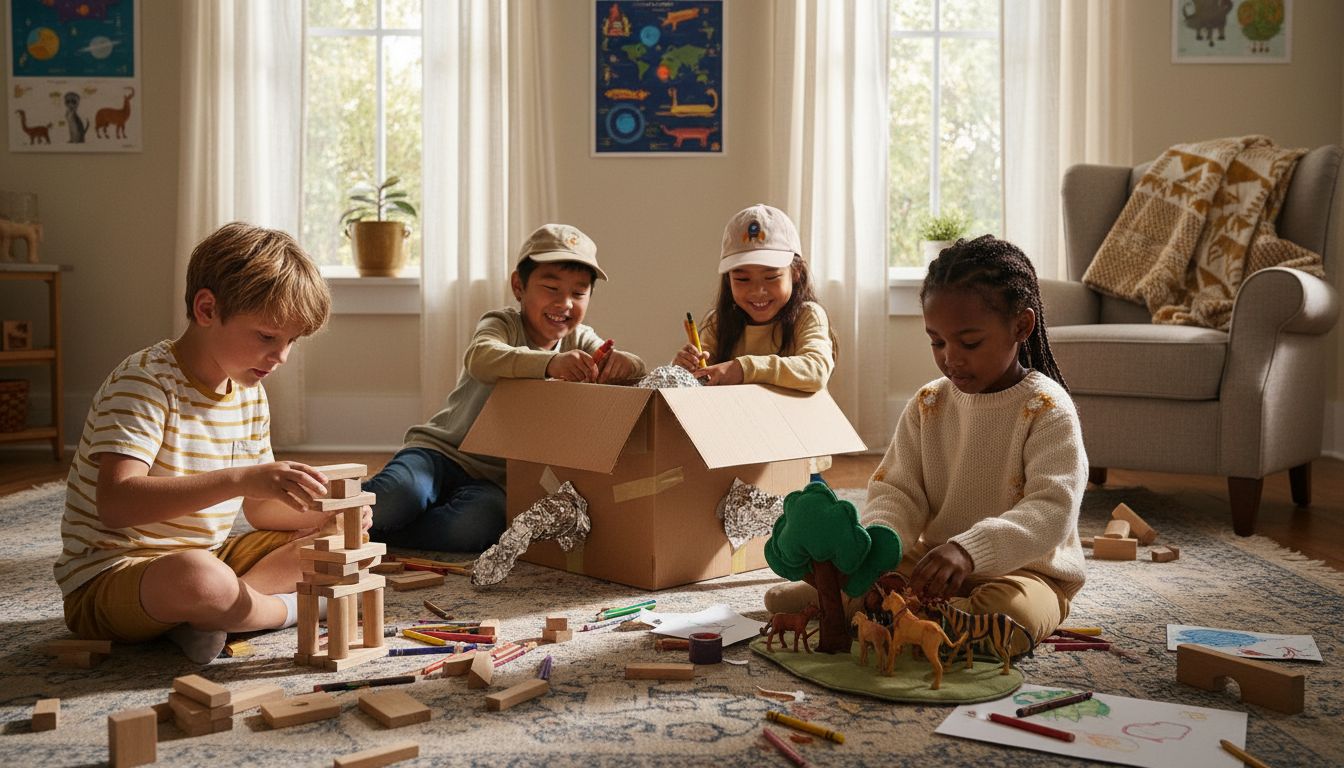 By giving children the space to play freely, parents support their natural learning processes and help them build confidence, problem-solving abilities, and resilience in a completely organic manner.
Key characteristics of unstructured play include:
- No predetermined rules or objectives
- Child-led and spontaneous
- Driven by curiosity and imagination
- Flexible and adaptable to the child’s evolving interests
For parents wanting to understand more about supporting their child’s development, check out our guide on making learning fun and engaging to complement these unstructured play insights.
Types of Unstructured Play Activities
Unstructured play encompasses a rich and diverse range of activities that allow children to explore their creativity and develop essential skills. According to Modules, these activities include free play where children independently choose their exploration methods without adult guidance. Classic examples include imaginative play, block building, and spontaneous physical activities like running and climbing.
Wikipedia offers a fascinating developmental perspective on unstructured play, highlighting different social interaction stages. These stages range from solitary play, where a child plays alone, to onlooker play, where children observe others playing, and parallel play, where children play side by side without direct interaction. Each stage represents a unique developmental progression in how children engage with their environment and peers.
The beauty of unstructured play lies in its flexibility and child-driven nature. Children might transform everyday objects into extraordinary play scenarios - a cardboard box becomes a spaceship, wooden blocks transform into architectural marvels, or a simple backyard becomes an expansive imaginative landscape. These activities are not just entertaining but crucial for developing problem-solving skills, emotional intelligence, and spatial reasoning.
Key types of unstructured play include:
- Imaginative play
- Physical exploration
- Construction play
- Sensory play
- Social interaction play
To dive deeper into supporting your child’s playful learning journey, explore our guide on understanding the benefits of imaginative play, which provides additional insights into how play nurtures young minds.
Developmental Benefits of Free Play
Scientific American highlights that free play is a critical cornerstone of comprehensive child development, offering profound impacts across multiple developmental domains. This unstructured approach to play promotes essential skills including social competence, emotional resilience, cooperation, self-confidence, and cognitive growth, enabling children to explore and understand their world through intrinsic motivation.
The remarkable depth of free play’s developmental benefits becomes evident when examining its multifaceted impact. According to Growing Up, unstructured play provides children with unique opportunities to develop problem-solving skills, enhance creativity, and learn emotional regulation. These skills are not simply academic achievements but fundamental life competencies that shape how children interact with challenges, understand complex social dynamics, and build internal emotional resources.
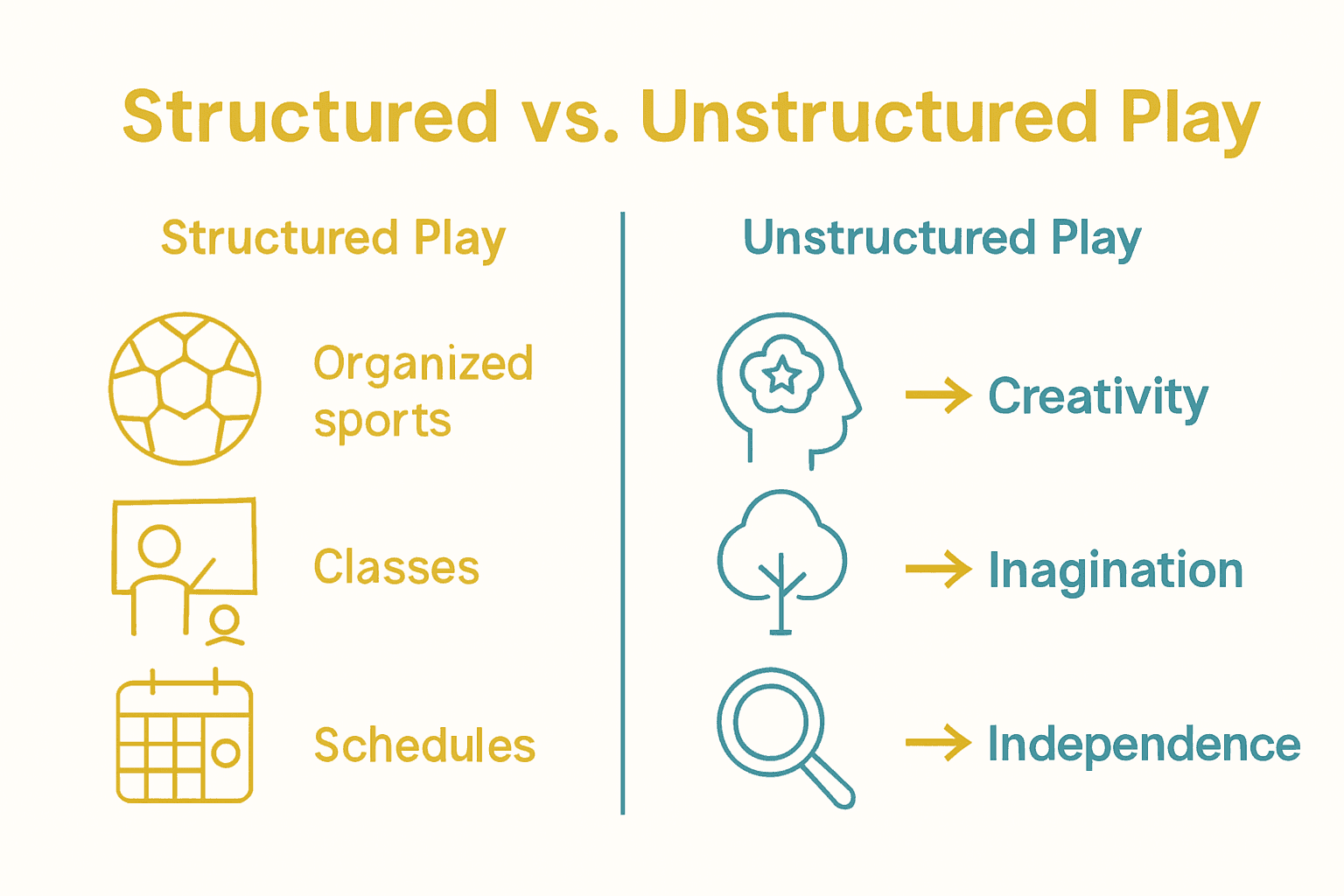
Through free play, children essentially become architects of their own learning experiences. They learn to negotiate, experiment, fail, and recover - all without adult intervention. Imagination transforms ordinary objects into extraordinary learning tools: a cardboard box becomes a spaceship, building blocks become architectural challenges, and playground interactions become complex social laboratories. These experiences teach children far more than structured activities ever could, nurturing adaptability, innovative thinking, and intrinsic motivation.
Key developmental benefits of free play include:
- Enhanced cognitive flexibility
- Improved emotional intelligence
- Advanced problem-solving capabilities
- Better social interaction skills
- Increased creativity and imagination
- Stronger self-regulation abilities
For parents seeking deeper insights into supporting their child’s developmental journey, our guide on childhood brain development offers comprehensive strategies for nurturing young minds.
Unstructured Play and Nature Connection
Wikipedia reveals that natural playscapes are revolutionary environments designed to spark children’s unstructured play by integrating authentic landscapes, diverse vegetation, and organic materials. These intentionally crafted spaces go beyond traditional playgrounds, transforming outdoor environments into living classrooms where curiosity, imagination, and environmental awareness naturally flourish.
The profound connection between unstructured play and nature becomes evident when children are given freedom to explore, discover, and interact with their natural surroundings. According to Wikipedia’s Play Equity research, ensuring equitable access to these natural play opportunities is crucial for children’s holistic development. By removing barriers and creating inclusive outdoor spaces, we enable children from diverse backgrounds to experience the transformative power of connecting with the natural world through spontaneous, unguided play.
Imagination transforms ordinary natural settings into extraordinary play landscapes. A fallen log becomes a pirate ship, a cluster of rocks turns into a mountain expedition, and a grassy field becomes an endless adventure playground. These experiences are not just play - they’re powerful learning moments that teach children about ecological systems, spatial awareness, risk assessment, and environmental stewardship. Children develop a visceral understanding of the world around them, learning to appreciate, respect, and protect natural environments through direct, unstructured engagement.
Key aspects of nature-based unstructured play include:
- Sensory exploration
- Physical challenge and risk assessment
- Environmental learning
- Ecological awareness
- Creative problem-solving
- Emotional connection with nature
For parents eager to explore nature-based play approaches, discover our guide on nature exploration and Montessori techniques to inspire your child’s outdoor adventures.
Parental Roles and Safety Considerations
According to National Institutes of Health, playworkers and caregivers play a critical role in mediating children’s unstructured play by creating safe environments that balance freedom with appropriate supervision. This nuanced approach requires parents to act as supportive facilitators rather than restrictive controllers, allowing children to explore and learn while maintaining a watchful but non-intrusive presence.
Scientific American emphasizes the delicate balance parents must strike between ensuring safety and preserving the essential developmental benefits of free play. The key is not to eliminate risk entirely, but to create environments where children can encounter manageable challenges that build resilience, problem-solving skills, and self-confidence. This means providing spaces that offer controlled opportunities for exploration, discovery, and age-appropriate risk-taking.
Effective parental involvement in unstructured play requires a nuanced understanding of child development. Parents become invisible scaffolders - present enough to ensure safety, but distant enough to allow genuine independent exploration. This might mean positioning yourself where a child can see you but not directly interfere, or creating play spaces that have natural boundaries and minimal hazards. The goal is to let children test their own limits, make mistakes, and learn from their experiences without constant direct intervention.
Key safety considerations for unstructured play include:
- Creating age-appropriate play environments
- Establishing clear but flexible boundaries
- Supervising without hovering
- Teaching risk assessment skills
- Ensuring physical safety without stifling creativity
- Maintaining visual proximity without direct interference
To support your journey in creating engaging and safe play experiences, discover our guide on making learning fun and engaging for kids to enhance your parenting approach.
Support Your Child’s Growth with Playful Learning Tools
Unstructured play is essential for children to develop creativity, problem-solving skills and emotional resilience. Yet parents often struggle to find meaningful ways to inspire their children to explore and connect with nature independently. This guide highlights the importance of child-led, free play and the challenges parents face balancing safety and freedom while nurturing natural curiosity.
Bring the magic of unstructured play into your child’s daily adventures with The Zoofamily’s thoughtfully designed kids’ cameras, walkie-talkies and binoculars. Each product is crafted to spark imagination, encourage outdoor exploration and deepen kids’ relationship with the natural world. We even plant a tree for every camera sold, supporting the restoration of our planet’s natural beauty for future generations. Discover how simple tools can open doors to limitless creativity and joyful discovery at The Zoofamily. To complement the insights from this guide, explore more ideas on making learning fun and engaging and understand how to nurture imaginative play. Start your child’s journey toward confident, joyful exploration today by visiting https://thezoofamily.com.
Frequently Asked Questions
What is unstructured play?
Unstructured play is a type of play that is child-initiated and child-directed, allowing children the freedom to explore and engage in activities without adult intervention or predetermined outcomes.
Why is unstructured play important for child development?
Unstructured play is crucial as it promotes cognitive skills, emotional intelligence, social competencies, problem-solving abilities, and creativity, all while allowing children to learn at their own pace without external pressure.
How can parents encourage unstructured play at home?
Parents can encourage unstructured play by providing a safe and open environment filled with diverse materials and toys, allowing children to explore freely without strict guidelines or adult-led activities.
What are some examples of unstructured play activities?
Examples of unstructured play include imaginative play, building with blocks, running, climbing, and using everyday objects creatively—like turning a cardboard box into a spaceship or a fallen log into a pirate ship.
Recommended
- Making Learning Fun: Engaging Activities for Your Kids – The Zoofamily
- Understanding the Benefits of Imaginative Play – The Zoofamily
- Childhood Brain Development: A Guide for Modern European Mums – The Zoofamily
- Making Learning Fun: Engaging Activities for Your Kids – The Zoofamily
- Step-by-Step Guide to Open-Ended Play for Modern Families – Learning Bugs
- Learning Through Play Explained: Benefits and Approaches – Learning Bugs