

Over 60 percent of british parents say finding quality learning games is one of their top concerns. Choosing the right activity can set the stage for a child’s enthusiasm and future learning success. With so many options available, it is easy to feel lost. This guide highlights evidence-based steps that help british families select, prepare, and adapt educational games, leading to more joyful play and lasting skill development in children.
Table of Contents
- Étape 1: Choose Suitable Learning Fun Games For Your Child
- Étape 2: Prepare Playful Spaces And Gather Game Materials
- Étape 3: Introduce Game Concepts Using Nature-Inspired Themes
- Étape 4: Guide Children Through Fun Learning Interactions
- Étape 5: Adjust Difficulty For Continuous Engagement
- Étape 6: Verify Learning Outcomes And Celebrate Progress
Quick Summary
| Key Point | Explanation |
|---|---|
| 1. Choose age-appropriate games | Select learning games that match your child’s developmental stage to keep them engaged and motivated. |
| 2. Create inviting learning spaces | Design environments that encourage exploration with natural elements and accessible materials to enhance cognitive engagement. |
| 3. Use nature-inspired themes | Incorporate storytelling and natural objects into gameplay to boost creativity and develop connections to the environment. |
| 4. Balance guidance and freedom | Guide children during play by asking open-ended questions and observing their play style to enhance critical thinking skills. |
| 5. Celebrate learning achievements | Acknowledge your child’s progress in a fun, personalised way to reinforce their motivation and confidence in further learning. |
Étape 1: Choose suitable learning fun games for your child
Selecting the right learning games requires thoughtful consideration to spark your child’s curiosity and educational growth. Research from Harvard Graduate School of Education emphasises selecting games that offer children genuine agency and appropriate challenges, ensuring they remain engaged while developing critical skills.
When choosing learning games, focus on matching the game’s complexity to your child’s current developmental stage. Look for activities that challenge them slightly beyond their comfort zone without causing frustration. Games should integrate playful elements that make learning feel like an exciting adventure rather than a chore. Educational research highlights the importance of embedding fun elements to boost children’s motivation and cognitive engagement.
Key selection criteria include interactive gameplay, age appropriate difficulty, skill progression opportunities, and elements that stimulate problem solving. Observe your child’s natural interests and select games that align with those passions. A science loving child might enjoy strategy games involving exploration, while a creative child could thrive with imaginative role playing activities that teach collaboration and storytelling skills.
Étape 2: Prepare playful spaces and gather game materials
Creating an engaging environment for learning games requires thoughtful preparation and strategic space design. Researchers have discovered that playscapes with diverse natural materials significantly encourage children’s cognitive development and engineering play behaviours, transforming ordinary spaces into extraordinary learning zones.
Begin by selecting an area with sufficient room for movement and exploration. Clear away potential obstacles and ensure the space feels inviting and safe. Consider incorporating natural elements like plants or textured surfaces to stimulate sensory engagement. Studies highlight that playscapes designed with environmental elements foster children’s curiosity and connection to their surroundings, making the learning environment more dynamic and interesting.
Gather materials that match the specific learning game you have planned. This might include building blocks, drawing supplies, interactive props, or natural objects like stones and branches. Arrange materials within easy reach, creating an organised yet accessible setup that encourages independent play and exploration. Remember that the most effective learning spaces feel open and adaptable, allowing children to transform the environment according to their imaginative impulses.
Étape 3: Introduce game concepts using nature-inspired themes
Make-believe play represents a powerful learning mechanism that enables children to explore complex ideas through imaginative storytelling and role-playing. Nature-inspired themes offer an exceptional pathway to engage young minds, transforming learning into an exciting adventure of discovery and creativity.
Begin by creating narrative scenarios that connect gameplay with natural elements. For instance, transform a simple matching game into an expedition where players become forest explorers tracking animal habitats or botanical researchers collecting plant specimens. Narrative role-playing games with nature themes can significantly improve children’s engagement and visualization skills, making learning feel like an immersive experience rather than a structured lesson.
Encourage children to use natural objects as game props and incorporate sensory experiences. Stones might become treasure markers, leaves could represent currency, and branches could serve as magical wands. This approach not only makes gameplay more interactive but also helps children develop deeper connections with their environment, turning each game into a multisensory learning journey that sparks curiosity and imagination.
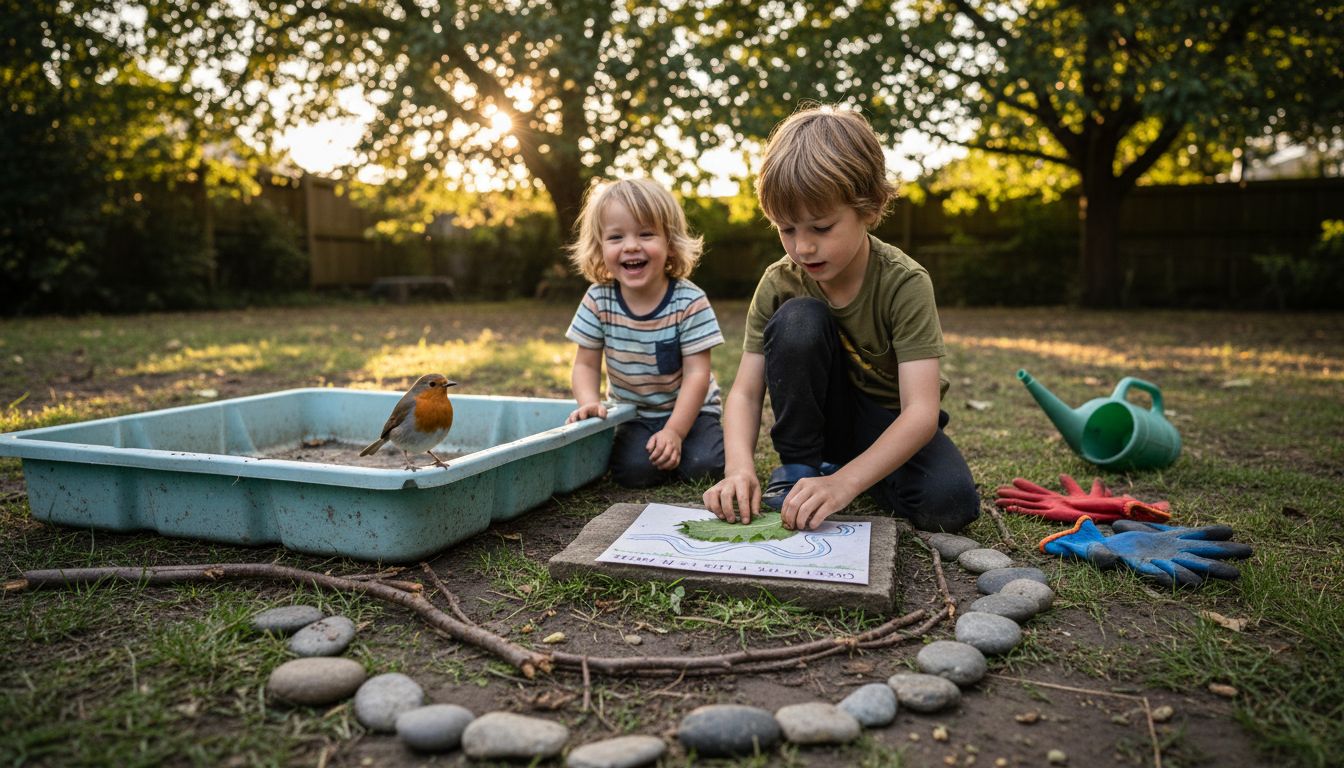
Étape 4: Guide children through fun learning interactions
Successful learning interactions require a delicate balance of guidance and freedom. Researchers have discovered that combining analog and digital materials in game design can foster incredibly creative and playful interactions among children, providing a rich landscape for exploration and discovery.
Begin by establishing clear but flexible game boundaries that allow children to exercise their imagination. Actively participate in the game without dominating play, asking open-ended questions that encourage critical thinking and problem solving. Your role is to gently nudge their curiosity, offering subtle hints and prompts that help them navigate challenges independently. Studies highlighting parental involvement demonstrate that engaged interaction can significantly enhance children’s learning experiences, transforming simple games into profound educational moments.
Observe your child’s natural play style and adapt your interaction accordingly. Some children thrive with direct guidance, while others prefer minimal intervention. Pay attention to their emotional cues and energy levels, being prepared to adjust the game’s complexity or shift focus if they seem frustrated or disengaged. The ultimate goal is creating an environment where learning feels like an exciting adventure rather than a structured task.
Étape 5: Adjust difficulty for continuous engagement
Educational game research demonstrates that systematic difficulty alignment with children’s developmental abilities is crucial for maintaining sustained learning interest, creating an optimal challenge environment that keeps children motivated and curious.
Begin by establishing a baseline of your child’s current skill level through initial gameplay observations. Start with tasks that feel achievable and gradually increase complexity as they demonstrate mastery. Physical-digital play technologies that adapt to children’s developmental stages provide an excellent model for creating responsive learning experiences, allowing for seamless progression that prevents frustration or boredom.

Watch for subtle signals indicating whether the current difficulty level is appropriate. If your child appears disengaged or overly anxious, it is time to recalibrate. Some children will benefit from incremental challenges, while others might need more dramatic shifts in gameplay complexity. The key is maintaining a delicate balance where learning feels like an exciting adventure rather than an insurmountable task. Your attentive, responsive approach will transform each game into a personalised learning journey that grows alongside your child’s expanding capabilities.
Étape 6: Verify learning outcomes and celebrate progress
Comprehensive evaluations of educational games reveal critical insights into their effectiveness and children’s learning trajectories, making systematic assessment an essential component of play based learning experiences.
Observe your child’s gameplay carefully, noting specific skills they demonstrate during different activities. Create simple yet meaningful assessment moments that feel like natural extensions of play rather than formal tests. Look for evidence of problem solving, creativity, communication, and emerging cognitive abilities. Research indicates that celebrating children’s progress in play based learning environments powerfully reinforces positive behaviours and learning achievements, transforming assessment into an encouraging experience.
Design celebration strategies that feel genuine and personalised. This might involve creating a special recognition ritual unique to your child achievements such as a victory dance, a congratulatory sticker chart, or sharing their accomplishments with family members. The goal is not just acknowledging their progress but building their confidence and intrinsic motivation to continue learning through playful exploration.
Inspire Creative Learning Adventures with The Zoofamily
The article highlights the challenge of engaging children in learning through creative play that fosters curiosity, problem solving and connection with nature. If you want to transform playful learning spaces with nature-inspired themes and stimulate your child’s imagination while supporting their cognitive growth, The Zoofamily offers an exciting solution. Our specially designed kids’ cameras, walkie-talkies and binoculars bring educational games to life by encouraging outdoor exploration and discovery. Each product is crafted to ignite kids’ passion for nature and build meaningful connections with the planet.
Start your child’s journey towards immersive learning today by exploring our interactive tools that perfectly complement the playful steps from the article. Experience how combining imaginative play with real-world adventure can enrich your child’s development while making a positive impact. Visit The Zoofamily to discover our collection and learn more about our commitment to planting a tree for every camera sold. Embrace a new way to engage, inspire and celebrate your child’s progress with adventure-filled learning at home.
Frequently Asked Questions
What are suitable learning fun games for my child?
Selecting suitable learning fun games involves matching the game’s complexity to your child’s current developmental stage. Look for games that challenge them slightly beyond their comfort zone and incorporate playful elements that make learning feel exciting. Consider their interests for personalised options, like strategy games for a science lover or imaginative role-playing for a creative child.
How can I create an engaging space for learning games?
To create an engaging space, choose an area with enough room for movement and exploration. Clear obstacles, incorporate natural elements like plants for sensory engagement, and gather materials matching the learning games planned to encourage independent play.
How do I introduce game concepts using nature-inspired themes?
You can introduce game concepts by creating narrative scenarios that connect learning to natural elements. For instance, turn a matching game into an expedition where players become explorers tracking animal habitats, thus making the experience immersive and educational.
What is the best way to guide children through learning interactions?
Successful guidance during learning interactions involves establishing clear yet flexible game boundaries. Actively participate without dominating, ask open-ended questions, and adapt your interaction style to your child’s play preferences to foster critical thinking and problem-solving skills.
How can I adjust game difficulty for continuous engagement?
Adjust game difficulty by observing your child’s skill level through gameplay. Start with achievable tasks and gradually increase complexity as they master new skills, ensuring that learning remains an exciting adventure without causing frustration or boredom.
How should I verify learning outcomes and celebrate progress?
To verify learning outcomes, observe your child’s gameplay and note specific skills demonstrated during activities. Create informal assessment moments that feel like play, and design creative celebration strategies, like a victory dance or a sticker chart, to reinforce positive behaviours and encourage further exploration.
Recommended
- Making Learning Fun: Engaging Activities for Your Kids – The Zoofamily
- Making Learning Fun: Engaging Activities for Your Kids – The Zoofamily
- Understanding the Benefits of Imaginative Play – The Zoofamily
- 7 Tips for Exciting Photography Scavenger Hunts – The Zoofamily
- Fun Food Safety Games for Kids in Schools and Restaurants - Probe IT
- 7 Interactive Classroom Ideas for Engaging Learning - Projector Display