

Most adults assume they know what an “animal family” means. A lion pride, a bear with her cubs, a robin feeding chicks in a nest. But learning about animal families actually involves two very different ideas that often get muddled: the scientific classification of animals into taxonomic groups, and the behavioural reality of how animals raise their young. These are not the same thing, and mixing them up can leave children with a confusing picture of the natural world. This guide untangles both concepts and gives you practical tools to teach them well.
Table of Contents
- Key takeaways
- Learning about animal families: what the science actually says
- Animal parenting: a different kind of family
- Teaching through play and hands-on activities
- From animal families to conservation
- My perspective on teaching animal families well
- Discover animal family learning with Thezoofamily
- FAQ
Key takeaways
| Point | Details |
|---|---|
| Two meanings of “family” | Taxonomy uses “family” as a scientific rank; parenting behaviour is a separate, equally fascinating concept. |
| Species definitions vary | There is no single fixed species definition; hybrids and extinct animals show why multiple approaches matter. |
| Play builds classification skills | Sorting games and animal-themed activities develop pattern recognition, vocabulary, and scientific reasoning in children. |
| Behaviour connects emotionally | Stories about animal parenting create emotional engagement that makes classification lessons far more memorable. |
| Conservation starts with connection | Children who understand animal families and habitats are more likely to develop genuine care for wildlife. |
Learning about animal families: what the science actually says
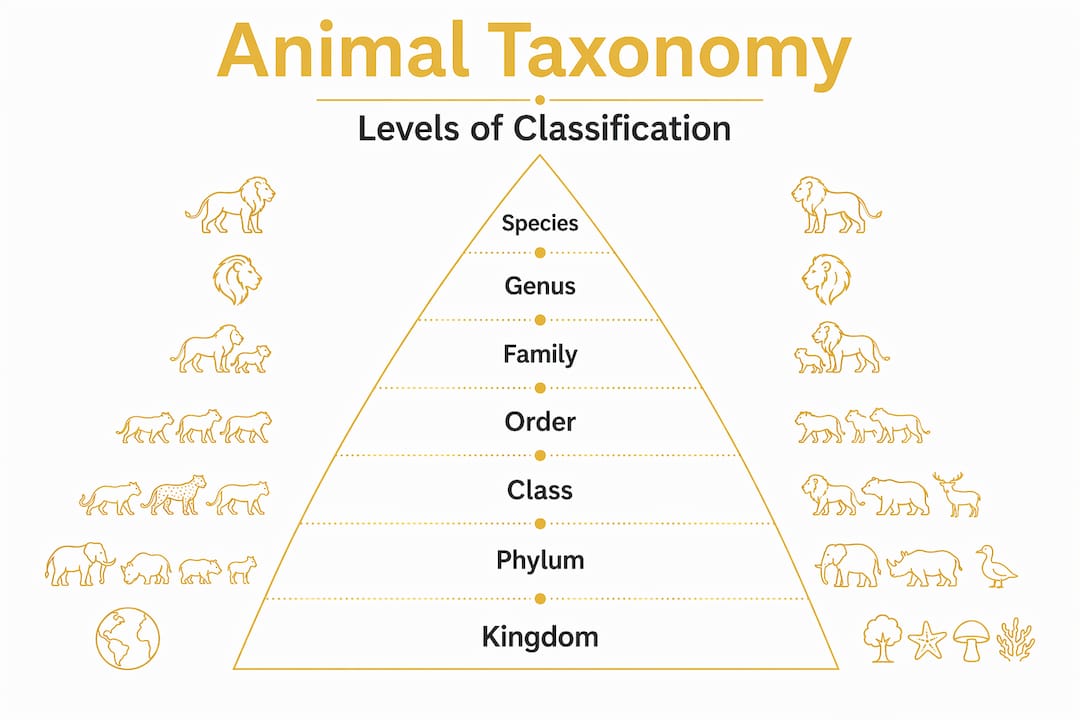
When scientists say “family,” they do not mean a mother and her babies. In the Linnaean taxonomy hierarchy, a family is a formal rank sitting between order and genus. Felidae, for example, is the family that contains lions, tigers, domestic cats, and cheetahs. These animals share common ancestry, but they do not necessarily live together or raise young together. That distinction matters enormously when you are trying to teach children with any accuracy.
The hierarchy itself is worth knowing: kingdom, phylum, class, order, family, genus, species. Think of it as a set of nesting boxes, each one more specific than the last. Explaining this to a child as “different-sized sorting boxes” works surprisingly well. The bigger the box, the more distant the relationship.
What counts as a species?
This is where things get genuinely surprising. The biological species concept defines a species as a group of organisms that can breed together and produce fertile offspring. Under this definition, horses and donkeys are separate species because their offspring, mules, are infertile. But that single definition breaks down quickly. Fossils cannot be tested for breeding compatibility. Bacteria reproduce asexually. Two visually identical populations living in different habitats may never interbreed even though they theoretically could.
Scientists therefore use several overlapping approaches: morphological (what the animal looks like), genetic (how its DNA compares), and ecological (what niche it occupies). There are over 2.1 million described species, with billions more estimated to exist. Sharing that number with a child, alongside the honest admission that scientists are still arguing about definitions, tends to spark exactly the kind of curiosity you want to encourage.
Pro Tip: When introducing the taxonomic hierarchy to younger children, use a familiar animal like a dog. Show them that dogs belong to the family Canidae, which also includes wolves and foxes. That single example makes the abstract hierarchy feel tangible and immediately interesting.
The practical takeaway for teaching is this: acknowledging multiple species concepts prepares children for real-world scientific complexity far better than a single tidy definition ever could. Science is an ongoing conversation, and children who understand that early become better thinkers.
Animal parenting: a different kind of family
Understanding animal species scientifically is one thing. Watching a polar bear nudge her cubs through snowdrifts is another. Both are legitimate and important ways of understanding animal family groups, but they answer different questions.
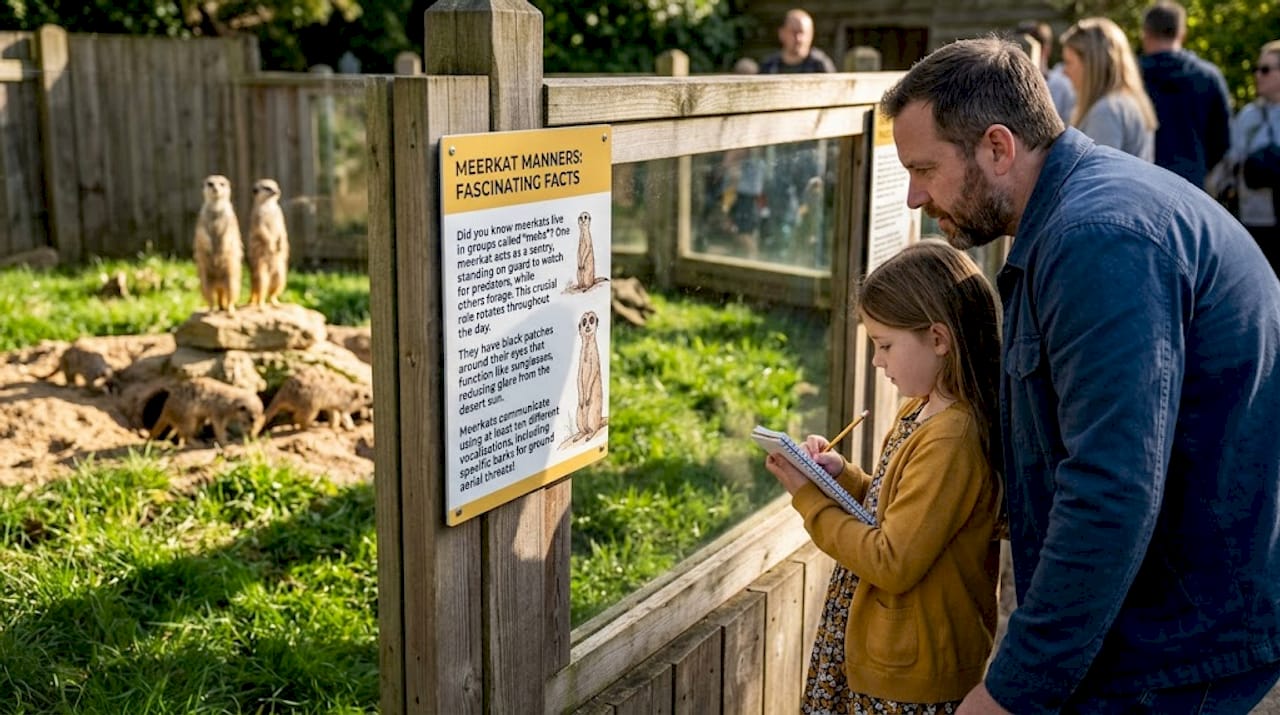
Parenting behaviour across the animal kingdom is astonishingly varied. Bear cubs stay with their mothers for around 18 months, learning to forage, swim, and survive before striking out alone. Eagle eggs incubate for approximately 35 days, with both parents taking turns. Some species offer no parental care at all: sea turtles bury their eggs on a beach and never return. Others, like elephants, involve aunts, grandmothers, and the whole herd in raising a calf.
Here is why separating these two ideas matters in practice:
- Children who hear only the “cute family” narrative often assume all animals nurture their young, which leads to real misunderstandings about wildlife.
- Children who learn only dry taxonomy miss the emotional engagement that makes science memorable and meaningful.
- Blending both, with clear labels for each, gives children a layered and accurate understanding of the natural world.
- Stories about parental care also introduce vocabulary organically: cubs, fledglings, calves, hatchlings, pups.
The most effective teaching moment is one where a child learns that a penguin chick keeping warm on its parent’s feet is a behaviour, while the fact that penguins belong to the order Sphenisciformes is classification. Both are true. Both are interesting. They just explain different things.
Teaching through play and hands-on activities
Children do not learn classification by sitting still and listening. They learn it by touching, sorting, comparing, and arguing about their choices. The good news is that animal-themed play builds categorisation, vocabulary, and empathy all at once, and it does not require specialist equipment.
Here are five activities that genuinely work:
-
The sorting game. Gather a mix of toy animals or printed picture cards. Ask children to group them any way they like, then explain their reasoning. One child might group by habitat, another by number of legs, another by whether the animal has fur. All are valid starting points for a richer conversation about observable traits in classification.
-
Bug hunt and field classification. Take the children outside with a notebook. Find insects, woodlice, or earthworms and encourage them to describe what they observe: legs, wings, segments, colour. This mirrors real taxonomy and makes the garden feel like a laboratory.
-
Parent and offspring matching. Create simple matching cards: cow and calf, duck and duckling, fox and kit. This teaches vocabulary while reinforcing the idea that parenting is a distinct biological concept. The how animal play builds curiosity article at Thezoofamily expands on exactly this kind of playful approach.
-
Habitat building. Let children construct small habitat scenes using craft materials or outdoor objects. Ask them which animals would live there and why. This naturally introduces adaptation, a concept that bridges taxonomy and behaviour beautifully.
-
Storytelling with rules. Choose a real animal family (otters are a particularly good choice) and tell their story through a week of activity. Then pause and ask: “Is this about how otters are classified, or how they behave?” That single question, asked regularly, builds the habit of distinguishing evidence from inference.
Pro Tip: When children have finished sorting, always ask them to explain why they grouped animals together rather than simply checking if they got it “right.” The explanation is where the scientific thinking actually happens, as noted in classification activity design.
For parents looking for structured outdoor ideas, Thezoofamily has a useful collection of outdoor science activities for kids that complement these approaches well.
From animal families to conservation
Learning to name and sort animals is a starting point, not an endpoint. The deeper goal is helping children understand that animal family groups exist within habitats, that those habitats have specific conditions, and that human behaviour directly affects whether those conditions survive.
There are several natural bridges from animal family learning to conservation thinking:
- When a child learns that a red squirrel depends on specific woodland to raise its young, habitat protection stops being abstract.
- When they discover that a species of frog can only reproduce in unpolluted water, water quality becomes personally relevant.
- When they follow the story of a wolf pack through a full season, population dynamics start to make emotional sense before they make mathematical sense.
Community events focused on animal welfare are a particularly effective bridge. Events that use story trails and hands-on encounters link factual animal knowledge to practical ethics. Children who learn that tortoises have complex needs, for example, are less likely to see them as easy pets and more likely to advocate for their protection. Animal-family learning genuinely connects to welfare knowledge and reduces casual mistreatment of animals.
Structured educational programmes like Project WILD offer science-aligned curricula from pre-K through to secondary school, giving educators consistent, research-backed frameworks for teaching animal families and ecosystems together. These programmes are worth exploring if you teach in a formal setting and want the lessons to build coherently over time.
“The goal is not just to teach children the name of an animal, but to help them feel the cost of its loss.”
Family nature days, local wildlife reserves, and even a well-tended garden pond can serve as living classrooms. The creative family day ideas resource from Thezoofamily offers a practical starting point for making these experiences regular rather than occasional.
My perspective on teaching animal families well
I have spent a long time watching how children respond to animal topics, and the single biggest mistake I see adults make is treating taxonomy and parenting stories as interchangeable. They are not. When a child hears that dolphins are in the order Artiodactyla (the same group as hippos and pigs), that is genuinely astonishing. When they hear that a dolphin mother stays with her calf for up to six years, that is emotionally moving. Both are true. But if you blur the two, you end up with children who think every animal in the same scientific family must live and parent together, which produces confusion rather than understanding.
What I have found is that children actually cope very well with “there are two different things called a family here.” They are used to words having multiple meanings. The trick is making both meanings interesting enough that they want to hold onto both.
I also believe strongly that the emotional pathway matters as much as the factual one. A child who cries at the thought of a habitat being destroyed is not being sentimental. That child is developing the kind of moral imagination that becomes environmental responsibility in adulthood. The science gives them the tools. The story gives them the reason.
Play, observation, and honest conversation about complexity are the real curriculum here. Everything else is detail.
— ALAIN
Discover animal family learning with Thezoofamily
At Thezoofamily, we believe the best way to spark a child’s love of the natural world is to give them tools that make exploration feel like an adventure. Our kids’ cameras, binoculars, and walkie-talkies are designed with animal references precisely to trigger curiosity about the creatures sharing our planet. Whether you are setting up a backyard bug hunt or planning a family nature day, the Thezoofamily learning activities page is a practical starting point for parents and educators who want learning to feel genuinely alive. We also plant one tree for every camera sold, because understanding animal families and protecting their habitats should go hand in hand. Explore our engaging activities for kids and find the approach that fits your family.
FAQ
What does “animal family” mean in science?
In scientific classification, a family is a taxonomic rank between order and genus, grouping animals with shared ancestry. The family Felidae, for example, includes all cats from lions to domestic breeds.
How are types of animal families different from parenting groups?
Taxonomic families describe evolutionary relationships, while parenting groups describe behaviour. A mother bear and her cubs form a behavioural family; bears as a group belong to the taxonomic family Ursidae.
How do you explain animal classification to young children?
Use sorting games with toy animals or picture cards and ask children to group them by observable traits such as legs, fur, or habitat. Always ask them to explain their choices, as the reasoning builds real scientific thinking.
Why does learning about animal families matter for conservation?
When children understand that specific animals depend on specific habitats to raise their young, they develop a personal stake in protecting those environments. Emotional connection formed through stories and play is often what turns interest into genuine care.
What is the best age to start animal classification lessons?
Simple sorting activities work well from age four onwards, using observable traits like colour, size, or habitat. More formal taxonomy with hierarchy and Latin names suits children from around age eight, when abstract reasoning begins to develop.