

Most parents are surprised to learn that spending time outdoors can increase children’s creativity by over 50 percent compared to indoor play. In many british families, the focus often falls on screen time or structured activities, yet imaginative play in nature provides a wealth of sensory experiences and cognitive growth. This guide steps beyond traditional advice by sharing practical ways to inspire children’s imagination outside, making every outdoor moment a chance for discovery and development.
Table of Contents
- Defining Imagination Outdoors for Children
- Key Benefits of Outdoor Creative Play
- Essential Tools and Nature-Inspired Props
- Stimulating Imaginative Activities by Age
- Safety, Supervision, and Environmental Care
- Common Challenges and How to Overcome Them
Key Takeaways
| Point | Details |
|---|---|
| Transformative Outdoor Play | Outdoor play fosters children’s creativity, allowing for sensory exploration and cognitive development through unstructured play. |
| Developmental Benefits | Engaging in outdoor activities significantly boosts children’s emotional, cognitive, physical, and social development. |
| Essential Tools for Imagination | Providing nature-inspired props encourages creativity, allowing children to interact meaningfully with their environments. |
| Overcoming Challenges | Actively addressing technological distractions and initial hesitations can enhance children’s confidence in outdoor imaginative play. |
Defining Imagination Outdoors for Children
Imagination outdoors is a transformative experience that transcends traditional play boundaries, offering children an expansive canvas for creativity and sensory exploration. Unlike indoor environments, outdoor spaces provide a dynamic, unrestricted landscape where children can engage their senses, experiment freely, and develop intricate cognitive skills through unstructured play.
According to pathsoflearning, outdoor environments engage all five senses, creating rich learning experiences that traditional indoor activities cannot replicate. These multisensory interactions stimulate creative expression in profound ways. Children discover textural differences between grass and gravel, hear complex soundscapes of rustling leaves and distant birdsong, and observe intricate natural details that spark imaginative thinking.
Outdoor imagination manifests through several distinctive approaches:
- Unstructured Play: Creating narratives and scenarios using natural elements like sticks, stones, and landscapes
- Sensory Exploration: Discovering textures, sounds, and visual patterns in nature
- Imaginative Scenarios: Transforming outdoor spaces into magical kingdoms, scientific laboratories, or adventure landscapes
The magic of outdoor imagination lies in its ability to liberate children from predetermined play structures. Natural environments become living, breathing playgrounds where creativity knows no boundaries. By encouraging children to interact with the outdoors, parents can nurture cognitive flexibility, creative problem-solving, and a deep, intrinsic connection with the natural world.
Learn more about nurturing imagination through play in our article about imaginative play benefits.
Key Benefits of Outdoor Creative Play
Outdoor creative play represents a profound developmental opportunity for children, offering far more than simple entertainment. It is a critical mechanism through which children explore, learn, and grow, transforming natural environments into dynamic classrooms of imagination and discovery.
According to kidsfirstservices, outdoor play significantly enhances children’s emotional development by fostering independence, building self-confidence, and helping them manage stress and challenges. Research from rwjbh further confirms these benefits, indicating that outdoor play contributes to cognitive and social/emotional development, increases attention spans, and promotes both happiness and immunity in children.
Key developmental benefits of outdoor creative play include:
- Cognitive Growth: Stimulating problem-solving skills through unstructured exploration
- Emotional Resilience: Building confidence through navigating natural environments
- Physical Development: Enhancing motor skills and physical coordination
- Social Intelligence: Learning cooperation and communication through shared outdoor experiences
Creative outdoor play goes beyond traditional structured activities. It encourages children to transform ordinary landscapes into extraordinary worlds, using natural elements as tools for imaginative expression. When children interact with rocks, sticks, leaves, and open spaces, they develop critical thinking skills, learn to adapt to changing environments, and cultivate a sense of wonder about the world around them.
Want to explore more engaging activities for your kids? Check out our guide to making learning fun.
Essential Tools and Nature-Inspired Props
Transforming outdoor play requires thoughtful selection of tools and props that inspire creativity while supporting natural exploration. These carefully chosen items become bridges between imagination and the physical world, enabling children to interact with their environment in meaningful and engaging ways.
According to kompan, natural playgrounds integrate nature into play, allowing children to interact with natural elements and engage in diverse physical activities that foster social interaction and hands-on learning. kidkraft further emphasizes that natural elements like tree stumps, logs, and climbers provide varied movement challenges while utilizing natural materials for rich sensory experiences that stimulate learning and imagination.
Essential nature-inspired props for outdoor creative play include:
- Exploration Tools: Magnifying glasses, binoculars, small notebooks
- Natural Building Materials: Sticks, rocks, leaves, bark
- Sensory Investigation Kits: Containers for collecting specimens
- Imaginative Costume Pieces: Simple fabric scraps, old hats, costume accessories
These props are not merely toys but catalysts for discovery.
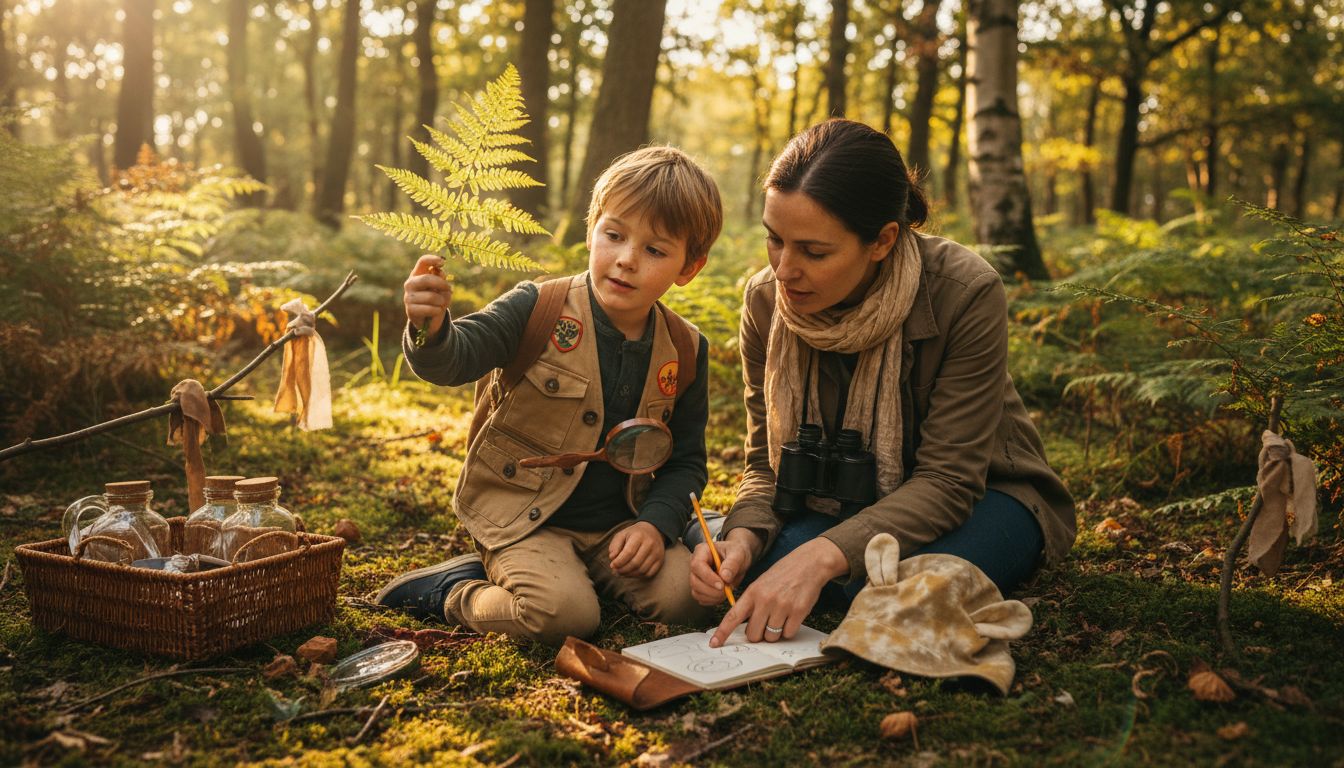 A simple stick can become a wizard’s wand, a scientific measuring tool, or a bridge in an imaginary landscape. By providing open-ended materials, parents create opportunities for children to develop problem-solving skills, creativity, and a deep connection with the natural world.
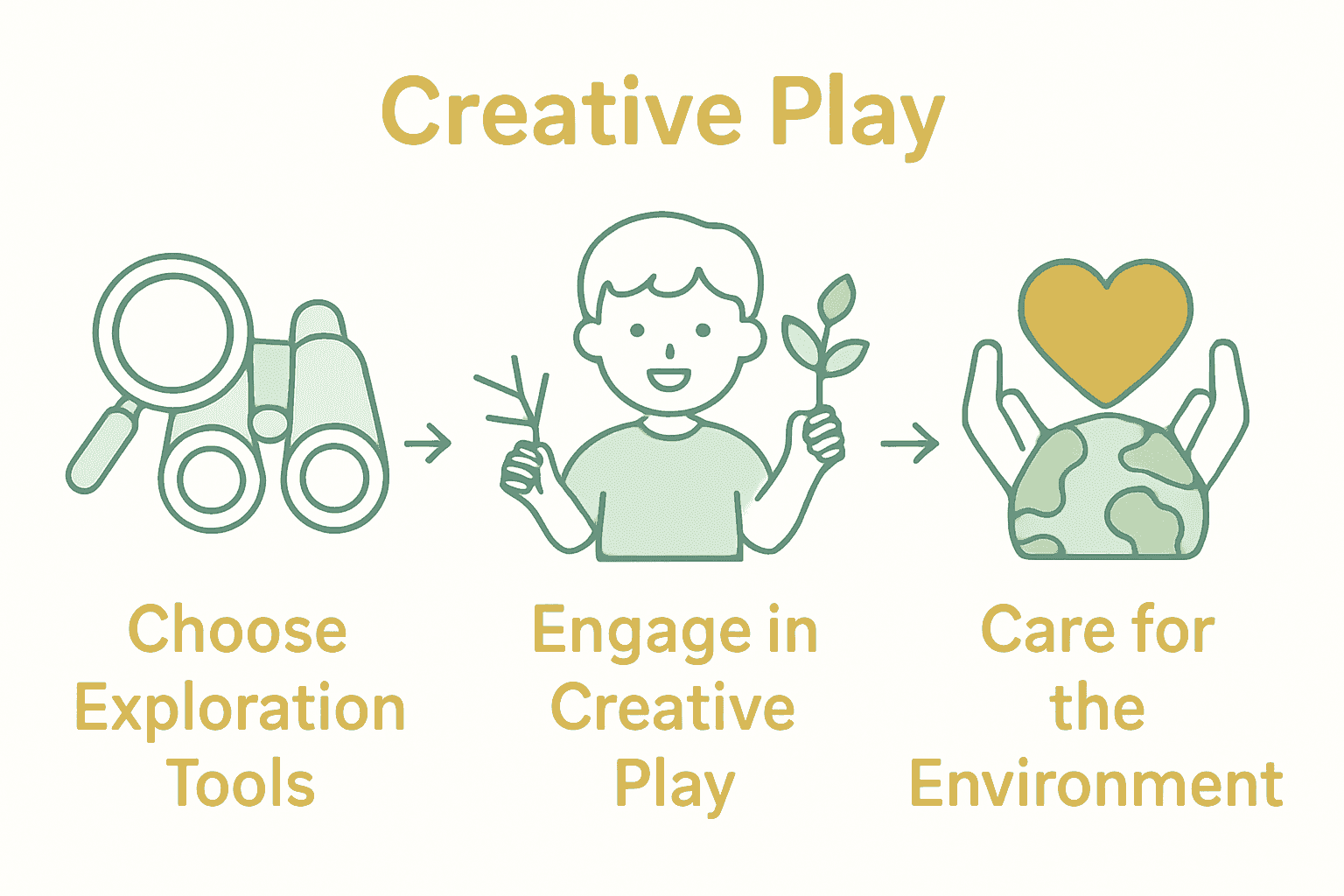
Ready to spark your child’s outdoor imagination? Discover more engaging activities for kids that blend learning and play.
Stimulating Imaginative Activities by Age
Children’s imagination evolves dramatically through different developmental stages, requiring tailored approaches that respect their cognitive and emotional growth. Understanding how to nurture creativity at each age becomes crucial for parents seeking to unlock their child’s potential through outdoor play and exploration.
According to pathsoflearning, outdoor play boosts cognitive function and problem-solving skills, with natural challenges enhancing critical thinking and improving memory and concentration abilities. kidkraft further emphasizes that outdoor settings inspire role-playing and pretend play, encouraging children to engage in imaginative activities suitable for their developmental stage.
Imaginative activities by age range include:
- Toddlers (1-3 years): Sensory exploration, simple object transformation
- Preschoolers (3-5 years): Elaborate storytelling, role-playing scenarios
- Early Elementary (6-8 years): Complex narrative creation, collaborative imaginary worlds
- Older Children (9-12 years): Strategic imaginative games, nature-based problem-solving adventures
The key is providing age-appropriate challenges that stretch a child’s imagination without overwhelming their developmental capabilities. A stick for a toddler might become a simple waving object, while for an older child, it could transform into an intricate tool for an elaborate outdoor adventure narrative.
Discover more about supporting your child’s developmental journey in our guide to childhood brain development.
Safety, Supervision, and Environmental Care
Creating a safe yet exploratory outdoor environment requires a delicate balance between protecting children and allowing them to develop critical risk assessment skills. Parents and caregivers play a crucial role in designing spaces that encourage curiosity while maintaining fundamental safety principles.
According to en, playscapes are strategically designed to eliminate fall heights by using topography changes for climbing and experiencing height variations, resulting in significantly lower injury rates compared to standard playgrounds. goodforkids further emphasizes that engaging outdoor learning spaces support children in exploring and taking risks, helping them develop essential risk assessment skills and environmental awareness.
Key safety and supervision strategies include:
- Active Monitoring: Maintaining visual contact without hovering
- Age-Appropriate Boundaries: Defining safe exploration zones
- Environmental Assessment: Checking for potential hazards before play
- Teaching Risk Awareness: Guiding children to recognize potential dangers
- Protective Equipment: Using appropriate gear for specific activities
Environmental care is equally important in outdoor play. Teaching children to respect nature, minimize their ecological impact, and understand the delicate balance of ecosystems transforms play into a learning experience. Simple practices like picking up rubbish, avoiding disturbing wildlife, and understanding local plant and animal life can instil lifelong environmental consciousness.
Learn more about supporting your child’s developmental journey in our guide to childhood brain development.
Common Challenges and How to Overcome Them
Parents often encounter significant obstacles when attempting to foster outdoor imaginative play, ranging from technological distractions to children’s initial reluctance to explore beyond familiar indoor environments. Understanding these challenges is the first step towards creating meaningful outdoor experiences that captivate and inspire young minds.
According to kidsfirstservices, outdoor play helps children manage stress and challenges, fostering resilience and emotional well-being. kidkraft further emphasizes that outdoor play encourages independence and emotional resilience, helping children understand their limits, take manageable risks, and develop emotional strength.
Common challenges in outdoor imaginative play include:
- Technological Distractions: Competing with screens and digital entertainment
- Initial Hesitation: Children feeling uncomfortable or unsure in outdoor settings
- Limited Imagination Triggers: Difficulty initiating creative play
- Weather and Environmental Constraints: Unpredictable outdoor conditions
- Safety Concerns: Parental anxiety about potential risks
Overcoming these challenges requires a strategic and patient approach. Start by creating small, engaging scenarios that transform outdoor spaces into magical landscapes. Introduce open-ended props, participate actively in play, and gradually build your child’s confidence in exploring natural environments. Remember that imagination is a skill that grows with practice, encouragement, and gentle guidance.
Discover more strategies for supporting your child’s developmental journey in our guide to childhood brain development.
Ignite Your Child’s Outdoor Imagination with The Zoofamily
Unlocking your child’s creativity outdoors can feel challenging when trying to balance safety, stimulation, and overcoming distractions like screens. The article highlights how outdoor play nurtures cognitive flexibility, emotional resilience, and a deep connection to nature through unstructured, imaginative scenarios. Yet, parents often face hurdles such as limited imagination triggers and the need for age-appropriate tools to inspire exploration.
The Zoofamily offers a unique solution designed exactly for these challenges. Our kids’ cameras, walkie-talkies, and binoculars are crafted with animal references that spark curiosity about wildlife while encouraging sensory discovery. Each product not only fuels storytelling and role play but also invites children to become nature explorers. Best of all, for every camera sold, we plant a tree, helping restore natural beauty for generations to come.
Transform your child’s outdoor adventures today by exploring our collection of creative tools. Join a community that values imaginative learning and environmental care together. Visit The Zoofamily now to equip your little explorer with the best gear and inspire a lifelong love of nature. Discover how engaging activities for kids and our nature-focused products can make every outdoor play session an unforgettable journey.
Frequently Asked Questions
What is the concept of imagination outdoors for children?
Imagination outdoors refers to the experience where children engage with outdoor environments that allow them to explore creatively and freely, using their senses to stimulate cognitive development through unstructured play.
How does outdoor creative play benefit children’s development?
Outdoor creative play enhances children’s cognitive growth, emotional resilience, physical development, and social intelligence. It allows them to develop problem-solving skills, gain confidence, and foster cooperation through shared experiences.
What types of props can enhance outdoor imaginative play?
Nature-inspired props like magnifying glasses, small notebooks, sticks, rocks, and costume pieces can inspire children’s creativity. These tools encourage exploration and imaginative scenarios by allowing children to interact with the natural environment meaningfully.
How can parents overcome challenges in fostering outdoor imagination?
To overcome challenges like technological distractions or initial hesitations, parents can create engaging scenarios, introduce open-ended materials, and actively participate in outdoor play, gradually building their child’s confidence in exploring natural settings.
Recommended
- Understanding the Benefits of Imaginative Play – The Zoofamily
- Making Learning Fun: Engaging Activities for Your Kids – The Zoofamily
- 7 Tips for Exciting Photography Scavenger Hunts – The Zoofamily
- Making Learning Fun: Engaging Activities for Your Kids – The Zoofamily
- Understanding Why Outdoor Play Toys Benefit Children – Learning Bugs