

Starting school in nature is one of the fastest-growing movements in early childhood education, and it is catching many parents pleasantly off guard. Nature classroom programmes have grown from a handful to more than 1,000 across the country in the last decade alone. Yet despite that surge, most parents still carry a fuzzy picture of what outdoor learning actually looks like on a cold Tuesday morning. This guide cuts through the confusion, giving you the facts, the practical steps, and the honest perspective you need to decide whether nature-based education is the right path for your child.
Table of Contents
- Key takeaways
- Starting school in nature: what it actually means
- Practical steps for choosing a nature school
- Supporting your child at home
- Common challenges and how to face them
- My honest take on what nature schools offer
- Explore nature learning with Thezoofamily
- FAQ
Key takeaways
| Point | Details |
|---|---|
| Nature schools are growing fast | Over 1,000 outdoor learning programmes now exist, reflecting serious demand from families. |
| Typical age range is 3 to 8 years | Most nature-based schools serve young children year-round, outdoors in nearly all weather. |
| Clothing is make-or-break | Layered, waterproof clothing is not optional. It determines whether your child thrives or struggles. |
| Learning is child-led and play-based | Nature-based education prioritises curiosity and free inquiry, not fixed lessons or worksheets. |
| Community benefits extend to families | Parents and carers gain social connection alongside their children in nature-school settings. |
Starting school in nature: what it actually means
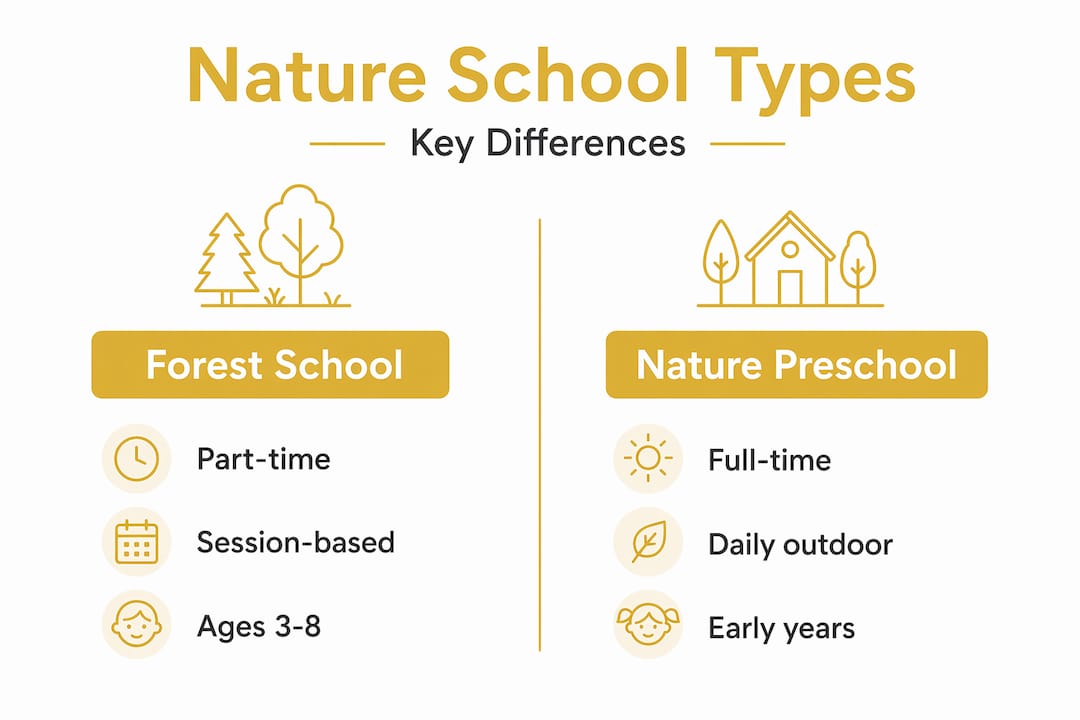
A lot of parents picture mud, chaos, and no maths. The reality is more considered and far more impressive. Nature-based education places children aged 3 to 8 in outdoor environments for the bulk of the school day, operating through all seasons. Most programmes run year-round outdoors, pausing only when conditions become genuinely unsafe. That is a very different philosophy from a classroom with a nature-themed noticeboard.
There are two main formats you will encounter. Forest schools for children are often sessional or part-time programmes embedded within a broader school week, where groups visit woodland or green spaces regularly under trained leaders. Nature preschools, by contrast, are full-time settings where the outdoor environment is the classroom. Both share the same foundational belief: that holistic child development in cognitive, physical, emotional, and social domains happens more naturally when children are outside and engaged with the living world.
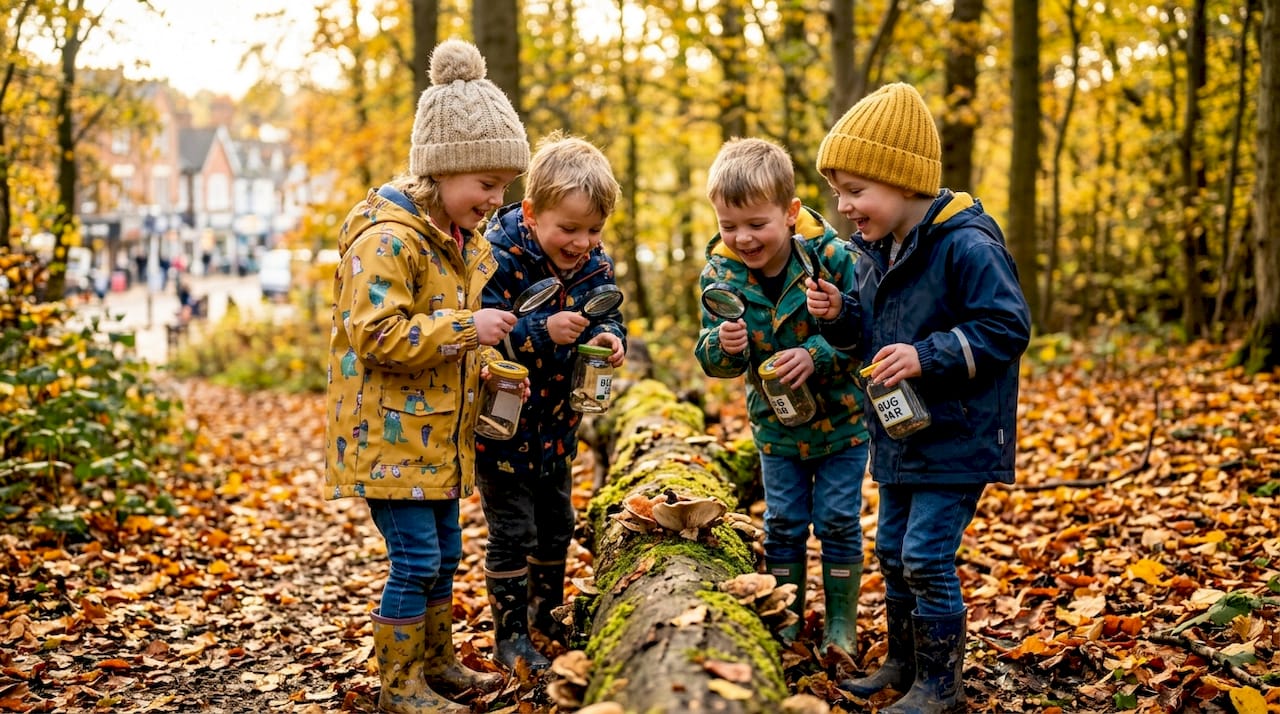
What does a typical day look like? Children arrive, change into outdoor kit, and then the day unfolds largely on the children’s terms. There might be a group gathering around a fire, a construction project using fallen branches, a close study of insects under a log, or storytelling in a clearing. The role of the adult shifts from instructor to observer and facilitator. Learning emerges from environment-child interaction, driven by genuine curiosity rather than a timetable.
Here is what distinguishes nature-based settings from traditional indoor schools at a glance:
- Child-led enquiry rather than teacher-directed tasks
- Risk-aware play that builds physical confidence and problem-solving
- Ecological immersion that develops awareness of seasons, living systems, and natural cycles
- Small group sizes that allow adults to observe and support individual children closely
- Community connection, extending the social benefits beyond the children to the families themselves
“Nature-based learning is not just an educational model. It is a community-building model. Families come together around a shared value, and that bond has real social benefits for parents too.” — Forest school educator, Southwark
Practical steps for choosing a nature school
Once you decide to explore outdoor learning programmes, the process can feel a little overwhelming. There is no single national register, programmes vary enormously in quality, and the terminology is not always consistent. A structured approach helps.
- Map what exists locally. Search for forest schools, nature preschools, and outdoor kindergartens in your area. Local wildlife trusts, council early years teams, and parent forums are good starting points. Many settings are small and community-led, so word of mouth matters. Fern Brook Nature School is a strong example of a setting that grew almost entirely through community trust and referrals.
- Visit in person, ideally outdoors. Ask to observe a session rather than just tour the indoor space. Watch how adults interact with children, how disagreements are handled, and how the environment is used.
- Ask about practitioner qualifications. Forest school leaders in the UK should hold a recognised Level 3 forest school qualification. Nature preschool staff should hold early years qualifications alongside any outdoor specialism.
- Clarify the outdoor-to-indoor ratio. Some settings market themselves as outdoor but spend the majority of time inside. Ask directly what percentage of the day children spend outdoors across the whole year.
- Understand the curriculum framework. Ask how outdoor pedagogy connects to the Early Years Foundation Stage (in England) or the relevant national framework in your country. Nature-based learning remains peripheral in many systems unless deliberately embedded in the curriculum, so check whether the school treats outdoor time as integral or as an add-on.
- Ask about the clothing policy. A school that has not thought carefully about clothing has not thought carefully about outdoor learning.
On that last point, preparation is everything when starting school outdoors.
Pro Tip: Invest in proper layered clothing before your child’s first week. A moisture-wicking base layer, a wool mid-layer, and a fully waterproof outer layer are not luxuries. They are the difference between a child who wants to go back outside and one who dreads it. Branded school kit often costs more than buying layers separately at outdoor retailers.
Seasonality also shapes the experience more than parents expect. Autumn and winter sessions can be the richest for exploration, but they demand more preparation from families. Spring and summer bring their own challenges: ticks, stinging plants, and sun protection. Ask each school how they handle each season specifically, not generically.
Supporting your child at home
The benefits of nature school do not arrive on their own. Children who have rich encounters with nature at home carry that curiosity directly into the outdoor classroom. There are practical and genuinely enjoyable ways to reinforce what their school is nurturing.
Ecological literacy develops through repeated, unhurried contact with the natural world. Children who regularly observe a bird feeder, track the seasons in a garden, or notice which insects visit which flowers are practising exactly the skills that nature schools build on. You do not need countryside access. A window box, a park visit, or a wildlife-friendly garden can provide more than enough material.
Some specific habits that make a real difference:
- Slow down outdoors. Resist the urge to move through a park quickly. Let your child set the pace and follow their gaze. A ten-minute inspection of a rotting log teaches more biology than most worksheets.
- Name things together. Not to test your child, but to give them vocabulary for what they already find fascinating. A field guide or an identification app makes this accessible for adults who did not grow up outdoors themselves.
- Encourage questions without rushing to answer them. Ask “What do you think?” before explaining. This models the enquiry-based approach their school uses.
- Bring in animal behaviour. Reading about or observing animal behaviour with children directly connects home life to what children encounter outdoors, deepening their sense of wonder and ecological awareness.
- Accept mess and discomfort. A parent who flinches at muddy knees inadvertently sends the message that nature is unpleasant. Enthusiasm is contagious. So is reluctance.
The playful eco education approach that Thezoofamily advocates for is built on exactly this premise: children who explore the natural world with curiosity and good tools develop a relationship with it that lasts a lifetime.
Common challenges and how to face them
Starting school in natural settings is not without friction. Knowing the challenges in advance means you can prepare rather than panic.
| Challenge | Common worry | Realistic response |
|---|---|---|
| Weather and comfort | “My child will be cold and miserable” | Proper clothing resolves this almost entirely. Schools with strong outdoor programmes have this down to a science. |
| Academic rigour | “Will my child fall behind in literacy and numeracy?” | Research consistently shows nature-based learners meet developmental milestones. The approach changes, not the outcome. |
| Curriculum alignment | “Is this recognised by the education system?” | In the UK, well-run settings align with EYFS. Ask your school directly how they document progress. |
| Social concerns | “Will my child miss out on friendships from mainstream school?” | Small group sizes in nature schools often produce stronger peer bonds, not weaker ones. |
| Sustainability of the school | “What if the programme closes?” | Community-focused models with low staff turnover tend to be the most stable. Ask about the school’s history and growth trajectory. |
The academic rigour concern is the one parents raise most often. It is worth addressing directly. Nature-based learning supports development across cognitive, social, physical, and emotional domains. Children in outdoor settings are not avoiding learning. They are doing it differently and, for many children, more effectively.
The systemic challenge is real, however. Without curricular embedding, nature-based learning can be treated as enrichment rather than education, which limits its reach and its perceived credibility. When evaluating a school, check whether outdoor learning is woven into every part of the day or reserved for “outdoor time.” That distinction matters.
Pro Tip: If your local primary school offers a forest school programme rather than a full-time nature setting, ask the class teacher how forest school observations feed back into the child’s learning record. Good schools use outdoor sessions as evidence of progress, not as breaks from it.
My honest take on what nature schools offer
I have visited and spoken with people running nature settings of all sizes, and the thing that consistently surprises parents most is not what children learn. It is what parents get out of it. The community aspect of nature-based education is genuinely undervalued in the conversation around outdoor learning programmes.
In my experience, families who choose nature schools tend to stay more engaged with their child’s education. Drop-off at a forest edge, with a brief conversation about what the children found yesterday, is a very different relationship than signing in at a reception desk. That proximity to the learning changes how parents understand and support their children at home.
The misconception I encounter most often is that nature schools are for a particular kind of family. The outdoorsy, organic, wellington-boot-owning kind. That is not what I have seen in practice. The settings that grow most sustainably are the ones that welcome families from all backgrounds and make the outdoor environment feel genuinely accessible, not aspirational.
What I have found actually works, for both schools and families, is persistence combined with flexibility. The first few weeks of starting school outdoors can feel chaotic. Children test boundaries differently when the walls are gone. But within a month, most settle into a rhythm that you simply cannot replicate indoors. The patience required is worth it.
— ALAIN
Explore nature learning with Thezoofamily
If you are already thinking about starting school in nature, Thezoofamily is worth bookmarking. The brand was built around the idea that children form their deepest bonds with the natural world through curiosity, play, and the right tools.
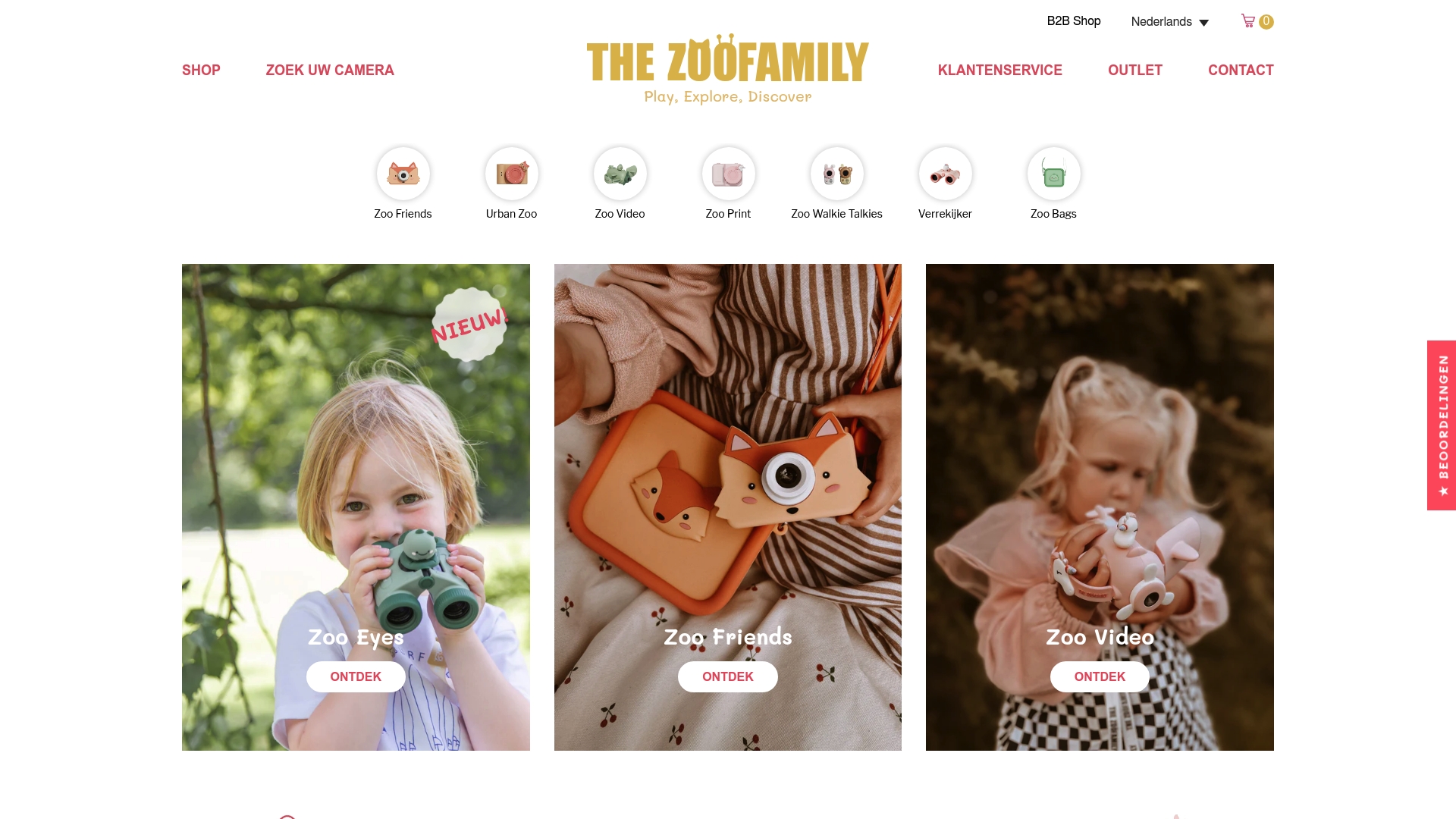
From kids’ cameras and binoculars designed with animal references to inspire genuine wonder, to blog content on eco education for kids and wildlife exploration at home, Thezoofamily supports the same values that nature schools are built on. Every camera sold plants a tree. That commitment to the planet is not a tagline. It is the whole point. Browse Thezoofamily’s full range and find the tools that bring outdoor learning to life beyond the school gate.
FAQ
What is a nature preschool?
A nature preschool is a full-time early years setting where children spend the majority of the day outdoors, learning through free play, exploration, and guided inquiry in natural environments rather than a traditional indoor classroom.
What age can children start forest school?
Forest schools for children typically accept children from age 3, with programmes designed for children up to around 8 years old, though some settings extend beyond this range.
Are nature schools recognised by the UK education system?
Yes, well-run nature-based settings in England operate within the Early Years Foundation Stage framework. Curricular embedding varies by school, so it is worth asking how individual settings document and report children’s progress.
What do children wear at a nature school?
Children need layered, waterproof clothing including a moisture-wicking base layer, a wool mid-layer, and a waterproof outer layer. Most schools provide a kit list before your child starts.
Do children in nature schools fall behind academically?
No. Holistic development research consistently shows that nature-based learners meet expected developmental milestones while gaining additional benefits in emotional awareness, physical confidence, and social skills.