

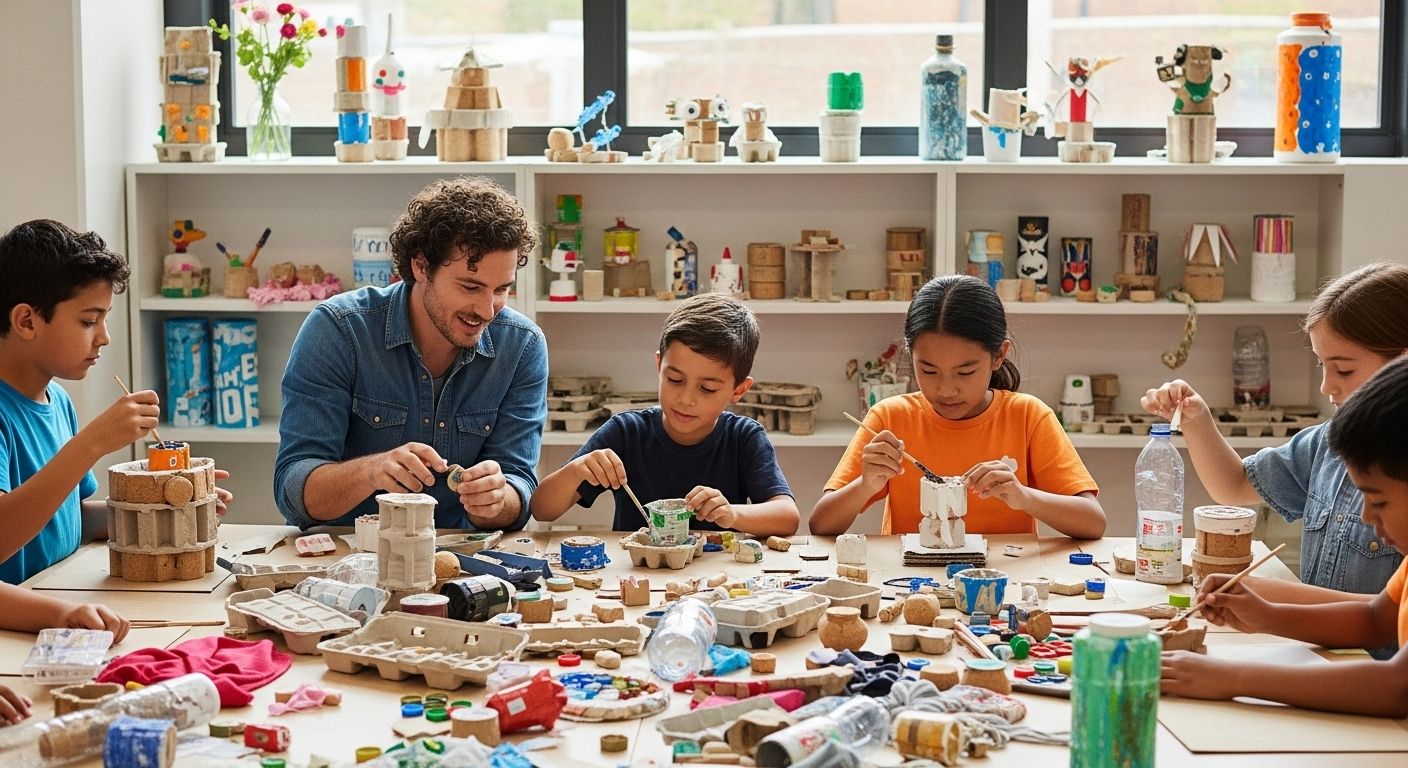
Children love turning everyday things into something magical. Simple household items like egg cartons and plastic bottles can become works of art in their hands. Most people see recycling as a chore but few realise it can spark imagination and offer hours of fun. Using recycled materials for art projects does not just reduce waste. It inspires a new way of thinking where rubbish becomes the start of something brilliant.
Table of Contents
- Start With Simple Materials
- Use Everyday Items For Projects
- Create Recycled Art Sculptures
- Make Functional Art Pieces
- Organise A Community Recycled Art Day
- Encourage Seasonal Themed Projects
- Incorporate Educational Elements
- Showcase And Share Finished Art
Quick Summary
| Takeaway | Explanation |
|---|---|
| Start with simple materials | Use common household items to encourage creativity in recycled art projects. |
| Safety and supervision are essential | Always ensure clean, safe materials and adult oversight during art activities. |
| Encourage experimental creativity | Allow children to explore and make mistakes, fostering unique artistic expression. |
| Integrate educational elements | Use recycled art to teach concepts like sustainability, design, and problem-solving. |
| Showcase finished artwork | Display children’s creations to boost confidence and promote environmental awareness. |
1: Start with Simple Materials
Beginning recycled art projects with children requires a smart approach focused on accessibility and creativity. Simple materials transform ordinary household items into extraordinary artistic expressions, turning potential waste into engaging learning experiences. By understanding how everyday objects can become artistic tools, parents and guardians can inspire young minds to view recycling as an exciting opportunity for imagination.
According to the Museum of the City of New York, recyclable materials offer tremendous potential for children’s creativity. Common household items become magical mediums for artistic exploration:
- Egg cartons
- Paper plates
- Toilet paper rolls
- Cardboard boxes
- Plastic bottles
- Old newspapers
Collecting materials becomes an adventure in itself. Encourage children to look around their home and identify items typically destined for recycling bins. This process teaches them about resource conservation and transforms mundane objects into potential art supplies. By involving kids in material selection, you make them active participants in the creative process.
When starting recycled art projects, safety and supervision are paramount. Ensure all materials are clean, free from sharp edges, and appropriate for your child’s age. Provide child-friendly scissors, non-toxic glue, and protective workspace coverings. The goal is creating a safe environment where creativity can flourish without unnecessary risks.
Remember that perfection is not the objective. These art projects are about exploration, learning, and fun. Encourage children to experiment, make mistakes, and develop their unique artistic vision. Each recycled art project is an opportunity to teach valuable lessons about sustainability, creativity, and resourcefulness.
2: Use Everyday Items for Projects
Transforming everyday household items into art projects opens a world of creative possibilities for children. Recycled art is not just about crafting but reimagining the potential of objects we typically discard. By teaching children to see beyond an item’s original purpose, parents can nurture innovative thinking and environmental consciousness.
According to Lorain County’s Eco-Friendly Craft Projects, common household items can become extraordinary art materials. Some unexpected items perfect for recycled art include:
- Wine corks
- Old magazines
- Glass jars
- Worn-out clothing
- Buttons
- Wooden ice cream sticks
Upcycling transforms seemingly useless objects into artistic treasures. For instance, an empty glass jar can become a luminous candle holder, while worn-out t-shirts can be woven into colourful wall hangings. This approach not only reduces waste but also teaches children valuable lessons about creativity and resourcefulness.
Consider creating a dedicated ‘art materials’ collection box where family members can contribute interesting items. This collaborative approach makes recycled art a shared family experience. Children learn to look at objects with curiosity, asking ‘What could this become?’ instead of automatically discarding them.
Encourage children to experiment with combining different materials. A cardboard box might become a robot, while bottle caps could form intricate mosaic designs. The key is to approach each item with imagination and playfulness. Art has no strict rules, and recycled materials offer endless opportunities for unique expression.
By embracing everyday items as potential art supplies, children develop problem-solving skills, spatial awareness, and environmental sensitivity. Each project becomes a small lesson in sustainability and creative thinking.
3: Create Recycled Art Sculptures
Recycled art sculptures transform ordinary materials into extraordinary three-dimensional masterpieces, offering children a dynamic canvas for imagination. Sculpting with recyclable items teaches spatial reasoning, problem-solving, and environmental consciousness in a hands-on, engaging manner.
According to the Institute for Arts Integration and STEAM, creating sculptures from recycled materials enhances children’s creative thinking and spatial awareness. Essential materials for building sculptures include:
- Plastic bottles
- Cardboard tubes
- Wire
- Empty boxes
- Bottle caps
- Rubber bands
- Wood scraps
Constructing sculptures requires planning and creativity. Encourage children to sketch their ideas before beginning, teaching them to visualize their final design. This process helps develop strategic thinking and gives structure to their artistic exploration. Some children might create animal figures, while others might design futuristic robots or imaginary landscapes.
Safety remains paramount when working with recycled materials. Ensure all items are clean, edges are smooth, and children use appropriate tools under adult supervision. Blunt scissors, child-safe glue, and protective workspace coverings are crucial.
The beauty of recycled art sculptures lies in their unpredictability. There are no strict rules, allowing children to experiment freely. A misshapen bottle can become a robot’s leg, while a cardboard tube might transform into a spaceship’s body. Learn more about creative crafting techniques that can inspire young artists to see potential in everyday objects.
Through sculpture creation, children learn valuable lessons about resourcefulness, environmental sustainability, and the boundless nature of creativity. Each sculpture tells a unique story of imagination and transformation.
4: Make Functional Art Pieces
Functional art transforms ordinary recycled materials into useful objects, combining creativity with practical utility. This approach teaches children that art can be both beautiful and purposeful, extending the lifecycle of items typically destined for the waste bin.
According to Harvard’s Project Zero, creating functional art allows children to explore innovative design while developing problem-solving skills. Potential functional art projects include:
- Pencil holders from tin cans
- Bird feeders from milk cartons
- Plant pots from plastic bottles
- Picture frames from cardboard
- Organizers from wooden boxes
- Wind chimes from metal objects
Designing functional pieces requires strategic thinking. Encourage children to consider both aesthetic appeal and practical use when transforming recycled materials. This process helps develop critical thinking skills and spatial reasoning. A milk carton becomes more than just a container when decorated and repurposed with imagination.
Safety remains paramount during these projects. Adult supervision ensures children use appropriate tools and adhesives. Clean materials, blunt scissors, and child-friendly glue are essential for creating successful functional art pieces.
Children learn valuable lessons about sustainability through functional art. They discover that objects can have multiple purposes and that creativity can solve practical challenges. Each project becomes a small lesson in environmental responsibility and innovative design.
The joy of functional art lies in its unexpected transformations. A simple glass jar might become a beautiful lantern, while an old wooden crate could turn into a stylish bookshelf. These projects not only recycle materials but also nurture children’s creativity and problem-solving abilities.
5: Organise a Community Recycled Art Day
Community recycled art days transform environmental education into a vibrant, interactive experience that connects families through creativity and sustainability. These events provide an extraordinary platform for children to showcase their artistic talents while learning about responsible resource management.
According to the Illinois Department of Natural Resources, community art workshops can inspire children to view recycling as an exciting opportunity. Key elements for planning a successful community recycled art day include:
- Secure an open, accessible venue
- Invite local schools and community centres
- Collect diverse recyclable materials
- Arrange age-appropriate workstations
- Provide supervision and guidance
- Display finished art pieces
Collaborative art projects create powerful learning experiences. By working together, children develop social skills, learn teamwork, and understand collective environmental responsibility. Each participant contributes to a larger narrative about sustainability and creative reuse.
Discover practical ways to involve children in environmental protection that extend beyond art projects. Encourage families to bring their own recycled materials, turning the event into a community-wide celebration of creativity and ecological awareness.
Adult volunteers play a crucial role in guiding and inspiring young artists. Their involvement helps children understand the significance of recycling and transforms the art day from a simple craft activity into an educational experience about environmental stewardship.
A community recycled art day is more than an event. It is a powerful statement about collective creativity, environmental consciousness, and the potential of reimagining waste as a resource for beauty and innovation.
6: Encourage Seasonal Themed Projects
Seasonal recycled art projects offer children exciting opportunities to connect creativity with environmental awareness, transforming ordinary materials into festive decorations and meaningful keepsakes. By aligning art activities with different times of the year, parents can make recycling an engaging and dynamic experience.
According to the US Environmental Protection Agency, seasonal projects can effectively teach children about waste reduction and creative reuse. Potential seasonal recycled art themes include:
- Winter holiday ornaments from bottle caps
- Autumn leaf collages using magazine papers
- Spring flower crafts with cardboard tubes
- Summer beach-themed art from plastic containers
- Halloween costume accessories from recycled fabrics
- Christmas decorations using glass jars
Themed projects provide structured creativity, allowing children to explore artistic expression within a specific context. Each season brings unique materials and inspiration, encouraging children to look at everyday objects with fresh perspectives.
Encourage children to collect materials throughout the year that might suit specific seasonal projects. A glass jar might become a spooky Halloween lantern, while cardboard boxes could transform into festive winter village scenes. The key is maintaining flexibility and embracing unexpected artistic discoveries.
Safety remains paramount during these creative sessions. Ensure adult supervision, use child-friendly tools, and prepare a dedicated workspace. Protective coverings and appropriate scissors are essential for successful and safe seasonal art experiences.
By integrating seasonal themes, recycled art becomes more than a craft activity. It becomes a celebration of creativity, environmental consciousness, and the changing rhythms of nature.
7: Incorporate Educational Elements
Recycled art projects offer remarkable opportunities to transform creativity into meaningful learning experiences, bridging artistic expression with educational exploration. By strategically integrating educational elements, parents can turn simple craft activities into powerful teaching moments about sustainability, science, and environmental consciousness.
According to Bing Nursery School at Stanford University, found materials can significantly enhance children’s cognitive development. Educational aspects to explore through recycled art include:
- Understanding material properties
- Learning about environmental conservation
- Exploring scientific concepts like structure and design
- Developing spatial reasoning skills
- Practicing mathematical principles
- Enhancing problem-solving abilities
Children learn best through hands-on, interactive experiences. Recycled art projects provide an ideal platform for introducing complex concepts in accessible, engaging ways. For instance, constructing a wind chime can teach principles of sound, physics, and material interaction while encouraging creative thinking.
Discover strategies for making learning enjoyable that extend beyond traditional educational methods. Encourage children to research the materials they are using, understand their environmental impact, and consider alternative uses.
Encourage children to document their creative process. Keeping a project journal or taking photographs helps them reflect on their learning, track their progress, and develop critical thinking skills. This approach transforms recycled art from a simple craft activity into a comprehensive educational journey.
8: Showcase and Share Finished Art
Displaying recycled art transforms children’s creative efforts into meaningful celebrations of imagination and environmental consciousness. The process of showcasing artwork provides additional motivation, builds confidence, and reinforces the value of their creative endeavours.
By creating dedicated spaces to exhibit recycled art projects, parents and educators can help children feel proud of their achievements and inspire others to explore sustainable creativity. Potential showcase opportunities include:
- Family gallery walls
- School exhibition spaces
- Community centre displays
- Digital photo albums
- Online sharing platforms
- Local environmental events
Sharing artwork goes beyond simple display, creating opportunities for children to articulate their creative process and environmental intentions. Encourage children to explain the materials used, the inspiration behind their design, and how they transformed ordinary objects into extraordinary art pieces.
Photographing and documenting the art projects helps preserve memories and create a visual narrative of the child’s artistic journey. These documented experiences can become cherished family memories and potentially inspire other families to engage in similar creative recycling activities.
Consider creating small information cards alongside the artwork that explain the recycled materials used and the environmental impact of their creative choices. This approach educates viewers and highlights the importance of resourceful thinking and sustainable practices.
Ultimately, showcasing recycled art is about celebrating creativity, environmental responsibility, and the remarkable potential of transforming seemingly worthless materials into beautiful, meaningful expressions of imagination.
The following table provides a comprehensive summary of the article’s main points, covering each key theme, the core actions or ideas, and the educational or developmental benefits for children through creative recycled art projects.
| Theme/Step | Core Actions/Ideas | Key Benefits/Outcomes |
|---|---|---|
| Start With Simple Materials | Use everyday recyclables (e.g., egg cartons, bottles) for art making | Fosters accessibility, creativity, and active resourcefulness |
| Use Everyday Items For Projects | Reimagine discarded items as art materials and collect collaboratively | Sparks imagination, nurtures curiosity, and reduces waste |
| Create Recycled Art Sculptures | Build 3D creations from diverse recycled materials | Develops spatial skills, planning, and environmental awareness |
| Make Functional Art Pieces | Transform recyclables into useful, decorated objects | Encourages design thinking and multi-purpose problem-solving |
| Organise a Community Recycled Art Day | Hold group events for shared creation and learning | Builds teamwork, social skills, and community engagement |
| Encourage Seasonal Themed Projects | Align projects with holidays and seasons using thematic approaches | Connects creativity with nature, celebrates diversity in reuse |
| Incorporate Educational Elements | Integrate concepts like sustainability, science, and reasoning | Enhances cognitive skills, environmental education, maths links |
| Showcase and Share Finished Art | Display and explain projects at home, school, or online | Boosts confidence and promotes sustainability inspiration |
Spark Creativity and Protect Nature with The Zoofamily
Many parents want their children to develop resourcefulness, care for the planet, and creative thinking, but struggle to find tools that truly connect those lessons to real-world wonder. Just as the article highlighted how everyday objects can become extraordinary recycled art projects, The Zoofamily helps kids deepen their curiosity about nature and sustainability through hands-on exploration. Our mission extends beyond innovative kids’ cameras, walkie-talkies, or binoculars – every product is designed to inspire children to see beauty in the world and understand their part in restoring it.
Imagine your next creative project going hand-in-hand with real environmental impact. With every The Zoofamily camera sold, we plant one tree and nurture a future where children do more than make recycled art – they become guardians of our planet. Ready to turn your family’s creativity into meaningful action? Discover how our nature-inspired technology and commitment to sustainability can enrich your recycled art adventures today by visiting The Zoofamily or learn more about daily ways to protect the earth with kids on our inspiration blog. Act now to help creativity bloom and make a difference together.
Frequently Asked Questions
What materials can we use for recycled art projects?
You can use a variety of common household items like egg cartons, cardboard boxes, toilet paper rolls, plastic bottles, and old newspapers. These materials can be transformed into creative art supplies.
How can I ensure safety during recycled art projects for kids?
To ensure safety, make sure all materials are clean, have no sharp edges, and are age-appropriate. Always supervise children when using scissors and glue, and provide child-friendly tools and protective workspace coverings.
What are functional art pieces, and how can kids create them?
Functional art pieces are creative projects that serve a practical purpose. Kids can turn items like tin cans into pencil holders, milk cartons into bird feeders, or plastic bottles into plant pots, combining creativity with utility.
How can I encourage my child to express their creativity through recycled art?
Encourage your child to experiment with various materials and ideas. Ask them questions about what an item could become rather than its original purpose, and support their exploration by creating a dedicated art materials collection together.