

Every british parent knows the joy of seeing a child notice something new for the first time. Strong observation skills do more than help children spot differences—they shape how they understand science, solve problems, and connect with the world around them. According to the British Educational Research Association, children who practice careful observation gain essential cognitive benefits that last a lifetime. Discover practical ways to help your child build these vital abilities and nurture a lifelong sense of curiosity.
Table of Contents
- Observation Skills: What It Means
- Nature-Based Observation Techniques
- Games and Sensory Activities To Practice
- Everyday Routines That Build Observation
- Supporting Curious, Patient Observation
Key Takeaways
| Point | Details |
|---|---|
| Importance of Observation Skills | Developing observation skills in children fosters critical thinking and scientific understanding while building a deeper connection with their environment. |
| Engagement through Play | Observation games and sensory activities transform learning into enjoyable experiences, enhancing children’s curiosity and exploration. |
| Daily Opportunities for Learning | Routine activities can be utilised to encourage observation skills, helping children engage with their surroundings meaningfully. |
| Supportive Environment | Creating low-pressure environments for exploration nurtures patient observation and validates children’s natural instincts to investigate. |
Observation Skills: What It Means
Observation skills represent a child’s fundamental ability to perceive, notice, and analyse details in their surrounding environment through intentional and focused attention. These skills go far beyond mere looking; they involve actively engaging with the world through careful examination and thoughtful processing of visual and sensory information.
In early childhood development, observation skills are critically important. Research from the British Educational Research Association highlights that developing these skills enables children to recognise intricate patterns in nature, transform intuitive concepts into scientific understanding, and cultivate a profound connection with their environment. This process lays essential groundwork for future learning, scientific thinking, and sustainable behaviours.
Children who develop strong observation skills learn to distinguish subtle differences, ask meaningful questions, and create mental frameworks for understanding complex systems. These capabilities manifest through activities like closely examining insects, tracking changes in plant growth, noticing minute colour variations, or carefully listening to different animal sounds. Such experiences help children build cognitive pathways that support critical thinking, scientific reasoning, and deeper sensory awareness.
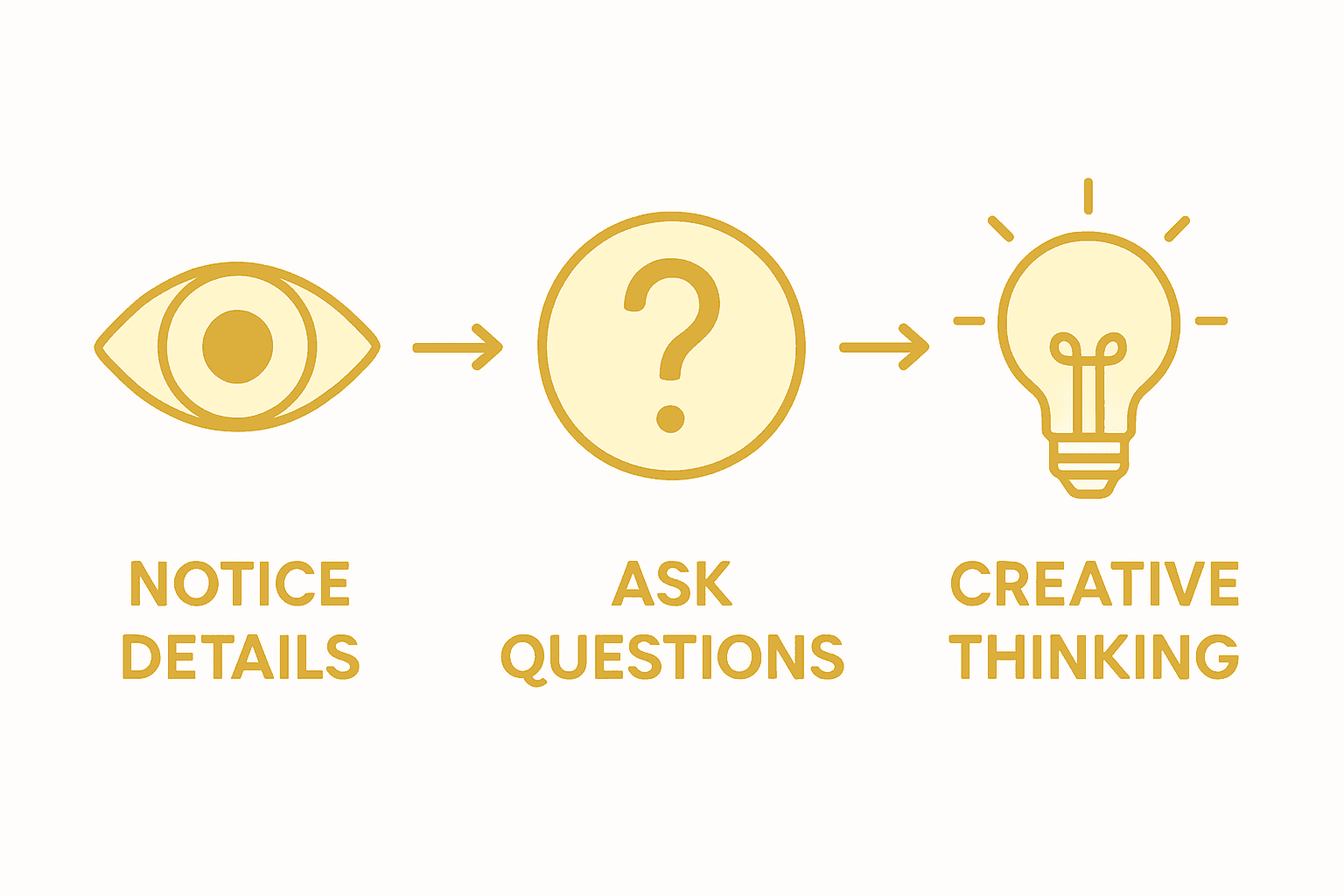
Practical observation skill development requires consistent encouragement and engaging opportunities for exploration. Parents can support this by creating environments that stimulate curiosity, providing tools like magnifying glasses, encouraging detailed conversations about what children see, and modelling careful, attentive exploration of the world around them.
Pro Tip: Observation Adventure: Create a weekly “discovery walk” where your child brings a small notebook and draws or writes about three new things they notice in nature, developing their observational muscles through structured, playful exploration.
The following table summarises the key impacts of developing strong observation skills in children:
| Key Skill Developed | Cognitive Impact | Long-Term Benefit |
|---|---|---|
| Pattern Recognition | Boosts analytical thinking | Supports science learning |
| Sensory Awareness | Integrates multisensory information | Fosters holistic understanding |
| Question Generation | Encourages scientific curiosity | Promotes lifelong learning |
| Patience and Focus | Builds sustained attention span | Enhances future academic success |
Nature-Based Observation Techniques
Nature-based observation represents a powerful approach to helping children develop keen sensory awareness and deep environmental understanding. By transforming ordinary outdoor experiences into structured learning opportunities, parents can guide children towards more intentional and meaningful interactions with their natural surroundings.
Research from Science Direct demonstrates that engaging children in specific observation techniques, such as documenting ‘good things’ noticed in nature, significantly enhances their connection to the environment. This method encourages detailed attention to natural elements, fostering appreciation and understanding of biodiversity while simultaneously developing critical observational skills.
Technology can also play a supportive role in nature-based observation. Innovative mobile applications like NatureCollections offer structured opportunities for tweens to explore outdoor environments, promoting family bonding and systematic exploration. These digital tools can help children track their discoveries, record interesting observations, and maintain a sense of curiosity about the natural world around them.
Effective nature-based observation techniques often involve sensory-rich activities that encourage children to engage multiple senses. Strategies like nature journaling, wildlife sketching, sound mapping, and texture collecting can transform a simple walk into an immersive learning experience. By providing children with specific frameworks for observation, parents can help them move beyond casual looking to intentional seeing.
Pro Tip: Sensory Nature Safari: Create a family “nature detective” challenge where each member uses a different sense (sight, sound, touch) to explore and document unique natural discoveries during outdoor adventures.
To better understand practical observation techniques, here is a comparison of different approaches that parents can use:
| Technique | Sensory Focus | Example Activity | Unique Benefit |
|---|---|---|---|
| Nature Journaling | Visual & tactile | Drawing local plants | Enhances detail retention |
| Sound Mapping | Auditory | Charting garden noises | Improves listening accuracy |
| Texture Collecting | Touch | Gathering leaf samples | Develops tactile discernment |
| Descriptive Conversation | Language & visual | Discussing meal colours | Expands vocabulary usage |
Games and Sensory Activities To Practice
Observation games transform learning into an exciting, interactive experience that captures children’s natural curiosity and drives their desire to explore and understand the world around them. By carefully designing playful activities, parents can help children develop keen sensory awareness and sophisticated observational skills that extend far beyond simple looking.
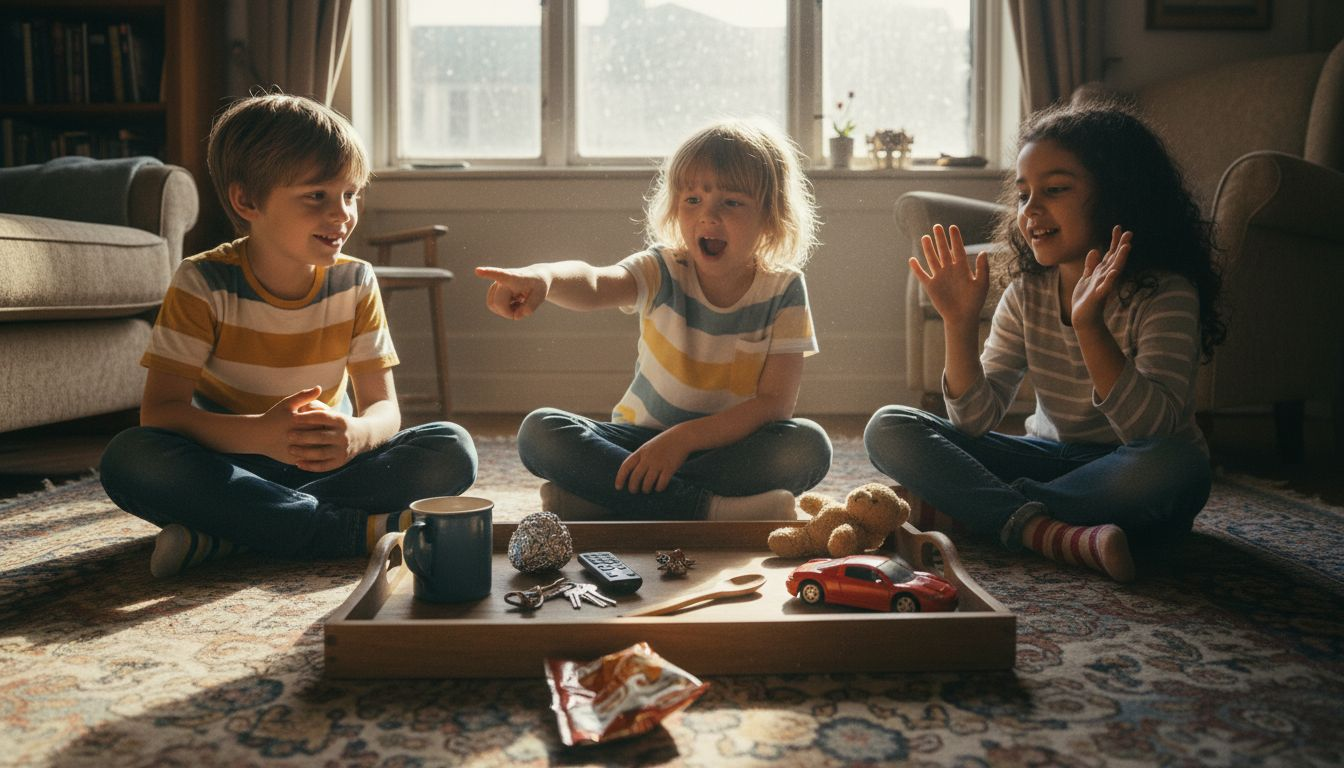
Play-based learning activities support the development of observation skills by enhancing problem-solving abilities, language comprehension, and social interactions. Children learn most effectively when engagement feels like play rather than structured instruction. This approach allows them to naturally absorb complex cognitive skills while experiencing genuine enjoyment.
Observational learning techniques provide powerful frameworks for skill development. Children learn by watching and carefully imitating others, which means parents and caregivers can model detailed observation through intentional demonstrations. Activities like “I Spy” games, nature scavenger hunts, and memory matching challenges create structured opportunities for children to practice distinguishing subtle differences, remembering intricate details, and developing systematic exploration strategies.
Sensory activities that engage multiple perceptual channels prove particularly effective for observation skill development. These might include blindfolded touch identification games, sound mapping exercises, texture collection challenges, or detailed drawing activities that require close environmental examination. Such multisensory approaches help children build comprehensive observation skills that integrate visual, auditory, and tactile information processing.
Pro Tip: Sensory Detective Challenge: Create a weekly family observation game where each member takes turns designing a sensory exploration challenge, encouraging creativity, keen perception, and playful learning.
Everyday Routines That Build Observation
Everyday observation transforms mundane moments into extraordinary learning opportunities, turning routine activities into powerful developmental experiences for children. Parents can seamlessly integrate observation skill-building into daily life, helping children develop a natural curiosity about their surrounding world without requiring extensive preparation or specialised equipment.
Observational assessment techniques highlight the importance of incorporating observation into routine interactions. Mealtime, playtime, and household chores present unique chances to encourage children’s detailed perception and analytical thinking. Simple activities like describing dinner ingredients, noticing changes in garden plants, or carefully sorting laundry can become engaging sensory exploration opportunities.
Consistent, low-pressure observation practices help children develop sophisticated perceptual skills. During cooking, invite children to describe ingredient textures, colours, and transformations. While walking outdoors, encourage them to count different types of leaves, identify bird sounds, or notice subtle environmental changes. Cleaning and organising tasks can become observation games where children categorise objects by size, colour, or function, turning potentially boring activities into exciting cognitive challenges.
Technology and digital tools can supplement these everyday observation techniques, but should not replace direct sensory experiences. Parents can use simple tools like magnifying glasses, sketchbooks, or smartphone cameras to document and discuss interesting observations, creating a family culture that values careful, intentional perception of the world.
Pro Tip: Observation Journal: Create a family observation notebook where each member records one interesting detail they noticed each day, transforming mindful seeing into a shared, collaborative experience.
Supporting Curious, Patient Observation
Patient observation represents a sophisticated skill that requires intentional nurturing and supportive guidance from parents and caregivers. Children naturally possess curiosity, but transforming that raw enthusiasm into structured, thoughtful observation demands careful cultivation of their innate investigative instincts.
Interactive observation systems demonstrate how children can develop deeper environmental connections during routine activities. By creating engaging contexts that reward careful, sustained attention, parents can help children understand that observation is not about speed, but about depth of understanding. This approach transforms potentially mundane moments into opportunities for profound learning and discovery.
The EXPLORA methodology highlights the importance of establishing a collaborative learning relationship that treats children as co-explorers rather than passive recipients of information. This approach encourages patience by positioning observation as a mutual journey of discovery, where adults learn alongside children and validate their natural investigative impulses. Strategies might include asking open-ended questions, demonstrating genuine curiosity, and creating low-pressure environments that celebrate careful, detailed exploration.
Supporting patient observation requires managing expectations and creating safe spaces for children to explore without judgment. This means resisting the urge to rush children’s investigative processes, allowing them time to examine objects, ask questions, and develop their own understanding. Parents can model patient observation by demonstrating their own careful, thoughtful exploration of the world, showing that curiosity is a lifelong adventure of continuous learning.
Pro Tip: Curiosity Celebration: Establish a weekly family ritual where each member shares one interesting observation they made, transforming patient observation into a celebrated, collaborative experience.
Spark Your Child’s Natural Curiosity With The Zoofamily
Developing strong observation skills requires tools that engage children’s senses and ignite their curiosity to explore the world deeply and patiently. The article highlights how critical patient observation and sensory-rich activities are in building this foundation. At The Zoofamily, we understand that kids need more than passive learning – they need interactive experiences that connect them with nature and inspire wonder. Our specially designed kids’ cameras, walkie-talkies, and binoculars feature animal references meant to captivate young minds while encouraging detailed and intentional exploration.
Turn nature walks and everyday moments into unforgettable observational adventures. By choosing products from The Zoofamily, you support a vision where every purchase helps restore natural beauty through tree planting and empowers your child to develop lifelong curiosity. Discover how our gear can transform simple play into sophisticated observation practice and make meaningful connections to the planet today. Visit The Zoofamily and start your child’s journey of discovery now.
Frequently Asked Questions
What are observation skills in children?
Observation skills in children refer to their ability to perceive, notice, and analyse details in their environment through focused attention. These skills involve actively engaging with the world and processing sensory information.
How can parents help develop their child’s observation skills?
Parents can foster observation skills by creating stimulating environments, providing tools like magnifying glasses, encouraging detailed conversations about what they see, and modelling careful exploration of their surroundings.
What are some activities to improve children’s observation skills?
Activities include nature journaling, scavenger hunts, sensory exploration challenges, and using games like “I Spy” to engage their senses and encourage detailed observation of their environment.
Why is curiosity important for developing observation skills?
Curiosity drives children to explore their surroundings more thoroughly. By nurturing this curiosity, parents can guide children to ask meaningful questions, notice details, and develop a deeper understanding of the world around them.