

There are 3.04 trillion trees on Earth. A typical mature tree absorbs around 22 kg of CO2 per year. The world’s oldest known living tree, Methuselah, is over 4,800 years old. The tallest tree ever measured, a coast redwood named Hyperion, stands at over 115 metres. These are the facts children remember, repeat, and ask questions about.
Here are the most shareable fun facts about trees, ready to use with children, classrooms, and curious adults:
- Trees talk to each other underground through fungal networks called the Wood Wide Web.
- Autumn leaf colours are hidden inside leaves all summer long.
- Some trees were grown from seeds that travelled to the Moon.
- Over half of all tree species exist in only one country on Earth.
- 15 billion trees are cut down every year, but only around 1.9 billion are planted.
- Coast redwoods can grow taller than 300 feet yet have roots only about 6 feet deep.
- The English oak supports more wildlife than almost any other native UK tree.
Quick summary: trees hold climate records in their rings, feed each other through underground fungi, support thousands of species, and have been to space. The facts below are grouped by theme so you can pick the ones that suit your audience.
Table of Contents
- 1. Fun facts about trees: the full list by theme
- 2. How tree rings, leaf colour, and the Wood Wide Web actually work
- 3. Why these facts matter: climate, wildlife, and wellbeing
- 4. Quick activities and lesson prompts using these facts
- 5. Common myths about trees, corrected
- 6. Research notes for teachers and curious adults
- Key takeaways
- Why trees deserve more than a passing mention
- Thezoofamily: helping children explore the natural world
- Useful sources and further reading
1. Fun facts about trees: the full list by theme
Science and behaviour
1. Trees share food underground. Beneath a forest floor, fungi connect tree roots in a network researchers call the Wood Wide Web. Trees pass sugars and nutrients through these threads. A large “mother tree” can support dozens of younger trees this way.
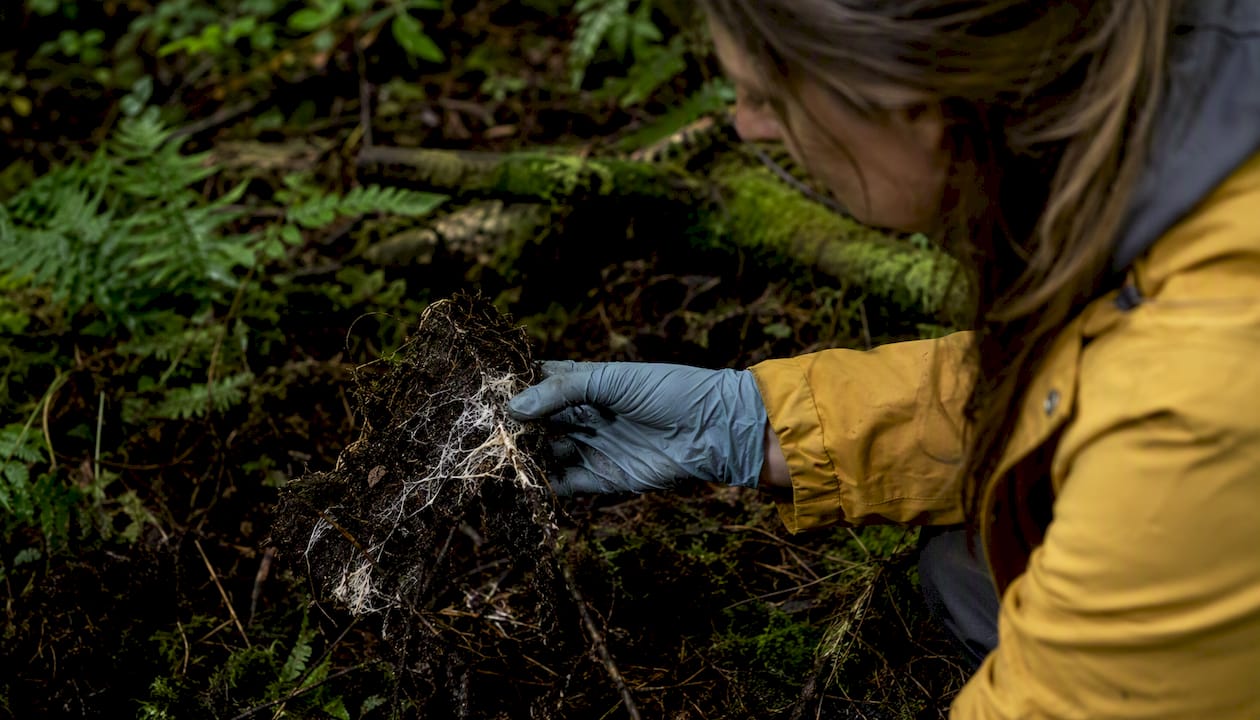
2. Older trees feed younger ones. Mother trees use mycorrhizal connections to send extra sugars to shaded seedlings that cannot yet make enough food themselves. It is a form of directed support, not random sharing.
3. Trees send warning signals. When insects attack, some trees release chemical signals through the fungal network. Neighbouring trees can respond by producing defensive compounds before the insects arrive.
4. Autumn colours were there all along. Red, orange, and yellow pigments exist inside leaves throughout the growing season. Chlorophyll, which is green, simply masks them. When daylight shortens in autumn, chlorophyll production stops and the hidden colours become visible.
5. Tree rings record history. Each ring in a tree’s trunk represents one year of growth. Wider rings mean good growing conditions; narrow ones suggest drought or cold. Scientists use this to reconstruct past climate events going back thousands of years.
Ask a child: “If a tree has 50 rings, how old is it?”
Records and extremes
6. The tallest tree is a coast redwood. Hyperion, a coast redwood in California, is the tallest measured living tree at over 115 metres. That is taller than the dome of St Paul’s Cathedral in London.
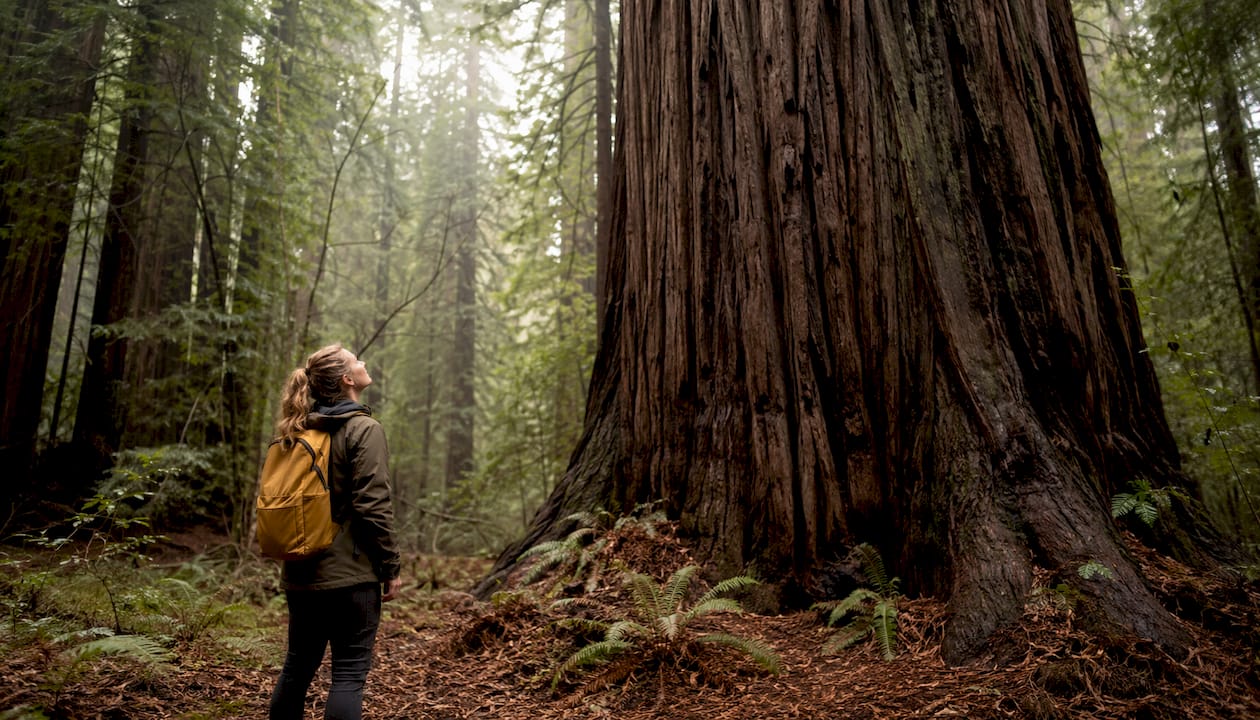
7. Tall trees have surprisingly shallow roots. Coast redwoods can exceed 300 feet in height yet their roots only go about 6 feet deep. They stay upright because their roots spread wide and interlock with the roots of neighbouring trees.
8. The oldest tree is over 4,800 years old. Methuselah, a bristlecone pine in California, is the oldest known living tree. It was already ancient when the Egyptian pyramids were being built.
9. Some trees are a single organism covering acres. Pando, a quaking aspen grove in Utah, is considered one single organism connected by a shared root system. It covers over 40 hectares and is estimated to weigh around 6 million kilograms.
10. Trees have been to the Moon. During the Apollo 14 mission, astronaut Stuart Roosa carried hundreds of tree seeds into lunar orbit. Those seeds were germinated back on Earth and planted across the United States as “moon trees.” Several are still growing today.
Ask a child: “Which is older, Methuselah or the pyramids?”
Nature and wildlife
11. Over half of all tree species grow in just one country. More than 50% of tree species are found nowhere else in the world outside their home country. This makes local conservation extremely important.
12. The English oak supports extraordinary biodiversity. A single mature English oak can support hundreds of species of insects, birds, and lichens. It is one of the most wildlife-rich trees in the UK.
13. Dead trees are still vital. A standing dead tree, called a snag, provides nesting sites for owls, bats, and woodpeckers. Fallen logs support beetles, fungi, and mosses. A dead tree is not wasted.
14. Trees cool cities. Tree canopy shades pavements and buildings, reducing surface temperatures. The US Environmental Protection Agency notes that urban trees and vegetation help reduce heat islands, lowering energy use in summer.
Human uses and culture
15. Trees produce the oxygen you breathe. A mature tree produces enough oxygen each day to support two people. Forests collectively process billions of tonnes of CO2 annually, though the exact figure varies by species, age, and forest health.
16. Wood is still the world’s most used building material. Timber has been used in construction for thousands of years and remains central to modern building. Cross-laminated timber is now used in multi-storey buildings as a lower-carbon alternative to concrete and steel.
17. Trees reduce noise. A belt of trees between a road and a home can reduce traffic noise noticeably. Leaves, branches, and trunks absorb and scatter sound waves.
18. Spending time near trees improves wellbeing. Research published in studies cited by the Greater Good Science Center at Berkeley links time spent near trees and in green spaces to lower stress levels and improved mood.
Pro Tip: When sharing these facts with children, pick one from each theme. A science fact, a record, and a wildlife fact together make a more memorable set than ten facts from the same category.
2. How tree rings, leaf colour, and the Wood Wide Web actually work
Tree rings: a natural calendar
Each year, a tree grows a new layer of wood just beneath its bark. In spring and early summer, growth is fast and the wood is lighter in colour. In late summer, growth slows and the wood darkens. Together, these two layers form one visible ring. Count the rings and you know the tree’s age.
Ring width tells you more than age. A wide ring means a good year with plenty of water and warmth. A narrow ring points to drought, cold, or damage. Scientists who study this, a field called dendrochronology, can use tree rings as climate records going back centuries, identifying volcanic eruptions, droughts, and cold snaps from the pattern alone.
- Tree rings can reveal droughts that happened before written records began.
- Ring density, not just width, can indicate volcanic cooling events.
- Ancient timber in old buildings can be dated precisely using ring patterns.
Why leaves change colour in autumn
Leaves are green because of chlorophyll, the pigment that captures sunlight for photosynthesis. Red, orange, and yellow pigments are present in the leaf all season but are overpowered by the green. As days shorten in autumn, the tree stops producing chlorophyll. The green fades, and the other colours become visible. The colours were always there.
The Wood Wide Web
Tree roots connect to fungi in a relationship called mycorrhizal symbiosis. The fungi extend far beyond the roots, reaching water and nutrients the roots cannot access alone. In return, the tree feeds the fungi with sugars. Across a forest, these fungal threads link many trees into a shared network. Research summarised by EarthDay.org confirms that this network can transmit nutrients and even chemical warning signals between trees.
- Fungi help trees access phosphorus and water from soil the roots cannot reach.
- Trees can send distress signals through the network when under attack.
- Mother trees direct extra nutrients to younger, shaded seedlings through these connections.
3. Why these facts matter: climate, wildlife, and wellbeing
Trees matter for three clear reasons: they capture carbon, support biodiversity, and improve human health. Each of these is backed by measurable evidence.
A typical mature tree absorbs around 22 kg of CO2 per year. That figure matters because it highlights the difference between a mature tree and a newly planted sapling. A sapling absorbs very little carbon in its first years. Mature trees, particularly large native species, do the heavy lifting. Planting trees is valuable, but protecting existing mature trees is more immediately effective for carbon capture.
| Fact | Figure |
|---|---|
| Estimated trees on Earth | 3.04 trillion |
| Trees cut down per year | 15 billion |
| Trees planted per year | 1.9 billion (UNEP estimate) |
| CO2 absorbed by a mature tree per year | ~22 kg |
The gap between the number of trees felled and the fewer trees planted each year is the clearest single fact for explaining deforestation to children or in a classroom discussion.
For UK readers, the English oak is a useful local example. A single mature oak can support hundreds of insect species, which in turn feed birds and bats. Remove the tree and you remove an entire food chain. The benefits of tree planting for families extend well beyond carbon: habitat, shade, noise reduction, and direct contact with nature all contribute to children’s development.
- Mature trees provide more carbon storage, more habitat, and more shade than young saplings.
- Over 50% of tree species exist in only one country, making local loss permanent at a global scale.
- Time spent near trees is linked to measurable reductions in stress and improved mood.
Forests are often described as the “lungs of the planet.” That description is broadly accurate but requires one qualification: absorption estimates vary considerably depending on species, tree age, and forest health. Old-growth forests store far more carbon than young plantations.
4. Quick activities and lesson prompts using these facts
These activities are designed for primary and early secondary classrooms, or family use outdoors. Each takes 15–30 minutes and needs minimal materials.
1. Tree ring counting exercise Objective: Understand how scientists calculate a tree’s age. Materials: A cross-section of a log (available from a timber yard or garden centre), a magnifying glass, pencil. Activity: Count the rings from the centre outward. Estimate the year the tree was planted. Discuss what was happening in history that year. Safety note: Supervise younger children with the magnifying glass in sunlight.
2. Leaf rubbing and pigment hunt Objective: Observe leaf structure and discuss autumn colour change. Materials: Paper, wax crayons, leaves from different trees. Activity: Place a leaf under paper and rub a crayon over it to reveal the veins. Collect leaves of different colours in autumn and discuss why the colours differ.
3. Wood Wide Web role-play Objective: Model how trees share resources through fungal networks. Materials: String or wool, labels (tree names), small bags of dried pasta or counters (representing nutrients). Activity: Each child is a tree. Connect them with string (the fungi). Pass counters along the network from the “mother tree” to the youngest or smallest child.
Pro Tip: For the Wood Wide Web role-play, give the “mother tree” child the most counters to start. This makes the directed support to smaller trees feel concrete rather than abstract.
4. Nature scavenger hunt: tree edition Objective: Identify local tree species and observe wildlife. Materials: A printed checklist, pencils, a nature scavenger hunt guide. Activity: List items to find: a leaf with five points, a seed pod, bark with a pattern, evidence of an insect. Award points for each find.
5. Noise reduction experiment Objective: Test whether trees reduce sound. Materials: A sound-level app on a phone, a quiet outdoor space with and without tree cover. Activity: Measure sound levels in an open area and then behind a row of trees or a hedge. Record the difference and discuss why it occurs.
6. Tree planting discussion prompt Objective: Connect facts to action. Prompt: “If 15 billion trees are cut down each year and only 1.9 billion are planted, what would need to change? What can one family do?” Extension: Research which UK charities plant trees and what species they choose.
7. Moon tree research project Objective: Connect space history to biology. Activity: Find out where the nearest moon tree is located using NASA’s records. Write a short paragraph about why those seeds were taken to the Moon and what happened to them. Classroom extension: Use tree-themed cutting files to create a display board showing the Apollo 14 mission route alongside the tree species used.
5. Common myths about trees, corrected
Myth: Autumn colours are created by cold weather. Fact: Cold temperatures can intensify colours, but the change is triggered by shorter days, not temperature alone. The pigments were already present in the leaf.
Myth: Trees always have deep taproots. Fact: Many large trees, including coast redwoods, have shallow roots that spread horizontally. Stability comes from width and interlocking with neighbours, not depth.
Myth: Planting trees immediately fixes carbon problems. Fact: Young trees absorb very little carbon. A mature tree absorbs around 22 kg of CO2 per year; a sapling absorbs a fraction of that. Protecting existing mature trees is more immediately effective than planting alone.
Myth: Trees are always carbon sinks. Fact: A diseased, dying, or recently felled tree releases stored carbon. Forests are net carbon sinks only when they are healthy and growing. Old-growth forests store far more carbon than young plantations.
Myth: All trees have the same lifespan. Fact: Lifespans vary enormously. Some willows live for decades; bristlecone pines can live for thousands of years. Species, soil, climate, and human activity all affect lifespan.
Myth: Leaves change colour because they are dying. Fact: The tree is actively withdrawing nutrients from the leaf before it drops. The colour change is part of a controlled process, not simple decay.
Myth: More trees always means more biodiversity. Fact: Species composition matters as much as quantity. A plantation of a single non-native species supports far fewer animals and insects than a mixed native woodland of the same size.
6. Research notes for teachers and curious adults
The scientific consensus is clear: forests are significant carbon stores, and tree networks are functional biological systems, not metaphors. Two fields of research underpin most of what appears in this article.
Dendrochronology is the study of tree rings as climate proxies. Scientists cross-reference ring patterns from living trees, ancient timber, and preserved wood to build continuous records stretching back thousands of years. NASA’s climate research team has published accessible summaries of how tree rings provide climate snapshots useful for classroom reference.
Mycorrhizal network research has grown substantially since the 1990s. Studies published in peer-reviewed journals, including work accessible via PubMed, confirm that fungal networks facilitate genuine nutrient transfer between trees. The term “Wood Wide Web” is a popular label for a real phenomenon.
Carbon accounting at landscape scale is more complex. Absorption figures vary by species, age, soil type, and forest management. The CPRE and forest researchers note that forests collectively absorb billions of tonnes of CO2, but precise global figures are difficult to calculate.
Forests function as both climate regulators and biological communities. Understanding tree networks and carbon storage together gives children a more accurate picture of why forests matter than either fact alone.
Suggested further reading for classrooms:
- CPRE’s tree facts page: accessible, UK-focused, suitable for upper primary.
- NASA’s climate site: tree ring explainers with images, good for secondary.
- EarthDay.org’s mycorrhizal network summary: clear language, suitable for teachers.
- Greater Good Science Center at Berkeley: wellbeing and trees, useful for PSHE lessons.
- The reasons to plant trees resource from Thezoofamily: family-friendly and links to practical action.
Key takeaways
Trees are most valuable when mature: a typical mature tree absorbs around 22 kg of CO2 per year, far more than a newly planted sapling, and supports far greater biodiversity.
| Point | Details |
|---|---|
| Global tree count | There are an estimated 3.04 trillion trees on Earth, but 15 billion are cut down every year. |
| Mature trees matter most | A mature tree absorbs around 22 kg of CO2 per year; young saplings absorb far less. |
| Wood Wide Web is real | Mycorrhizal fungal networks genuinely transfer nutrients and signals between trees. |
| Autumn colours are hidden | Red and yellow pigments exist in leaves all summer; they appear only when chlorophyll fades. |
| Thezoofamily plants trees | For every kids’ camera sold, Thezoofamily plants one tree, connecting product use to real conservation. |
Why trees deserve more than a passing mention
There is a tendency in education to treat trees as background scenery. They appear in worksheets about photosynthesis and then disappear. The research in this article suggests that is a missed opportunity.
The Wood Wide Web is not a charming metaphor. It is a functional biological infrastructure that challenges the idea of trees as isolated, passive organisms. Mother trees actively direct resources to younger trees. Forests have something closer to a collective response to stress than most people realise. Teaching children this changes how they see a walk in the woods.
The carbon numbers are also worth sitting with. Fifteen billion trees cut down each year against 1.9 billion planted is not a gap that planting campaigns alone will close. The implication for conservation education is direct: protecting what already exists matters as much as growing new trees. A child who understands that a 200-year-old oak is irreplaceable in the short term is better equipped to think about land use than one who simply knows “trees are good.”
The wellbeing evidence adds a practical dimension. Time near trees is linked to lower stress and improved mood. That is a reason to take children outside, not just a fact to memorise.
Thezoofamily: helping children explore the natural world
Thezoofamily makes kids’ cameras, binoculars, and walkie-talkies designed to get children looking closely at the world around them. A child with a pair of binoculars in a woodland is not just playing. They are observing bark texture, spotting birds in the canopy, and noticing things they would otherwise walk past.

For every camera sold, Thezoofamily plants one tree. That commitment links each product directly to the conservation facts in this article. If you are looking for a practical way to connect a child to nature beyond the classroom, the Thezoofamily range is a good place to start. Browse the full collection and find the right tool for your child’s next outdoor adventure.
Useful sources and further reading
These sources are suitable for classroom reference, family reading, and school worksheets. Each is freely accessible online.
-
CPRE: Tree time, 20 facts about trees — UK-focused, concise, and suitable for upper primary handouts. Covers global tree counts, CO2 figures, and deforestation data.
-
NASA Climate: Tree rings provide snapshots of Earth’s past climate — Clear explanation of dendrochronology with images. Good for secondary science lessons.
-
EarthDay.org: 6 surprising facts about trees — Accessible summary of mycorrhizal networks. Suitable for teachers preparing a Wood Wide Web lesson.
-
NASA NSSDC: Moon trees — Primary source for the Apollo 14 moon tree story. Includes species list and planting locations. Good for a history-science crossover lesson.
-
Greater Good Science Center, Berkeley: Why trees can make you happier — Summarises wellbeing research in plain language. Useful for PSHE or outdoor learning discussions.
-
EPA: What are heat islands? — Explains how urban trees reduce surface temperatures. Relevant for geography and climate lessons.
-
Thezoofamily: Understanding the benefits of tree planting — Family-friendly overview of why planting trees matters, with links to practical next steps.
To reference facts from this article in a school worksheet, cite the original source listed above for each figure. The CPRE page is the most suitable single source for UK classroom use.