

Choosing a pair of binoculars might sound as simple as picking your favourite colour, but the differences between models are massive. One surprising detail is that compact binoculars usually have lenses just 25-32mm wide while full-sized versions can go up to 50mm, changing everything about your view. Yet the secret is that a higher price or larger lens is not always the answer. Finding binoculars that fit your personal needs makes a far bigger difference than just chasing specs.
Table of Contents
- Step 1: Determine Your Binocular Needs
- Step 2: Research Binocular Features
- Step 3: Compare Different Models
- Step 4: Test Binocular Performance
- Step 5: Make Your Purchase
Quick Summary
| Key Point | Explanation |
|---|---|
| 1. Identify your binocular needs first | Understanding your primary use case narrows down options for better selection aligned with activities like birdwatching or sports. |
| 2. Research optical specifications thoroughly | Learn about magnification, lens diameter, and field of view to make an informed choice that meets your specific viewing needs. |
| 3. Compare various models systematically | Create a personal scoring system to rank features according to your priorities, improving decision-making during selection. |
| 4. Test performance in real environments | Evaluate clarity, focus mechanism, and ergonomics across different lighting to ensure chosen binoculars perform well in intended use cases. |
| 5. Pay attention to warranty and return policies | Carefully review warranty terms and purchase from reputable sellers to ensure long-term support and protection for your investment. |
Step 1: Determine Your Binocular Needs
Determining your specific binocular needs represents the foundational step in selecting the perfect pair for your adventures. Binoculars are not a one-size-fits-all tool, and understanding your intended use will dramatically narrow your selection process and ensure you invest in equipment perfectly matched to your requirements.
Understanding Your Primary Use Case
Every pair of binoculars has unique strengths designed for specific activities. Wildlife enthusiasts require different specifications compared to sports spectators or stargazers. Consider your primary activity carefully. Are you planning birdwatching in dense woodland? Tracking your children’s outdoor sports? Observing distant maritime scenes? Each scenario demands distinct optical characteristics.
For parents seeking binoculars as a potential educational tool or outdoor activity accessory, evaluating weight, durability, and magnification becomes crucial. Lightweight models with robust construction work best for younger users. Look for binoculars that can withstand occasional drops or rough handling, especially if children will be using them.
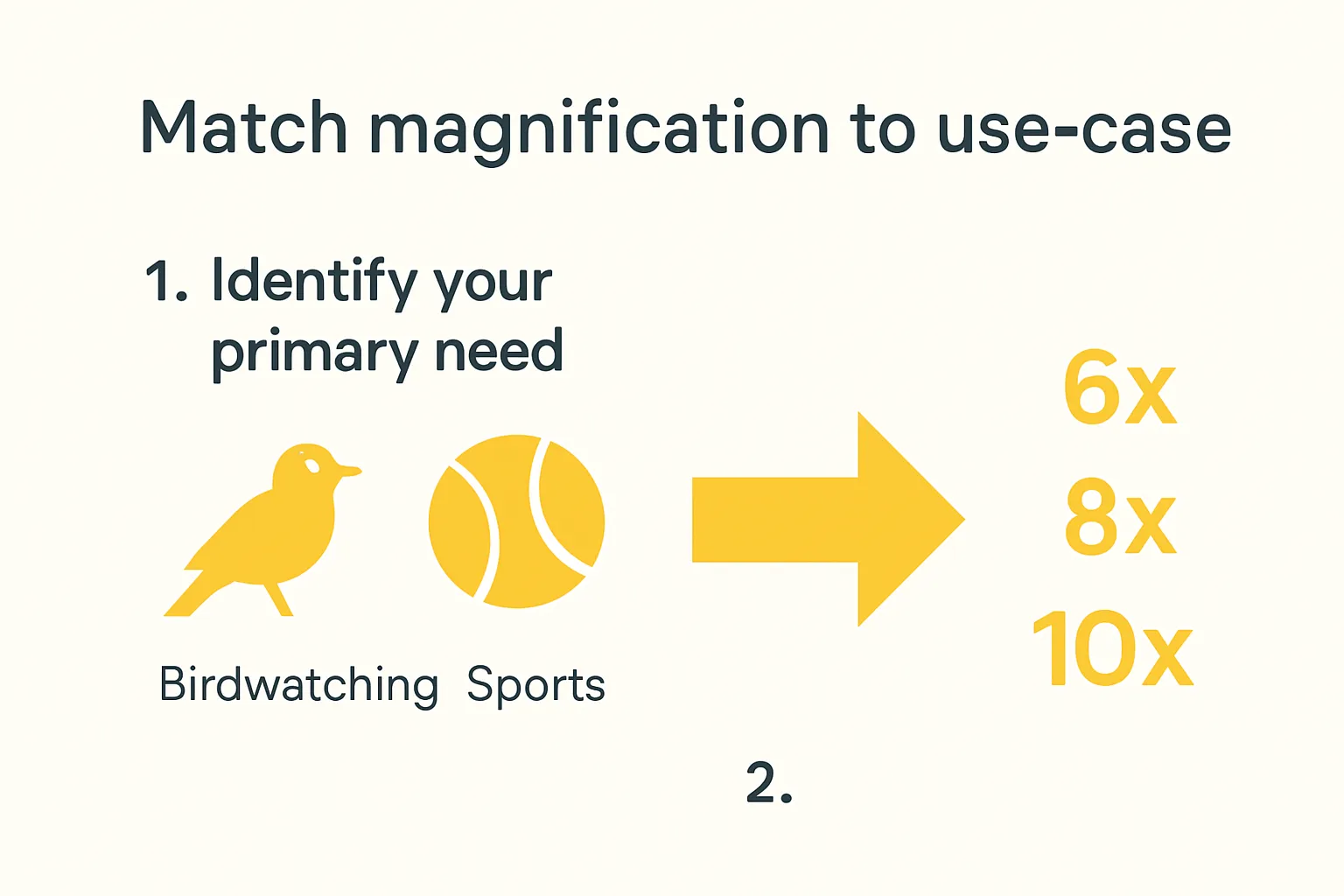
Magnification ranges typically start around 6x and extend to 10x for general use. Lower magnifications like 6x or 7x provide wider fields of view and steadier images, which are excellent for beginners or younger users. Higher magnifications such as 8x or 10x offer more detailed views but require more stable handling. As a general rule, choose magnification between 6x and 8x for most recreational activities.
Additional considerations include lens diameter, which affects light gathering capabilities. Larger objective lenses (around 32mm to 42mm) provide brighter images in varied lighting conditions. For younger users or casual observers, a compact 25mm lens might suffice, while serious enthusiasts might prefer larger 42mm lenses for enhanced visual clarity.
Below is a table comparing binocular sizes and their typical specifications to help you match the right model to your usage and preferences.
| Binocular Size | Lens Diameter (mm) | Typical Weight (g) | Best For | Light Gathering |
|---|---|---|---|---|
| Compact | 25-32 | 200-500 | Travel, casual use, children | Lower |
| Mid-Sized | 32-42 | 500-800 | Birdwatching, general outdoor use | Good balance |
| Full-Sized | 42-50 | 700-1000+ | Stargazing, wildlife, low light | Excellent |
Budget plays another significant role in your selection process. Entry-level binoculars range from £50 to £200, offering reasonable quality for casual users. Mid-range options between £200 and £500 provide superior optical performance, while professional-grade equipment can exceed £1000. As a beginner, focus on finding a balanced option that meets your specific needs without overwhelming your budget.
By carefully assessing your intended use, user experience level, and budgetary constraints, you’ll be well-positioned to select binoculars that transform your outdoor experiences. Remember, the perfect pair is not about having the most expensive equipment, but about finding the right tool that matches your unique requirements.
Step 2: Research Binocular Features
Researching binocular features transforms your purchasing journey from guesswork to informed decision making. This critical step helps you understand the technical specifications that ultimately determine your optical experience, ensuring you select equipment perfectly suited to your needs.
Understanding Core Optical Specifications
Magnification represents the fundamental starting point of your research. When you see a specification like 8x42, the first number (8x) indicates how many times larger an image appears compared to naked eye observation. Lower magnifications such as 6x provide wider viewing angles and steadier images, while higher magnifications like 10x offer more detailed views but can be challenging to keep stable without additional support.
Lens diameter plays an equally significant role in your binocular performance. The second number in specifications (42 in 8x42) represents millimetres of objective lens width. Larger lenses gather more light, producing brighter and clearer images, especially during low-light conditions like early morning or evening wildlife watching. Compact binoculars typically range between 25-32mm, while full-sized models extend to 42-50mm, offering enhanced visual clarity.
Field of view becomes another crucial consideration. This measurement indicates how wide an area you can observe at a specific distance. Wider fields of view make tracking moving objects easier, which proves particularly useful when observing wildlife, sports events, or children playing. Professional models often provide detailed field of view measurements printed on packaging or specification sheets.
Optical coatings represent a nuanced but important feature many beginners overlook. Multi-coated lenses reduce light reflection and improve image brightness, contrast, and colour accuracy. These coatings can significantly enhance your viewing experience, particularly in challenging lighting environments. Some premium binoculars feature advanced coatings that minimize glare and improve light transmission.
Weight and ergonomics matter substantially, especially for parents considering binoculars for family activities. Lightweight models between 500-700 grams provide comfortable handling without causing arm fatigue. Look for rubberized exterior grips that offer secure handling, particularly important when children might be using the equipment.
As recommended by National Wildlife Federation, always physically handle binoculars before purchasing. This hands-on approach allows you to assess comfort, weight distribution, and ease of focus adjustment. Some sporting goods stores and outdoor equipment retailers offer trial stations where you can test different models, providing invaluable practical insights into their real-world performance.
Step 3: Compare Different Models
Comparing different binocular models transforms your research into a strategic selection process. This crucial step helps you evaluate multiple options systematically, ensuring you find the perfect optical companion for your specific needs and preferences.
Systematic Comparison Approach
Start by creating a comprehensive comparison framework that goes beyond basic specifications. Develop a personal scoring system that weights features according to your individual priorities. Consider categories like optical performance, durability, weight, close focus distance, and price. Assign numerical scores to each category, allowing you to objectively rank potential models.
Price ranges provide an essential initial filtering mechanism. Entry-level binoculars typically fall between £50 and £200, offering basic functionality for casual users. Mid-range models between £200 and £500 provide superior optical quality and more robust construction. Professional-grade equipment can exceed £1000, featuring exceptional optical engineering and specialized components.
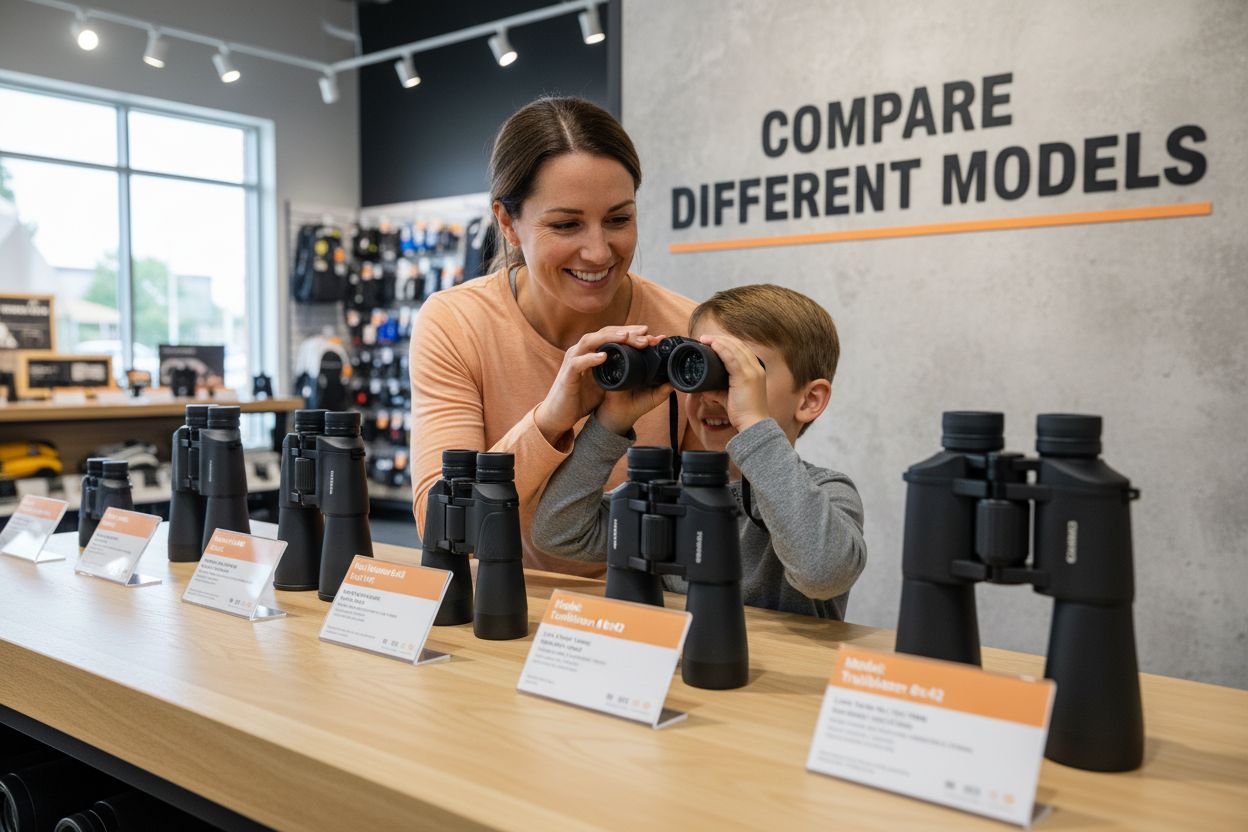
Physical handling remains critically important during model comparisons. Visit sporting goods stores, outdoor equipment retailers, or photography shops that allow hands-on testing. Pay attention to how each model feels in your hands. Consider factors like weight distribution, grip comfort, and ease of focusing mechanism. Some models feature smoother focus wheels or more ergonomic designs that significantly enhance user experience.
Optical performance demands careful evaluation. Compare models side-by-side in different lighting conditions if possible. Check how each pair handles colour reproduction, clarity, and light transmission. Look for models with multi-coated lenses, which reduce glare and improve image brightness. Some stores have demonstration areas where you can compare models directly, simulating real-world viewing scenarios.
As recommended by Outdoor Gear Lab, creating a shortlist of 3-5 models that meet your core requirements helps streamline decision making. Consider creating a comparison chart listing key specifications, prices, and your personal scoring for each model. This visual approach allows you to quickly identify strengths and weaknesses across different options.
Additional comparison factors include warranty coverage, brand reputation, and potential accessory compatibility. Some manufacturers offer comprehensive warranties covering accidental damage, while others provide more limited protection. Research customer support reputation and availability of replacement parts, especially if you anticipate frequent usage or potential rough handling.
Remember that the cheapest or most expensive option is not always the best. Your ideal binoculars strike a perfect balance between performance, comfort, and budget. By methodically comparing models and maintaining a structured evaluation approach, you’ll confidently select binoculars that transform your outdoor viewing experiences.
Step 4: Test Binocular Performance
Testing binocular performance represents the pivotal moment where theoretical research transforms into practical understanding. This step allows you to evaluate how potential binoculars actually perform in real-world conditions, moving beyond specifications to genuine user experience.
Comprehensive Performance Evaluation
Begin your performance testing by assessing optical clarity across different environments. Prioritize testing in varied lighting conditions, from bright midday sunlight to softer dawn and dusk illumination. Pay close attention to how different models handle colour reproduction, edge sharpness, and contrast. Look for binoculars that maintain image clarity and colour accuracy without significant distortion, especially near the edges of your viewing field.
Focus mechanism represents another critical testing area. Examine how smoothly and precisely you can adjust focus, noting how quickly you can shift between near and distant objects. A high-quality focus wheel should move effortlessly, requiring minimal hand movement. For parents or users with potentially limited hand strength, this becomes particularly important. Test how quickly you can bring objects into sharp focus and how stable the image remains during adjustment.
Ergonomic performance matters substantially during extended use. Simulate realistic viewing scenarios by holding binoculars for extended periods. Check for hand fatigue, grip comfort, and weight distribution. Some models feature textured rubber coating that provides better grip, especially in outdoor environments where moisture or slight perspiration might make handling challenging. Consider how the binoculars feel when wearing gloves or in slightly damp conditions.
Close focus capability becomes crucial for those interested in observing nearby wildlife or detailed landscape features. Test how close you can bring objects into sharp focus. Some high-quality binoculars allow clear viewing of objects just a few metres away, which proves invaluable for birdwatchers, nature enthusiasts, or parents tracking children’s outdoor activities.
As recommended by National Audubon Society, conduct field tests that mimic your intended usage. If you plan to use binoculars for birdwatching, visit a local park or nature reserve. For sports enthusiasts, try viewing distant playing fields. Parents might want to test tracking moving children during outdoor activities. Each scenario reveals unique performance characteristics that specifications alone cannot communicate.
Additional performance tests should include assessing low-light performance, checking for chromatic aberration (colour fringing around object edges), and evaluating depth of field. Some sporting goods stores or outdoor equipment retailers offer demonstration areas where you can conduct these detailed assessments. Do not hesitate to request extended testing periods or seek expert guidance during your evaluation.
Remember that perfect performance is subjective. Your ideal binoculars should feel like a natural extension of your vision, providing clear, comfortable viewing that enhances rather than complicates your outdoor experiences.
Step 5: Make Your Purchase
Making your final binocular purchase represents the culmination of your careful research and testing process. This step transforms your preparation into a strategic acquisition that matches your specific needs and budget while ensuring long-term satisfaction.
Strategic Purchasing Considerations
Timing your purchase strategically can unlock significant savings and additional value. Many outdoor equipment retailers offer seasonal promotions during autumn and winter months, when demand for outdoor gear tends to decrease. Watch for end-of-season sales, particularly around October and November, which can provide discounts ranging from 15% to 30% off standard retail prices.
Warranty coverage becomes a critical factor in your purchasing decision. Examine warranty terms meticulously, looking beyond standard manufacturer guarantees. Some premium brands offer comprehensive protection covering accidental damage, optical defects, and extended repair services. Compare warranty lengths, with most reputable manufacturers providing 2-5 year coverage. For families or users anticipating frequent outdoor use, prioritize brands offering robust, multi-year warranties that demonstrate confidence in their product quality.
Purchase channels offer varying advantages. Physical retail stores provide immediate hands-on testing and potential expert advice, while online platforms frequently offer more competitive pricing and wider selection. Specialist outdoor equipment retailers often employ knowledgeable staff who can provide nuanced guidance tailored to your specific requirements. Consider a hybrid approach: test in-store, but potentially purchase online for better pricing.
Budget allocation requires careful consideration. While it might be tempting to select the least expensive option, investing slightly more can yield substantially better optical performance and durability. Aim for the best quality within your comfortable price range, recognizing that binoculars represent a long-term investment in your outdoor experiences. Mid-range models between £200 and £500 often provide an excellent balance of performance and value.
As recommended by Consumer Reports, always verify return policies and purchase from reputable retailers. Many stores offer 30-day return windows, allowing you to thoroughly test your binoculars in real-world conditions. Some retailers provide additional protection plans that extend beyond manufacturer warranties, offering peace of mind for your investment.
Consider accessory compatibility when making your final selection. Look for binoculars with standard mounting options for tripods, compatible neck straps, and protective cases. These additional considerations ensure your purchase remains versatile and protected. Some brands offer comprehensive starter kits that include essential accessories, potentially providing better overall value.
Final verification involves checking your purchased binoculars immediately upon receipt. Inspect for any manufacturing defects, test focus mechanisms, and ensure all components function smoothly. Most reputable retailers provide immediate replacement or refund if any issues are discovered during initial inspection. By approaching your purchase methodically, you transform a simple transaction into a carefully considered investment in your outdoor exploration and discovery.
The following table outlines the main steps of the binocular buying process, including the focus of each step and what you should aim to achieve before moving on.
| Step | Focus Area | Key Outcome |
|---|---|---|
| 1. Determine Your Needs | Usage scenario, user, budget | List of requirements matched to intended activities |
| 2. Research Features | Magnification, optics, ergonomics | Shortlist of suitable specification ranges |
| 3. Compare Models | Price, warranty, handling | Ranked shortlist based on comparison and personal scoring |
| 4. Test Performance | Real-world usability, optics | Confirmation of comfort, clarity, and practical fit |
| 5. Make Your Purchase | Warranty, return policy, accessories | Confident purchase with protection and supporting extras |
Ready to Choose Binoculars That Inspire Lifelong Curiosity?
You have just learned how the right pair of binoculars can completely change outdoor experiences for beginners and families alike. But finding equipment that is both durable and child-friendly, while truly sparking a passion for nature, can be overwhelming. Many parents worry about weight, comfort and the challenge of engaging children meaningfully. Our guide highlighted crucial points such as magnification, ergonomic design and real-world testing, all so you can invest with confidence – but where do you find binoculars made especially for young explorers?
Let The Zoofamily guide your next step. Discover our kids’ binoculars, thoughtfully crafted for small hands and curious minds, blending robust animal-inspired designs with features that encourage hands-on connection with nature. Every purchase helps restore our planet, as we plant a tree for every camera sold. Browse the The Zoofamily binoculars, and open a world of discovery for your family – start your adventure today and nurture a love for wildlife that will last a lifetime.
Frequently Asked Questions
What magnification should I choose for general use?
For most recreational activities, it is recommended to choose binoculars with magnification between 6x and 8x. These provide wider fields of view and steadier images, making them ideal for beginners.
How important is lens diameter when selecting binoculars?
Lens diameter significantly affects light-gathering capabilities. Larger objective lenses (around 32mm to 42mm) provide brighter images in various lighting conditions, while smaller lenses (25mm) may suffice for casual use.
What should I consider for binoculars intended for children?
When selecting binoculars for children, consider options that are lightweight, durable, and have lower magnifications (6x or 7x). These features make it easier for younger users to handle and enjoy their binoculars during outdoor activities.
How can I effectively compare different binocular models?
To compare binocular models, create a scoring system based on essential features such as optical performance, weight, durability, and price. Physical handling is also crucial, so aim to visit stores that allow you to test the binoculars in real-world conditions.