

Walk into any supermarket and you will find shelves full of bottles labelled “natural,” “green,” or “eco safe.” Most of them are none of those things. The rise of eco friendly house cleaners, or what the cleaning industry more formally calls environmentally preferable cleaning products, has been shadowed by aggressive greenwashing that leaves families genuinely confused about what is actually safe. If you have children crawling on your floors or pets napping on your sofas, that confusion has real consequences. This guide cuts through the noise so you can clean confidently, protect your family, and actually make a difference.
Table of Contents
- Key takeaways
- Eco friendly house cleaners: spotting real ones
- Safe cleaning strategies for families with children
- Ingredients, packaging, and what to compare
- Building eco friendly cleaning into your routine
- My honest take on green cleaning at home
- How Thezoofamily supports your green home
- FAQ
Key takeaways
| Point | Details |
|---|---|
| Certifications beat claims | Look for EPA Safer Choice or Design for the Environment labels rather than trusting vague words like “natural” or “green.” |
| Timing protects children | Vacuum and mop while children are out of the room to reduce their exposure to stirred-up allergens and dust. |
| Ingredients and packaging both count | Choose plant-based, biodegradable formulas in refillable or recycled packaging to reduce your full environmental footprint. |
| DIY options genuinely work | Water and vinegar solutions alongside baking soda scrubs are effective, non-toxic cleaning supplies for most everyday tasks. |
| Concentrates save money and waste | Concentrated formats reduce plastic packaging and are more cost-effective per clean than ready-to-use sprays. |
Eco friendly house cleaners: spotting real ones
The biggest problem with the green cleaning market is not that safe products do not exist. It is that they are buried under layers of meaningless marketing. The EPA explicitly warns that terms like “environmentally friendly” and “eco safe” on a cleaning product label carry no regulatory weight whatsoever. Any manufacturer can print them without meeting a single standard.
This matters enormously when you have a toddler touching every surface in your home. The solution is to stop reading marketing language and start reading certification labels instead.
The two certifications that actually mean something
The EPA manages two programmes that give you genuine assurance:
- Safer Choice applies to general cleaning products. To earn this label, every ingredient in the formula must meet the EPA’s health and environmental criteria. That includes surfactants, solvents, fragrances, and preservatives. It is not a rubber stamp. Manufacturers must disclose their full ingredient list and each component is evaluated against established safety thresholds.
- Design for the Environment (DfE) applies to antimicrobial and disinfecting products. It follows a similar rigorous ingredient-screening process and signals that the product uses ingredients less harmful to human health and the environment than conventional alternatives.
Both programmes have searchable online databases. Before buying any cleaning product, you can look it up and confirm its certification status in under a minute.
One important nuance worth knowing: Safer Choice certification evaluates ingredient attributes as declared by the manufacturer, rather than conducting independent chemical analysis of the finished product. That means you should still read labels carefully and verify that a certified product suits your specific household needs, particularly if anyone in your family has allergies or sensitivities.
Pro Tip: Bookmark the EPA’s Safer Choice product search tool on your phone. You can use it while standing in the supermarket aisle to instantly verify whether a product lives up to its claims.
A useful additional resource is Thezoofamily’s post on bathroom cleaner certification, which details specific certified products suitable for family homes and explains what their labels actually guarantee.
Safe cleaning strategies for families with children
Switching to greener products is only part of the equation. How and when you clean matters just as much, particularly for children who spend more time on floors and breathe air closer to ground level than adults do.
HealthyChildren.org recommends that families use water and vinegar solutions alongside baking soda scrubs as practical, non-toxic alternatives to chemical-heavy products. These are not just budget-friendly options. They are genuinely effective for the majority of everyday household cleaning tasks and carry none of the chemical load of conventional cleaners.
Here is a cleaning sequence designed specifically to protect children’s respiratory health:
- Move children out of the room first. Even natural cleaning products can stir up dust and allergens. The AAP recommends vacuuming and mopping while children are absent to minimise their inhalation of airborne particles.
- Start with dry cleaning. Vacuum carpets, rugs, and upholstered furniture before any wet cleaning. This removes the bulk of dust and allergens before liquid products can trap them in fibres or spread them through the air.
- Follow with damp methods. Wet mopping and damp wiping of surfaces settles any remaining airborne particles rather than disturbing them further.
- Ventilate thoroughly. Open windows and run extractor fans during and after cleaning, even when using plant-based cleaning agents. Essential oils and citrus-derived solvents, however pleasant they smell, can still affect indoor air quality in poorly ventilated spaces.
- Allow surfaces to dry fully before children re-enter the room. This is particularly relevant in bathrooms and kitchens where wet floors present both slip hazards and lingering chemical exposure.
Pro Tip: Make a habit of cleaning main living areas during school hours or nap times. It sounds minor, but consistently timing your cleaning this way makes a measurable difference to the air quality children breathe every day.
For allergen control specifically, consider a HEPA-filter vacuum. Standard vacuums can redistribute fine particles back into the air, which defeats much of the purpose of a careful cleaning routine.
Ingredients, packaging, and what to compare
Not all biodegradable cleaners are created equal. When you are evaluating products beyond their certification labels, the ingredient list and the packaging format are the two areas where genuine differences appear.
What to look for in a formula
Trustworthy green house cleaning solutions tend to share certain ingredient characteristics. Eco-friendly products prioritise plant and mineral-based ingredients, avoid phosphates and sulphates, and skip unnecessary additives that persist in waterways. Useful ingredients to look for include plant-derived surfactants (such as those sourced from coconut or corn), citric acid, and sodium bicarbonate. Ingredients to avoid include synthetic fragrances listed only as “parfum,” triclosan, and chlorinated solvents.
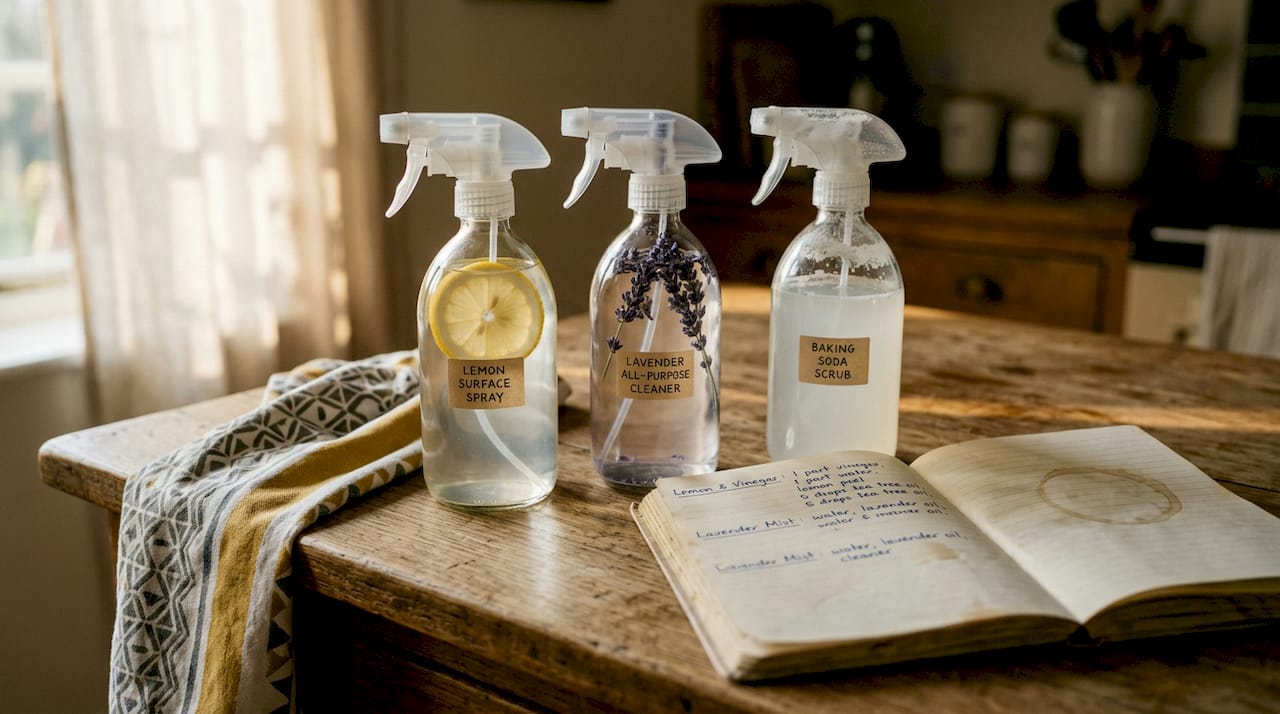
On fragrance specifically: some eco-friendly brands use essential oils to create pleasant natural scents, but sensitivities vary significantly between households. Branch Basics Concentrate, for example, is fragrance-free, making it a strong option for households with asthma, eczema, or chemical sensitivities, though it sits at a higher price point than most scented alternatives.
Packaging and product format comparison
| Format | Environmental benefit | Best for | Drawback |
|---|---|---|---|
| Concentrated liquid | Reduces water weight and packaging waste | Multi-surface cleaning, large homes | Requires dilution; easy to get ratio wrong |
| Ready-to-use spray | Convenient, no prep needed | Spot cleaning, quick jobs | More packaging per clean, higher cost per use |
| Refillable system | Dramatically reduces single-use plastic | Committed eco households | Higher upfront cost for bottles |
| Tablet or powder format | Minimal packaging, long shelf life | Storage-conscious households | Less effective on heavy grease |
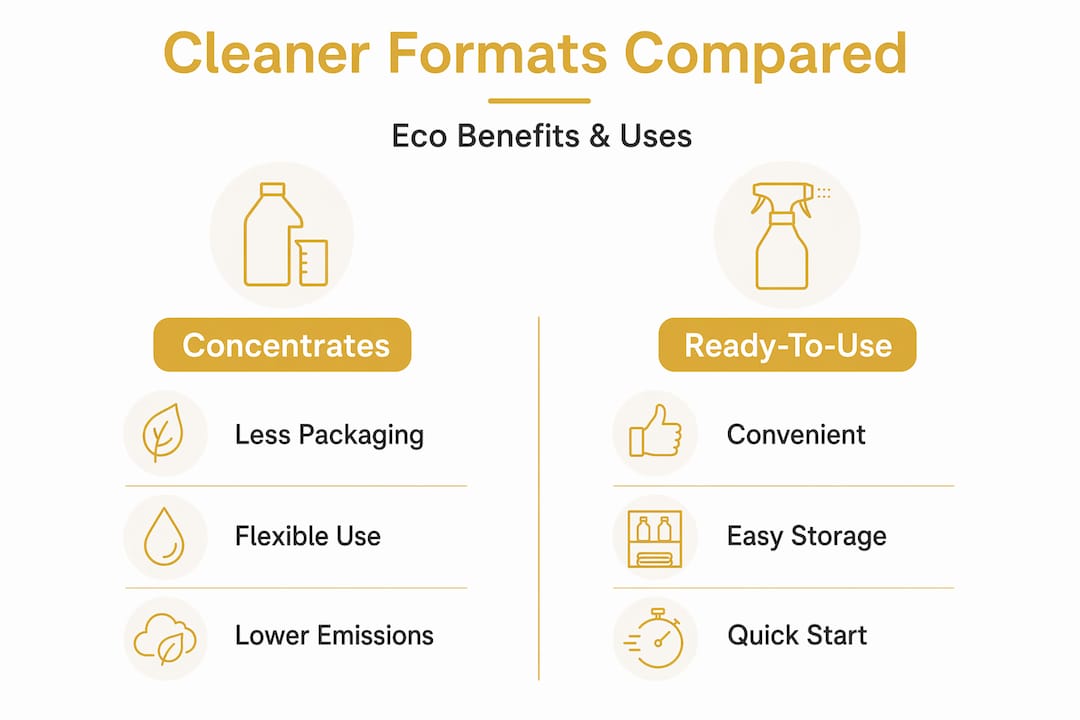
Some brands use refillable aluminium bottles and FSC-certified paper packaging to minimise their plastic footprint further. Concentrates like Dr. Bronner’s Sal Suds represent the most cost-effective and environmentally sound format overall, though they do require the extra step of diluting before use.
The broader principle here is that both the formula and the container count. A certified-ingredient product sold in a single-use plastic bottle is a better choice than a greenwashed product, but it is not the full picture. Considering both dimensions gives you a cleaner conscience and a genuinely lower environmental impact.
Building eco friendly cleaning into your routine
Knowing what to buy is one thing. Using it consistently and correctly is where most households struggle. A few structural habits make a significant difference.
Start by mapping your cleaning by room type and surface, then match your products accordingly. Bathrooms need something effective on limescale and mould. Kitchens require a formula that can cut through grease. Floors vary by material. Buying one all-purpose concentrate and diluting it differently for each task is often the most practical approach for busy families, and it dramatically reduces the number of bottles under your sink.
For a room-by-room approach, Thezoofamily’s guide on eco cleaning for families breaks down surface-specific recommendations in useful detail. For glass surfaces specifically, the guide on eco friendly glass cleaner covers what to look for and what to avoid.
A practical weekly structure for a family home might look like this:
- Monday and Thursday: Vacuum all rooms while children are at school, using a HEPA filter vacuum. Damp mop hard floors immediately after.
- Tuesday: Bathroom clean using a certified non-toxic cleaner. Spray, leave for two minutes to work, then wipe. Open the window during and for thirty minutes after.
- Wednesday: Kitchen surfaces, appliances, and hob using a diluted concentrate. Pay attention to handles and switches, which carry the highest bacterial load.
- Friday: Quick whole-home reset. Damp-wipe high-touch surfaces (door handles, light switches, remote controls) with a certified multi-surface spray.
Dilution discipline matters more than most people realise. Concentrated cleaners are more environmentally sound and cost-effective than ready-to-use sprays, but using them undiluted wastes product, increases chemical exposure, and can damage surfaces. Keep a clearly labelled spray bottle with your correct dilution ratio written on it.
My honest take on green cleaning at home
I have been recommending and testing eco-friendly cleaning products for years, and the honest truth is that the journey is messier than any guide makes it look. The first time I switched our household over entirely, I fell for two products that had every surface-level signal of credibility: pleasant scent, recycled packaging, reassuring language on the label. Neither had any certification I could verify. Both left streaks on our bathroom tiles that no amount of elbow grease resolved.
What I learned is that efficacy and ethics are not naturally opposed, but finding the overlap requires patience. The EPA Safer Choice database genuinely changed how I shop. Once I started cross-referencing products before buying rather than trusting labels at face value, the number of disappointing purchases dropped dramatically.
The cleaning timing advice is the piece I wish more parents prioritised. I noticed a real difference in how my children’s mornings felt after I shifted vacuuming to school hours. Less sneezing, fewer complaints about itchy eyes. It is not glamorous advice, but it works.
My practical recommendation: start with one certified concentrate for multi-surface use, one certified bathroom product, and a spray bottle of diluted white vinegar for glass. Master those three before expanding. Sustainable cleaning is a practice, not a purchase.
— ALAIN
How Thezoofamily supports your green home
At Thezoofamily, the belief that natural beauty should be preserved for future generations shapes everything we do. From planting a tree for every camera sold to curating resources that help families live more gently on the planet, our commitment runs deeper than any single product.
For families starting out with chemical-free home cleaners, our blog is a practical starting point. We have tested products, broken down certifications, and spoken to families who have made the switch successfully. Whether you are looking for the best eco friendly cleaning brands for bathrooms, a beginner’s approach to sustainable cleaning options in the kitchen, or guidance on diy eco friendly cleaners you can make with store-cupboard ingredients, you will find honest, family-tested information waiting for you.
We built Thezoofamily to help children fall in love with the natural world. Keeping that world worth loving starts at home, one clean surface at a time. Explore our full range of resources and find the eco-conscious cleaning approach that works for your family.
FAQ
What makes a house cleaner truly eco friendly?
A genuinely eco friendly house cleaner uses plant-based or mineral-based biodegradable ingredients, carries a credible certification such as EPA Safer Choice or Design for the Environment, and comes in packaging designed to reduce plastic waste. Vague terms like “natural” or “green” on a label carry no regulatory requirement.
Are DIY eco friendly cleaners actually effective?
Yes, for most everyday tasks. A water and vinegar solution handles glass, surfaces, and general disinfection effectively, while baking soda acts as a mild abrasive scrub for sinks and hobs. HealthyChildren.org recommends both as genuinely safer alternatives to chemical-heavy commercial products.
When is the best time to clean if you have young children?
The safest approach is to vacuum, dry dust, and mop while children are out of the room or house. This reduces their inhalation of stirred-up allergens and dust particles, which is particularly important for children with asthma or allergies.
How do I know if an eco-friendly product is actually certified?
Search the product name or brand on the EPA’s Safer Choice product finder tool online. Certification is registered and publicly searchable, so any genuinely certified product will appear in the database. If it does not appear, the label claims are unverified.
Are concentrated cleaners better than spray bottles?
In most cases, yes. Concentrated formats reduce packaging waste and are more cost-effective per clean than ready-to-use sprays. The trade-off is that they require correct dilution, so keeping a pre-mixed, clearly labelled spray bottle reduces the risk of using too much product.