

An eco friendly automatic toilet bowl cleaner is a product that maintains toilet hygiene continuously using plant-based, biodegradable ingredients, without bleach, ammonia, or single-use plastic waste. Unlike a bottle of conventional cleaner you squirt and scrub weekly, these systems work passively with every flush, releasing safe cleaning agents that prevent mineral scale, stains, and odours from taking hold. Brands such as Naturapod and Blueland have made this category credible and widely accessible. The result is a cleaner toilet with far less chemical exposure for your household and far less harm to waterways.
How do eco friendly automatic toilet bowl cleaners work?
These products fall into two distinct delivery methods, and understanding the difference is the single most useful thing you can learn before buying.
In-tank systems sit inside the cistern and release a measured dose of cleaning formula with every flush. Naturapod’s in-tank cleaner, for example, provides up to 90 days of continuous protection by slowly dissolving plant-based agents that coat the bowl and prevent mineral deposits from adhering. Because the formula disperses through the water before it ever reaches the bowl, scale and limescale are addressed before they become visible problems. This is preventive cleaning in the truest sense.
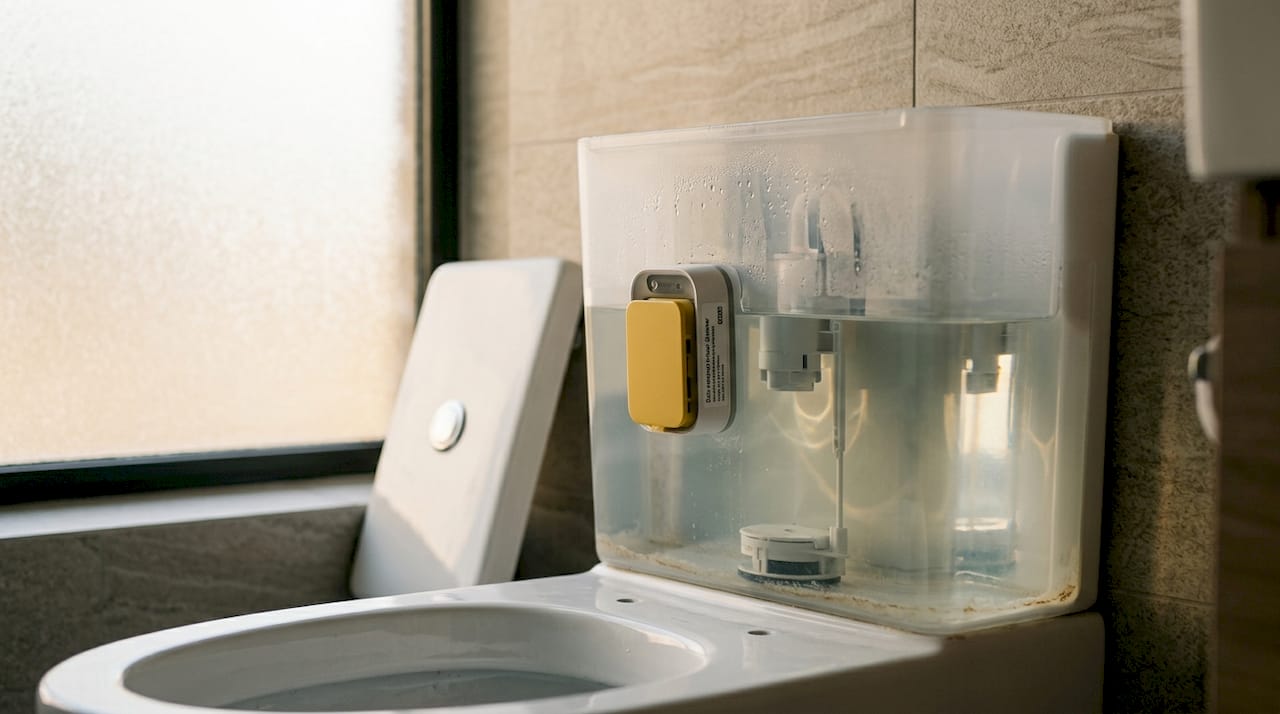
In-bowl tablets work differently. You place them directly in the bowl, where water activates the formula during use. Blueland’s plastic-free, septic-safe tablets are designed specifically for bowl placement and deliver a concentrated burst of cleaning power to tackle existing stains. They are not intended for tank use, and placing them incorrectly reduces their effectiveness and can damage rubber seals.
The chemistry behind both formats relies on citric acid and plant-derived surfactants rather than chlorine bleach. Citric acid dissolves calcium carbonate deposits (the white scale you see around the waterline) by reacting with the mineral directly. Plant oils and surfactants lift organic matter and neutralise odour-causing bacteria without leaving toxic residues in the water that flows into your drains.
Pro Tip: If your water is hard (above 200 mg/litre of calcium carbonate), an in-tank system is the better starting point. It addresses scale continuously rather than waiting for deposits to form.
What are the main eco friendly ingredients and how effective are they?
The ingredients list is where greenwashed products reveal themselves. A genuinely green toilet bowl freshener will lead with citric acid, plant-based surfactants, and botanical fragrances. It will not contain chlorine bleach, ammonia, phosphates, or petrochemical solvents.
Citric acid is the workhorse of natural toilet cleaning. Southern Living recommends citric acid for removing mineral scale as a safer alternative to hydrochloric acid, which is the aggressive ingredient found in many conventional descalers. Citric acid works by chelating calcium ions, effectively pulling the mineral structure apart without corroding porcelain or releasing fumes. For hard water households, this matters enormously.
Vinegar is often suggested as a DIY alternative, but it has a significant limitation. LAVO’s research notes that vinegar degrades rubber seals over time when used continuously in a cistern, making it unsuitable for in-tank automatic systems. Citric acid, by contrast, is stable at the concentrations used in these products and does not cause the same degradation. This is why reputable brands formulate with citric acid rather than acetic acid.
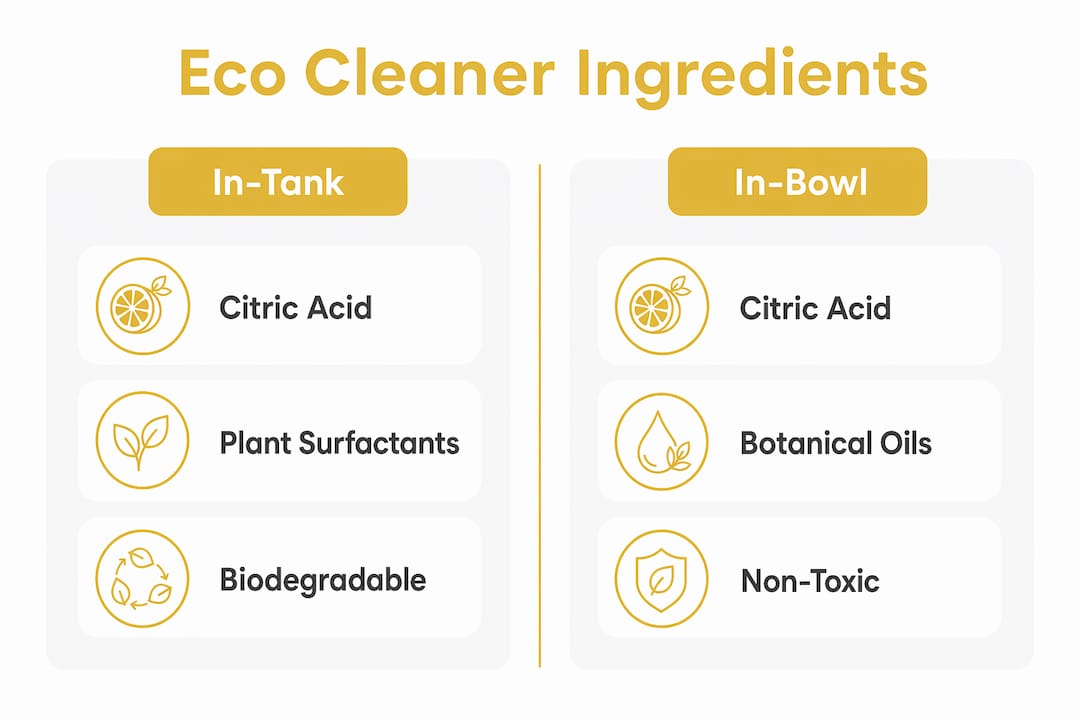
Botanical fragrances from sources such as essential oils of eucalyptus, lavender, or tea tree provide deodorising without synthetic musks or phthalates. These compounds break down naturally in wastewater rather than accumulating in aquatic ecosystems.
| Ingredient | Function | Eco advantage |
|---|---|---|
| Citric acid | Dissolves mineral scale and limescale | Biodegradable, non-toxic to aquatic life |
| Plant-based surfactants | Lifts organic stains and bacteria | Derived from renewable sources, not petrochemicals |
| Botanical essential oils | Deodorises and provides fragrance | No synthetic musks or phthalates |
| Sodium bicarbonate | Mild abrasive and pH buffer | Naturally occurring, fully biodegradable |
Certifications matter when evaluating claims. Blueland’s tablets hold several independent eco-certifications and avoid harmful chemicals entirely. Look for EPA Safer Choice, Cradle to Cradle, or B Corp status as indicators that a brand’s environmental claims have been independently verified rather than self-declared.
Pro Tip: Avoid any product labelled “eco” that still lists “parfum” without specifying botanical origin. Synthetic fragrance compounds are among the most common hidden pollutants in household cleaners.
How to choose between in-tank and in-bowl eco cleaners?
The right format depends on your household’s cleaning habits, water hardness, and plumbing setup. Neither format is universally superior. Each solves a different problem.
In-tank automatic systems are best when you:
- Have hard water and want continuous scale prevention
- Prefer a set-and-forget approach with minimal weekly effort
- Want the longest product lifespan per unit (Naturapod’s system lasts up to 90 days)
- Have a standard cistern without a dual-flush mechanism that might accelerate dissolution
In-bowl tablets are better suited when you:
- Have soft water and primarily need stain removal rather than scale prevention
- Prefer to control dosing manually and apply treatment only when needed
- Are renting and cannot modify the cistern
- Want a product that also works as a periodic deep-clean treatment
Placement accuracy is non-negotiable. Blueland explicitly warns that their bowl tablets are not designed for tank use. Placing a bowl-only formula in the cistern can reduce cleaning performance and, in some cases, cause deterioration of the rubber flapper valve or inlet seals. This is not a minor inconvenience. Replacing cistern components is a plumbing job most homeowners would rather avoid.
Septic system compatibility deserves its own consideration. Naturapod confirms that their in-tank system is septic safe, and many biodegradable cleaners carry this designation. However, septic-safe claims vary by product and concentration. If your home uses a septic tank, verify the specific product’s compatibility before committing to continuous automatic dosing. The bacterial ecosystem in a septic tank is sensitive, and even some plant-based surfactants can disrupt it at high doses.
What are practical tips for getting the best results?
Using a green toilet bowl cleaner automatically does not mean you can abandon manual cleaning entirely. Naturapod acknowledges that automatic systems are designed primarily for prevention and maintenance, not for removing established stains. Think of them as a daily supplement rather than a weekly deep clean.
Follow these steps to get the most from your automatic cleaning system:
- Start with a clean bowl. Before installing any in-tank or in-bowl system, scrub the toilet thoroughly to remove existing scale, rings, and stains. An automatic cleaner maintains cleanliness; it does not restore a neglected bowl.
- Install the in-tank unit correctly. Place the unit away from the flush valve to avoid blocking water flow. Most units clip to the inside of the cistern wall. Check the manufacturer’s instructions for your specific cistern type.
- Perform a weekly manual clean. Use an eco-friendly toilet brush and a small amount of citric acid-based cleaner to address any staining around the waterline. This takes two minutes and prevents the gradual buildup that automatic systems cannot fully stop.
- For stubborn rings, use a targeted treatment. FabTab recommends placing a tablet directly in the bowl and allowing a 30-minute dwell time before scrubbing. This targeted approach handles the stains that passive systems miss.
- Replace in-tank units on schedule. Do not wait until the unit is completely dissolved. Replacing it at the recommended interval (typically every 30 to 90 days depending on the brand) maintains consistent dosing and prevents gaps in protection.
Pro Tip: Pair your automatic cleaner with an eco-friendly bathroom routine that avoids mixing products. Combining citric acid-based cleaners with bleach-based products, even accidentally, produces chlorine gas. Stick to one chemistry throughout your bathroom.
Choosing a bamboo or recycled-plastic toilet brush completes the picture. The brush itself is part of your cleaning system, and replacing a plastic brush with a sustainable alternative is a small change with a measurable reduction in household plastic waste over time.
Key takeaways
The most effective eco friendly automatic toilet bowl cleaner combines the right delivery method (in-tank for prevention, in-bowl for stain removal) with citric acid-based ingredients and regular manual maintenance.
| Point | Details |
|---|---|
| Match format to your water type | In-tank systems suit hard water; in-bowl tablets suit soft water and targeted stain removal. |
| Citric acid outperforms vinegar | Citric acid is stable for continuous tank use; vinegar degrades rubber seals over time. |
| Placement errors cause real damage | Using bowl-only tablets in the cistern reduces effectiveness and risks seal deterioration. |
| Automatic does not mean hands-off | Weekly manual scrubbing remains necessary to remove stains automatic systems cannot prevent. |
| Verify septic compatibility | Confirm septic-safe status for your specific product before using continuous dosing systems. |
Why I think most people misunderstand “automatic” toilet cleaning
The word “automatic” sells the fantasy of a toilet that cleans itself. After spending considerable time researching and testing these products, I can tell you that fantasy is partly true and mostly misleading.
What in-tank systems genuinely do well is prevention. Naturapod’s approach of releasing small doses of plant-based formula with every flush is genuinely effective at stopping scale from forming in the first place. If you install one in a freshly cleaned toilet and maintain a weekly wipe-down, you will notice a real difference in how long the bowl stays clean between deep cleans.
What they do not do is replace effort entirely. A toilet that has been neglected for months will not be restored by dropping in a tablet. The chemistry is not strong enough, nor should it be. The whole point of a biodegradable cleaner is that it is gentle on the environment, which means it is also gentler on stubborn stains than a bleach-based product.
My honest concern with this category is greenwashing. Too many products carry vague “natural” or “eco” labels without independent certification. Blueland’s commitment to verified eco-certifications is the standard the whole category should meet. Before you buy, look for EPA Safer Choice or equivalent third-party verification. A brand that cannot point to independent certification is asking you to take their word for it.
The best approach I have found is straightforward. Choose a certified in-tank system for daily prevention, do a two-minute manual clean once a week, and treat stubborn stains with a targeted tablet when needed. That combination is genuinely low-effort, genuinely effective, and genuinely better for the planet.
— ALAIN
Explore eco friendly home care with Thezoofamily
Thezoofamily believes that caring for your home and caring for the planet are the same thing. The same values that drive Thezoofamily’s commitment to planting a tree for every product sold extend to every corner of your household routine, including your bathroom.
If you are building a cleaner, greener home, the guides and product recommendations at Thezoofamily cover everything from biodegradable bathroom cleaners to pet-safe surface treatments. You will also find practical advice on reducing indoor pollutants through smarter product choices. Every recommendation is chosen with the same standard: safe ingredients, minimal packaging, and real cleaning performance.
FAQ
What is an eco friendly automatic toilet bowl cleaner?
An eco friendly automatic toilet bowl cleaner is a product that releases plant-based, biodegradable cleaning agents continuously with each flush, preventing scale and odour without bleach, ammonia, or plastic waste.
Are in-tank toilet cleaners safe for septic systems?
Many biodegradable in-tank cleaners, including Naturapod’s system, are confirmed septic safe, but you should verify compatibility for your specific product and usage rate before installing any continuous dosing system.
Can I use eco toilet tablets in the cistern and the bowl?
No. Products like Blueland’s tablets are formulated specifically for bowl use and should not be placed in the cistern. Using bowl-only tablets in the tank reduces effectiveness and risks damage to rubber seals and plumbing components.
How often do I still need to scrub the toilet manually?
A weekly manual clean with an eco-friendly brush and a citric acid cleaner is recommended even when using an automatic system. Automatic cleaners prevent buildup; they do not remove established stains or rings without additional scrubbing.
Is citric acid better than bleach for toilet cleaning?
Citric acid is more effective than bleach for dissolving mineral scale and hard water deposits, and it is safer for waterways and septic systems. Bleach remains more effective for disinfecting against bacteria and mildew, so the best choice depends on your primary cleaning goal.