

Over 40 percent of british parents say they wish they had captured more of their child’s early years. Preserving these moments goes far beyond keeping old photo albums on a shelf. As memories fade and children grow, thoughtful documentation becomes an act of love as well as a practical tool for understanding development. Whether through photos, journals, or creative projects, this guide reveals how to capture and celebrate the memories that shape a child’s unique story.
Table of Contents
- Defining Childhood Memory Documentation
- Popular Methods and Creative Approaches
- Essential Tools and Technologies Used
- Safeguarding Privacy and Digital Safety
- Common Pitfalls and Best Practices
Key Takeaways
| Point | Details |
|---|---|
| Importance of Documentation | Childhood memory documentation is essential for preserving a child’s experiences and enhancing their development. It creates a meaningful chronicle that can be cherished over time. |
| Diverse Methods of Capturing Memories | Incorporate various innovative techniques, such as digital memory journals and sensory memory documentation, to engage children in the memory-preservation process. |
| Balance Preservation and Privacy | Ensure digital safety by implementing strong privacy measures and considering children’s consent when documenting and sharing their memories. |
| Avoid Common Pitfalls | Foster a relaxed documentation environment by involving children in the process and avoiding overwhelming recording methods to enhance their engagement and comfort. |
Defining Childhood Memory Documentation
Childhood memory documentation represents a deliberate and thoughtful process of capturing, preserving, and reflecting upon the fleeting moments that shape a child’s early experiences. As Scholars UNH highlights through Bethany Karen Benson Fleck’s research, documentation transcends mere record-keeping, emerging as a profound method of understanding and celebrating a child’s developmental journey.
At its core, childhood memory documentation involves systematically collecting and curating tangible evidence of a child’s growth, learning, and personal narrative. This can encompass various mediums - photographs, handwritten journals, digital recordings, artwork, and personal artefacts that collectively construct a rich tapestry of childhood memories. The significance lies not just in preservation, but in creating a meaningful chronicle that can be revisited and cherished throughout one’s lifetime.
Research into childhood memory reveals fascinating complexities. PubMed studies on childhood amnesia demonstrate that our capacity to recall early life events changes dramatically with age. This scientific insight underscores the importance of proactively documenting memories, as our natural recall becomes increasingly selective over time. Effective documentation strategies can help parents and guardians capture nuanced details that might otherwise fade from memory.
Key considerations for meaningful childhood memory documentation include:
- Consistency in recording memories
- Capturing both significant milestones and everyday moments
- Using diverse documentation methods
- Involving the child in the documentation process when appropriate
- Creating a narrative that goes beyond mere facts
Ultimately, childhood memory documentation is an art form that blends emotional preservation with historical record-keeping, creating a personalised archive that celebrates individual growth and familial love.
Popular Methods and Creative Approaches
Documenting childhood memories has evolved far beyond traditional photo albums and handwritten journals, embracing innovative and immersive techniques that capture the essence of growing up. Wikipedia highlights visual autoethnography as a powerful method where personal experiences are chronicled through photography, video, and other visual media, creating a rich narrative that connects individual memories to broader cultural contexts.
One particularly fascinating approach is sensory memory documentation. As Wikipedia explains through sensobiographic walking, this method involves revisiting significant physical spaces and pathways from one’s past, allowing individuals to reconnect with deeply embedded sensory memories. Parents can adapt this technique by creating memory walks or revisiting meaningful locations that trigger vivid childhood recollections.
Creative documentation methods have expanded to include diverse and interactive approaches that engage children directly in the memory-preservation process. These might encompass:
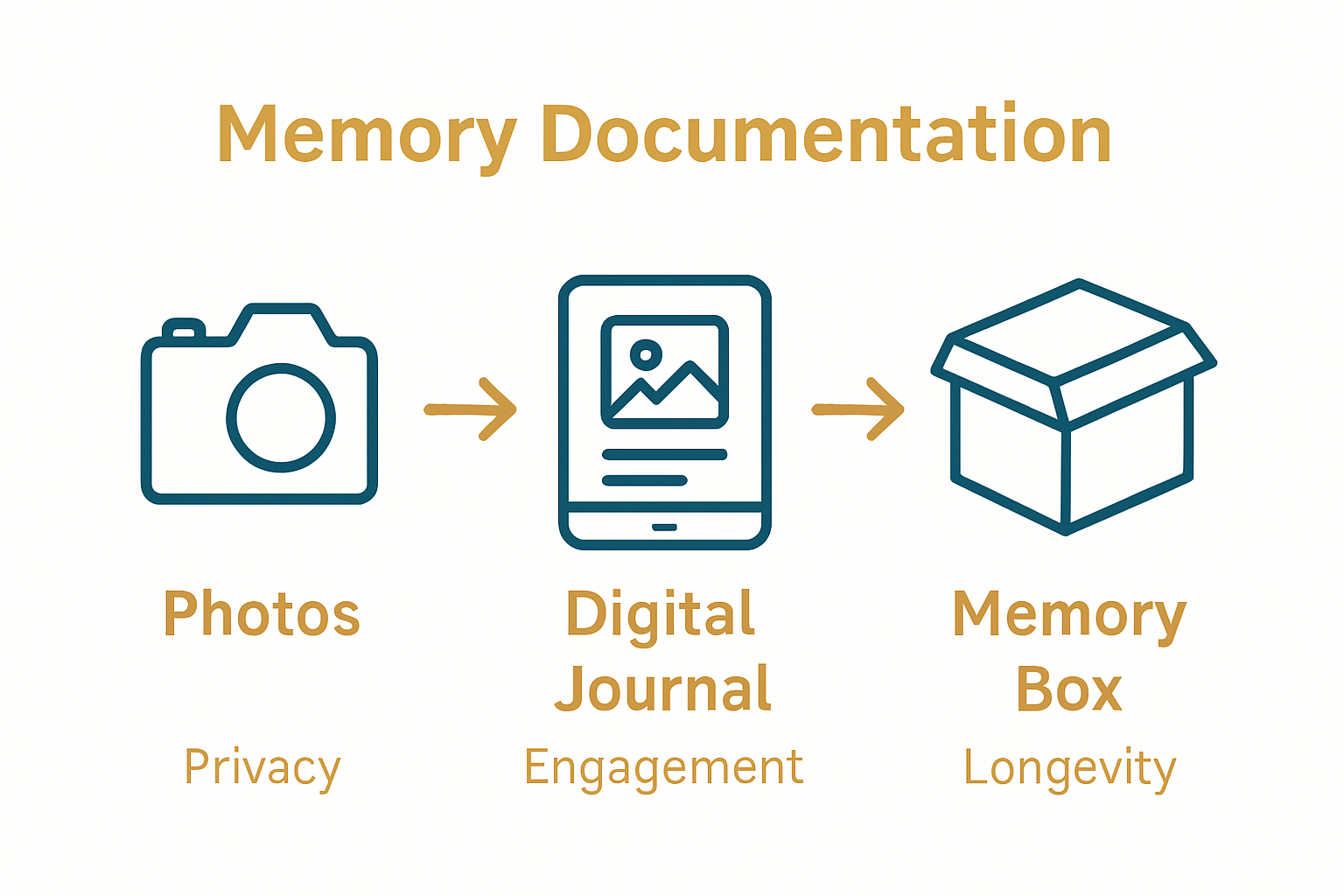
- Digital memory journals with multimedia entries
- Scrapbooking combining physical and digital elements
- Audio recordings capturing children’s own storytelling
- Interactive memory boxes with tactile mementos
- Collaborative family memory projects
With Making Learning Fun: Engaging Activities for Your Kids, parents can transform memory documentation into an engaging, playful experience that not only preserves memories but also strengthens family bonds and encourages children’s creativity.

Ultimately, the most effective childhood memory documentation transcends mere record-keeping. It becomes a living, breathing narrative that captures the nuanced emotional landscape of growing up, allowing future generations to understand and appreciate their personal and family history.
Essential Tools and Technologies Used
In the digital age, documenting childhood memories has transformed dramatically, with innovative technologies offering unprecedented ways to capture and preserve precious moments. ArXiv introduces the CIVIL Retrieval System, a groundbreaking technology that integrates visual lifelogs with advanced captioning, enabling parents to retrieve specific images through intuitive textual queries and enhance memory recall with remarkable precision.
Technology has expanded beyond simple photograph storage, creating immersive platforms for intergenerational storytelling. ArXiv highlights the Slots-Memento system, which allows users to record and associate stories directly with family mementos, bridging generational gaps and preserving rich personal narratives that might otherwise be lost to time.
The essential tools for childhood memory documentation now encompass a diverse range of digital and physical technologies:
- Smartphone apps with cloud storage and organisation features
- High-resolution digital cameras and video recorders
- Secure digital journals and memory platforms
- Voice recording technologies
- Interactive digital scrapbooking tools
With Making Learning Fun: Engaging Activities for Your Kids, parents can discover innovative ways to integrate technology into memory preservation, transforming documentation from a passive record into an engaging, interactive experience that celebrates childhood’s fleeting moments.
The most effective memory documentation technologies are those that balance technological sophistication with emotional authenticity, creating platforms that not only store memories but also tell compelling, personal stories that can be cherished for generations.
Safeguarding Privacy and Digital Safety
In the digital era, documenting childhood memories requires a nuanced approach that balances preservation with privacy protection. Wikipedia highlights the concept of community archives, which emphasise individual control over how personal materials are collected, stored, and shared, providing a critical framework for responsible memory documentation.
Digital safety involves more than technological measures. Wikipedia notes that reminiscence therapy underscores the psychological sensitivity surrounding personal memories, reminding parents that each documented moment carries emotional significance and requires respectful handling. This means considering not just digital security, but the potential long-term implications of sharing personal childhood narratives.
Key strategies for maintaining privacy and digital safety include:
- Using strong, unique passwords for memory storage platforms
- Implementing strict privacy settings on digital repositories
- Obtaining child consent for sharing memories as they grow older
- Regularly auditing and updating privacy controls
- Selecting platforms with robust data encryption
With Making Learning Fun: Engaging Activities for Your Kids, parents can learn about creating safe, meaningful memory documentation that respects their child’s developing sense of privacy and digital identity.
Ultimately, safeguarding childhood memories is a delicate balance between preservation and protection. By approaching digital memory documentation with mindfulness, empathy, and robust security practices, parents can create a lasting, secure archive that honours their child’s personal narrative.
Common Pitfalls and Best Practices
Documenting childhood memories is an art that requires careful navigation between preservation and authenticity. ScienceDirect reveals that while documentation methods can effectively capture factual information, they may not significantly enhance episodic memory, suggesting parents must adopt nuanced approaches that go beyond mere record-keeping.
ArXiv emphasises the critical importance of cultivating curiosity-driven documentation, highlighting that children’s memory preservation should be engaging and playful rather than overly structured. This approach transforms memory documentation from a clinical process into an interactive, enjoyable experience that naturally stimulates children’s interest and participation.
Common pitfalls to avoid in childhood memory documentation include:
- Over-documenting and creating performance anxiety
- Using intrusive or overwhelming recording methods
- Neglecting the child’s emotional comfort
- Focusing solely on milestone moments
- Forgetting to involve the child in the documentation process
Best practices for meaningful memory preservation encompass:
- Creating a relaxed, spontaneous documentation environment
- Allowing children to guide narrative selection
- Using diverse, multi-sensory documentation techniques
- Respecting the child’s privacy and comfort levels
- Maintaining consistency without becoming rigid
With Making Learning Fun: Engaging Activities for Your Kids, parents can discover innovative strategies that transform memory documentation into a collaborative, joyful journey of shared storytelling.
Ultimately, successful childhood memory documentation is less about perfect records and more about capturing the authentic essence of growing up – the laughter, curiosity, and wonder that define childhood’s magical moments.
Capture Childhood Wonders with The Zoofamily
Documenting childhood memories is a delicate balance of preserving authenticity while keeping the process joyful and engaging. As the article highlights, challenges like avoiding over-documentation and involving children meaningfully are crucial pain points for parents seeking to create lasting and heartfelt archives. With a focus on sensory memory documentation and curiosity-driven storytelling, parents need tools that inspire creativity and offer simple, natural ways to preserve those fleeting moments.
At The Zoofamily, we understand these emotional needs and provide more than just the best kids’ cameras, walkie-talkies, and binoculars. Our products are designed to stimulate children’s imagination and connection to nature, making memory documentation an interactive and playful experience that children love to be part of. Every purchase also contributes to restoring natural beauty for future generations because for every camera sold we plant a tree. Start creating your child’s unique story today with tools created for authentic memory preservation. Explore our collection and transform memory-making into a treasured family journey now at The Zoofamily.
Discover how to blend technology and creativity seamlessly with our nature-inspired products that respect both your child’s privacy and emotional comfort. Visit Making Learning Fun: Engaging Activities for Your Kids for more ideas on turning documentation into a loving and safe activity the whole family can enjoy.
Frequently Asked Questions
What is childhood memory documentation?
Childhood memory documentation is the process of capturing, preserving, and reflecting on moments that shape a child’s early experiences. It involves collecting various forms of evidence, such as photographs, journals, and artefacts, to create a narrative of a child’s growth.
Why is it important to document childhood memories?
Documenting childhood memories helps preserve experiences that may be forgotten over time. As children grow, our ability to recall early events changes, making it crucial to capture details that define their development and emotional landscape.
What are some creative methods for documenting childhood memories?
Creative methods include using digital memory journals, interactive memory boxes, audio recordings, and visual autoethnography. These approaches engage children in the documentation process and transform memory preservation into a collaborative experience.
How can parents ensure privacy when documenting memories digitally?
Parents can ensure privacy by using strong passwords, implementing strict privacy settings, obtaining consent from their children for sharing memories, regularly updating privacy controls, and choosing secure platforms with data encryption.