

Over 80 percent of British and European parents are concerned about the impact of screens on child development. For eco-conscious moms in France and Germany, finding ways to encourage imaginative, screen-free play outdoors matters more than ever. This guide shares practical, nature-inspired activities that spark creativity and help children build essential skills away from digital distractions.
Table of Contents
- Defining Unplugged Play For Children
- Types Of Nature-Inspired Play Activities
- Key Features Of Eco-Conscious Toys
- How Unplugged Play Boosts Creativity
- Physical, Emotional, And Social Benefits
- Common Mistakes To Avoid With Screen-Free Play
Key Takeaways
| Point | Details |
|---|---|
| Unplugged Play is Crucial for Development | Encouraging children to engage in unplugged play fosters creativity, emotional intelligence, and social skills by promoting direct interactions without digital distractions. |
| Nature-Inspired Activities Enhance Learning | Engaging children in nature play cultivates curiosity and environmental awareness, leading to diverse and sustainable play experiences that support holistic development. |
| Eco-Conscious Toys Support Responsible Play | Selecting eco-friendly toys encourages environmental stewardship while offering educational value that fosters children’s understanding of sustainability. |
| Avoid Over-Scheduling and Passive Engagement | To maximise the benefits of screen-free play, ensure children have ample opportunities for spontaneous exploration and social interaction. |
Defining Unplugged Play for Children
Unplugged play represents a critical developmental approach where children engage in activities without digital technology, focusing instead on direct sensory experiences and imaginative interactions. Scholarly research demonstrates that this type of play functions as a spectrum, ranging from completely unstructured free play to guided activities that deliberately exclude electronic screens.
At its core, unplugged play encompasses activities driven by intrinsic enjoyment and natural curiosity. These might include physical exploration, creative arts, constructive building, imaginative role-playing, or outdoor nature interactions. The fundamental characteristic is engagement without digital mediation - children using their creativity, physical capabilities, and social skills to generate play experiences organically.
By removing digital distractions, unplugged play allows children to develop critical cognitive, emotional, and social capabilities. Comprehensive studies reveal that these screen-free experiences contribute significantly to developmental milestones, encouraging problem-solving skills, emotional intelligence, and genuine human connection.
Pro tip: Create a daily “unplugged play window” where digital devices are completely removed, allowing children to explore, imagine, and interact naturally with their environment and peers.
Types of Nature-Inspired Play Activities
Nature-inspired play encompasses a rich spectrum of activities designed to connect children directly with their natural environment. Recent systematic research reveals that outdoor play environments provide unique opportunities for children to engage in more diverse, creative, and sustained play experiences compared to structured indoor settings.
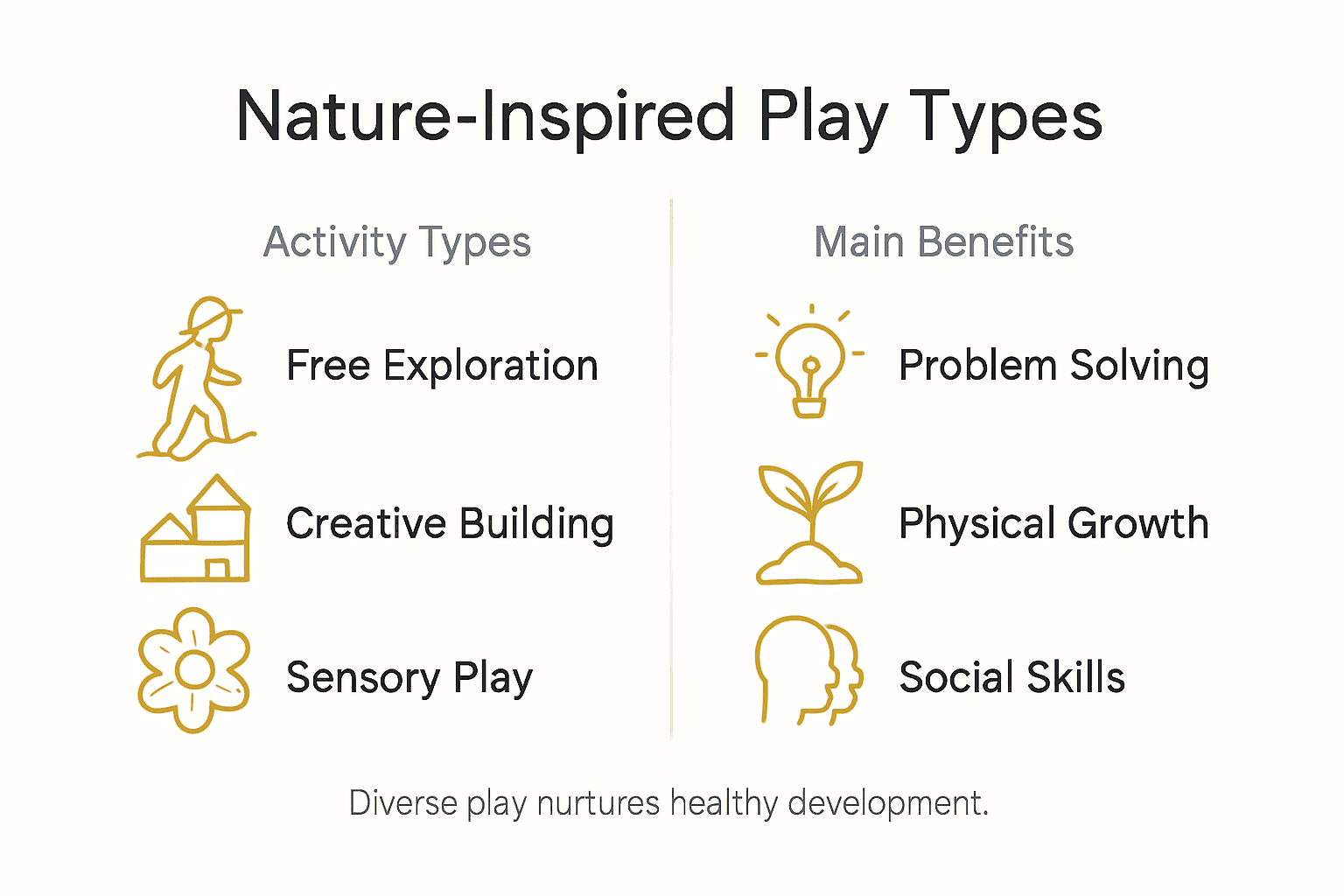
These nature-inspired activities can be broadly categorised into several engaging types. Free exploration involves allowing children to interact spontaneously with natural materials like sticks, stones, leaves, and soil. Sensory interaction activities encourage children to touch, smell, listen, and observe their surroundings, developing keen environmental awareness. Constructive play might include building shelters from branches, creating nature art, or designing small landscapes using natural elements.
Comprehensive curriculum frameworks highlight additional nature play categories such as environmental stewardship activities, where children learn about ecosystem preservation through hands-on engagement. These might include planting seeds, observing wildlife, collecting and sorting natural objects, or participating in simple conservation projects that teach ecological responsibility while maintaining a sense of playful discovery.
Here’s a summary of the main types of nature-inspired play and their unique benefits for child development:
| Activity Type | Primary Benefit | Typical Materials or Features | How It Supports Growth |
|---|---|---|---|
| Free exploration | Fosters curiosity and independence | Sticks, stones, leaves | Encourages decision making |
| Sensory interaction | Enhances environmental awareness | Soil, water, outdoor sounds | Develops observation and focus |
| Constructive play | Builds teamwork and creativity | Branches, rocks, nature art | Improves problem-solving skills |
| Environmental stewardship | Teaches responsibility | Seeds, wildlife, natural objects | Promotes ecological understanding |
Pro tip: Create a “nature exploration kit” with simple tools like magnifying glasses, sketch pads, and collection bags to transform outdoor play into an exciting sensory learning adventure.
Key Features of Eco-Conscious Toys
Eco-conscious toys represent a transformative approach to children’s play, integrating environmental responsibility with developmental learning. Academic research demonstrates that sustainable toy design involves a comprehensive evaluation of materials, manufacturing processes, and long-term environmental impact, going far beyond traditional product development.
The key features of these environmentally responsible playthings encompass multiple critical dimensions. Sustainable material selection stands paramount, with manufacturers prioritising responsibly sourced wood, organic textiles, and recycled components. Non-toxic finishes and production processes ensure child safety while minimising ecological harm. Durability becomes another crucial consideration, with designers creating toys that withstand extensive play while reducing waste through longer product lifecycles.
Professional guidelines highlight that truly eco-conscious toys must balance environmental stewardship with educational value. This means developing play experiences that not only minimise environmental footprint but actively engage children in understanding ecological principles. Toys might incorporate educational elements about conservation, feature biodegradable components, or represent endangered species to spark environmental awareness from an early age.
This table compares traditional toys to eco-conscious toys, highlighting key differences for environmentally responsible play:
| Feature | Traditional Toys | Eco-Conscious Toys |
|---|---|---|
| Materials Used | Plastic, synthetic fabrics | Organic cotton, recycled wood |
| Safety Considerations | May use chemical finishes | Non-toxic, eco-friendly paints |
| Environmental Impact | Often ends in landfill | Designed for biodegradability |
| Educational Focus | Entertainment-centric | Includes conservation themes |
Pro tip: When selecting eco-conscious toys, examine the entire product lifecycle – from raw material sourcing to manufacturing process and eventual disposal – to make truly sustainable choices.
How Unplugged Play Boosts Creativity
Creativity thrives when children are liberated from digital constraints, allowing their imagination to flourish through unstructured exploration. Peer-reviewed research demonstrates that unplugged activities in learning environments significantly enhance divergent thinking, problem-solving capabilities, and cognitive flexibility through hands-on engagement and collaborative experiences.

Unplugged play provides a rich canvas for imaginative expression, enabling children to transform ordinary objects into extraordinary tools of creativity. By engaging in open-ended play without predetermined digital narratives, children learn to construct their own scenarios, reimagine possibilities, and develop innovative thinking patterns. This process involves complex cognitive skills such as object substitution, where a simple stick might become a magic wand, a fishing rod, or a conductor’s baton.
Research from the British Council reveals that pretend play is particularly powerful in nurturing creative thought processes. Through role enactment and self-directed storytelling, children develop narrative skills, emotional intelligence, and the ability to view situations from multiple perspectives. These experiences build foundational creative thinking skills that extend far beyond childhood, preparing young minds for future challenges that require adaptability and original problem-solving.
Pro tip: Create a designated ‘imagination zone’ at home with minimal structured toys, encouraging children to use their creativity and transform everyday objects into play experiences.
Physical, Emotional, and Social Benefits
Unplugged play offers a holistic developmental approach that nurtures children’s comprehensive well-being. Comprehensive research studies reveal that routine screen-free activities significantly impact physical, emotional, and social growth, providing children with essential developmental opportunities often missed in digital-dominated environments.
Physically, unplugged play encourages active movement, gross and fine motor skill development, and natural body coordination. Children engage in spontaneous physical activities like running, jumping, climbing, and manipulating objects, which are crucial for muscle development, spatial awareness, and overall physical fitness. These unstructured movements contrast sharply with sedentary digital interactions, promoting healthier, more dynamic physical engagement.
Research highlights the profound emotional and social benefits of screen-free play. Through direct interactions with peers and environments, children develop critical emotional intelligence skills such as empathy, self-regulation, and conflict resolution. Unstructured play scenarios allow children to navigate complex social dynamics, practice communication, and build resilience by encountering and overcoming small challenges in a supportive, low-stakes environment.
Pro tip: Design weekly ‘unplugged play dates’ where children interact without digital devices, encouraging natural social skill development and creative interaction.
Common Mistakes to Avoid with Screen-Free Play
Screen-free play requires intentional, thoughtful planning to maximise children’s developmental potential. Professional educators highlight that many parents inadvertently undermine unplugged play experiences through common strategic errors, such as over-scheduling activities or providing insufficient variety in play opportunities.
One critical mistake is transforming screen-free time into another form of passive engagement. Parents often replace digital entertainment with structured, adult-directed activities that limit children’s natural creativity and spontaneity. Instead, children require diverse, open-ended play experiences that allow them to explore, imagine, and problem-solve independently. This means creating environments with loose parts, natural materials, and minimal adult intervention that encourage genuine child-led exploration.
Comprehensive research guides emphasise the importance of balancing individual play with collaborative and outdoor experiences. Frequently, parents mistakenly isolate children during screen-free time, overlooking the crucial social learning that occurs through peer interactions, group play scenarios, and shared creative endeavours. The most effective screen-free play integrates physical movement, social interaction, and imaginative exploration across multiple developmental domains.
Pro tip: Create a ‘play possibilities’ box filled with open-ended materials like cardboard, fabric scraps, and natural objects to spark spontaneous, creative unplugged play experiences.
Unlock Creativity and Connection Through Unplugged Outdoor Play
The article highlights the crucial role of unplugged play in nurturing children’s creativity, emotional intelligence, and social skills while encouraging hands-on interaction with nature. Many parents and educators face the challenge of balancing digital distractions with screen-free activities that truly inspire imagination and environmental awareness. If you want to enrich your child’s screen-free experiences with tools designed to deepen their bond with the natural world and spark creativity, our solutions at The Zoofamily provide exactly that.
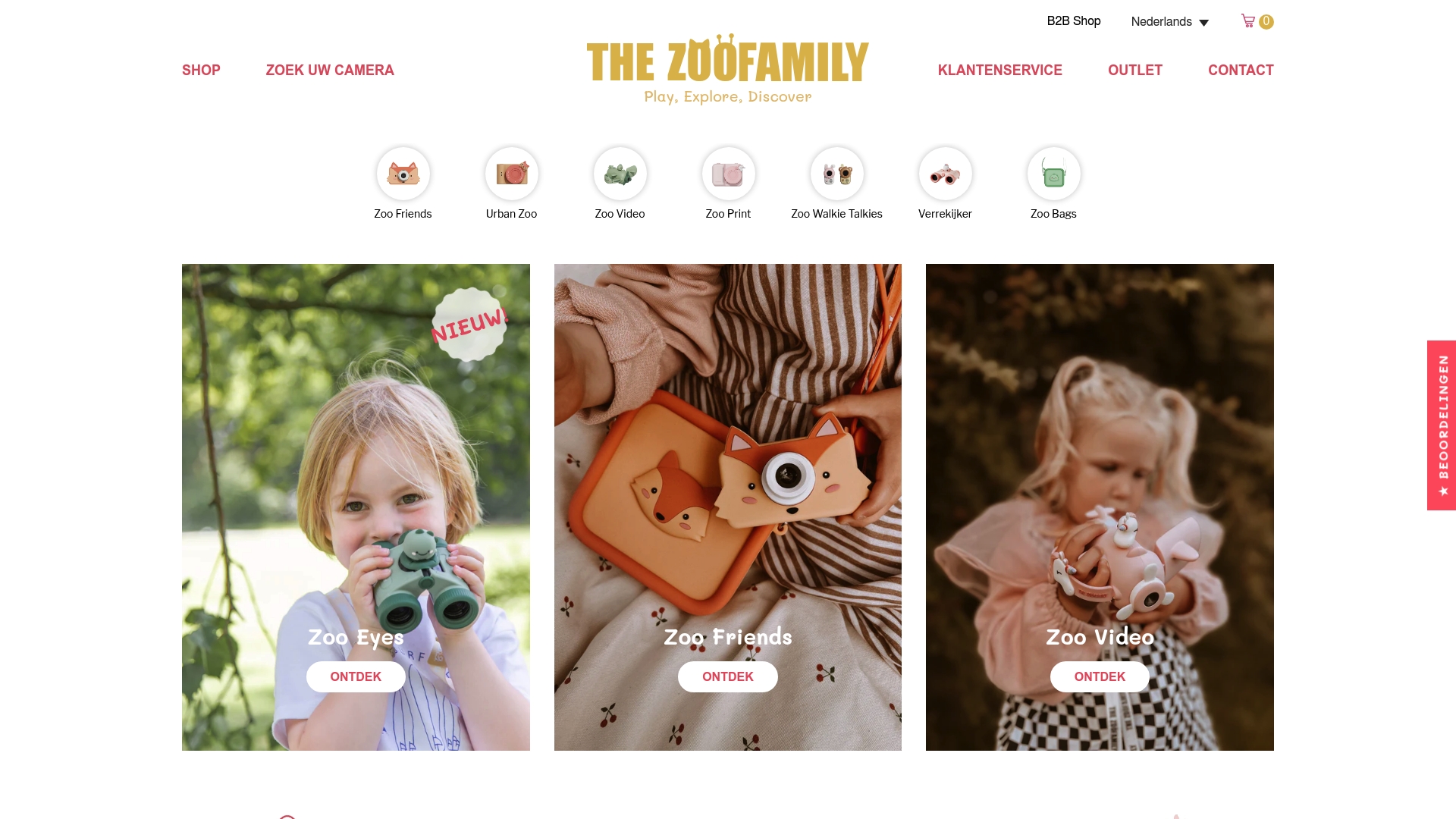
Explore our specially designed kids’ cameras, walkie-talkies, and binoculars that not only stimulate curiosity but also include animal references crafted to awaken a passion for nature. Every product purchased supports reforestation efforts because for every camera sold we plant one tree. Enhance your child’s unplugged adventures today by discovering our unique collection at The Zoofamily. Ignite imagination, build lasting connections, and nurture a genuine love for our planet with creative outdoor play tools. Begin this journey now and witness the transformative benefits of unplugged play for your family.
Frequently Asked Questions
What are the main benefits of unplugged play for children?
Unplugged play fosters creativity, enhances problem-solving skills, and supports emotional and social development. It allows children to engage freely with their environment, developing cognitive and physical capabilities without digital distractions.
How can I encourage my child to engage in unplugged play?
Creating a daily ‘unplugged play window’ where digital devices are completely removed can help. Provide open-ended materials for exploration, such as natural objects or art supplies, and give children the freedom to play without structured adult-directed activities.
What types of activities are considered nature-inspired unplugged play?
Nature-inspired unplugged play activities include free exploration of natural materials, sensory interaction with the environment, constructive play like building with sticks, and environmental stewardship activities such as planting seeds or observing wildlife.
How does unplugged play compare to traditional screen-based entertainment?
Unplugged play encourages active engagement and creativity, allowing children to use their imagination and problem-solving skills, whereas screen-based entertainment often leads to passive consumption and can limit opportunities for hands-on exploration and social interaction.